
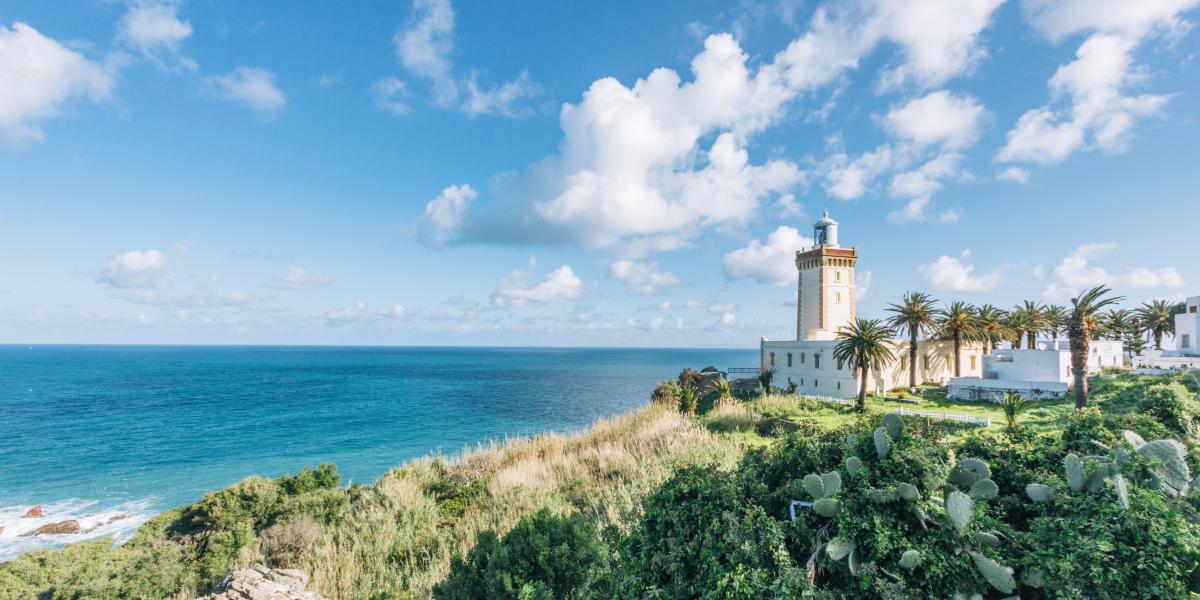
There are places that meet you where you are, and then ask more of you. Tangier is one of those places.
Perched at the edge of continents, where Africa greets Europe and the Atlantic meets the Mediterranean, Tangier is not only a city. It is a threshold; a crossroads. A reminder that borders can be bridges, and that learning has always moved across them.
It was here, in this city shaped by centuries of exchange, refuge, and reinvention, that we gathered for the inaugural Global Summit of NAFSA: Association of International Educators. And it was here that something powerful unfolded—not a conference in the traditional sense, but a living blueprint for the future of global higher education.
Meeting the Moment and Choosing to Lead
From the very first day, the tone was clear: honesty over comfort, courage over complacency. Speakers and participants alike identified where higher education is falling short—and where innovation, imagination, and bold leadership are already taking root.
A central throughline emerged quickly: the forces shaping higher education today cannot be understood in isolation. Geopolitics, technology, demography, climate, economics, and culture are deeply intersectional and intertwined. As the global system of higher education undergoes a profound rebalancing, we are facing real constraints as well as extraordinary opportunity.
Again and again, we returned to first principles: Purpose. Mission. Humanity.
Even as we embrace technological transformation, including artificial intelligence (AI), there was a resounding call to reassert the enduring relevance of liberal arts and humanistic education. Not as nostalgia, but as necessity. In a world that prizes speed, optimization, and efficiency, education must remain the space where meaning, ethics, critical thinking, and belonging are cultivated.
Resilience, we were reminded, does not come from rigidity. It comes from adaptability. And at the center of adaptability are people.
Re-Centering Knowledge, Reclaiming Narrative
One of the most meaningful moments for me was our reflection on Ibn Battuta, the fourteenth-century Moroccan scholar, explorer, and global learner whose journeys spanned Africa, Asia, and Europe. His life is a powerful reminder that international education is not new, not a Western idea, and not owned by any single geography.
His story invited us to challenge Eurocentric narratives, recenter global knowledge traditions, and recognize that learning across borders has always been a human endeavor rooted in curiosity, humility, and exchange.
This return to civilizational wisdom surfaced repeatedly throughout the summit. What becomes possible when innovation is not only driven by disruption, but also by deep cultural memory? When tradition and technology meet not in opposition, but in dialogue?
Doors, Humanity, and the Power of Place
Like the cultural significance of doors in Morocco—symbols of welcome, coexistence, humility, respect, and protection—this summit opened many doors.
Doors to possibility. Doors to collaboration. Doors to experimentation. Doors to brave, safe spaces where difficult questions could be asked and shared solutions imagined.
We felt this viscerally from the very beginning, as the summit opened with a poetic and deeply symbolic reception at the American Legation Museum (The Legation) in the Old Medina on Martin Luther King, Jr. Day in the United States. The Legation, the first U.S. diplomatic property abroad and a living symbol of people-to-people exchange, set the tone: history, diplomacy, education, and shared humanity converging in one place.
Throughout the week, place mattered. Walking the Medina. Visiting Asilah. Sharing meals. Sitting together over Moroccan tea and food. Ending our days not just with panels, but with music, dance, and storytelling. These moments reminded us that connection, culture, and community are not accessories to learning, they are central to it.
Innovation That Serves Humanity
One keynote in particular stayed with many of us: the TEDx-style address by Tonee Ndungu, a visionary African innovator whose work in education, fintech, and AI has transformed millions of lives across the continent.
In an era where “machines know everything,” Tonee challenged us to ask harder questions: What kind of innovation are we building and for whom? His message was clear and urgent: technology must serve society, not the other way around. Human systems still matter. Access can, and must, be expanded everywhere. And educators carry a responsibility not just to adopt tools, but to shape the ethical guardrails around them.
AI, we heard repeatedly, will not replace our humanity. But it will test whether we are willing to defend it.
What We Learned and What Comes Next
As the Summit closed, with space for quiet reflection and re-grounding, several lessons crystallized for me:
- The core mission of education must remain our North Star. Why we exist matters more than ever.
- The center of gravity in global higher education is shifting, and this is a positive, necessary development; opening space for more equitable ideas, voices, and partnerships.
- Bringing educators, industry, philanthropy, governments, and students to the same table fundamentally changes both the conversation and the solutions.
- Flexibility and courage are no longer optional for individuals or systems.
- We must shape self-determined learners, not just credential seekers.
- A bold, future-ready blueprint is needed for a world already in motion.
- Human experience remains our greatest strength, and technology, guided by ethics, can amplify it.
This summit marked not an endpoint, but a beginning.
Onward, Together
To Morocco: thank you for the many gifts. To every participant: thank you for showing up with heart, hope, and purpose. May the spirit of connection stay near.
NAFSA stands with you—walking this journey together, always.
And to those already asking about the next Global Summit: I hear you. Loud and clear. More to come. I promise.
Here’s to international education. Here’s to connection. Here’s to bringing the world closer, one exchange at a time.
Explore Shared Moments from Tangier:
