Saint Louis University
Saint Louis University is a private Jesuit research university founded in 1818 in St. Louis, Missouri, serving more than 17,000 students. Through a partnership with Jesuit Worldwide Learning, the university provides a fully accredited online bachelor’s degree program to students living in two refugee camps in Kenya and Malawi.
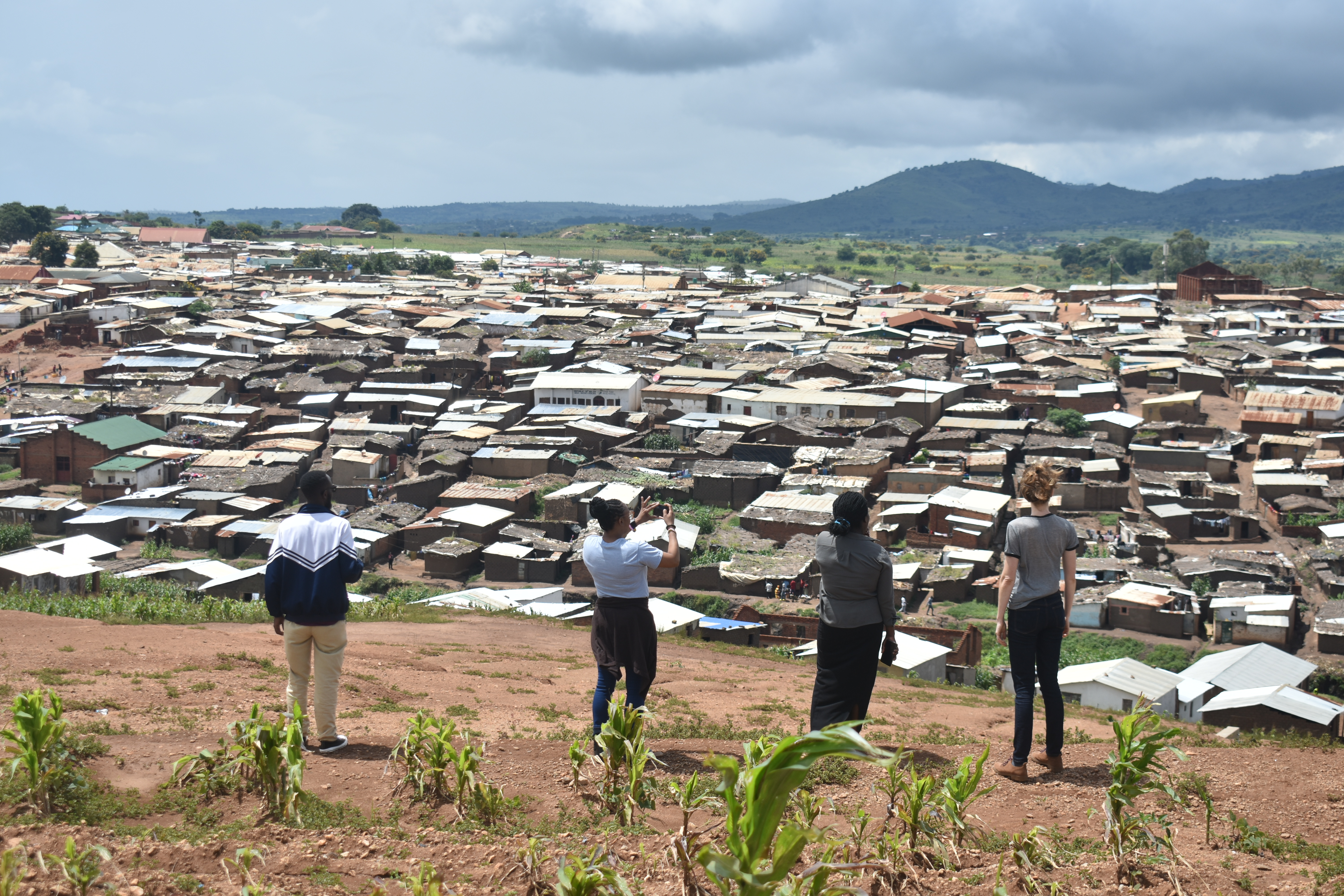
After nearly two years of weekly Zoom calls, Patricia Bass and Eboni Chism finally stood face-to-face with their students at the Kakuma Refugee Camp in Turkana County, Kenya. Kakuma has a population of over 300,000 people, making it the largest refugee camp in Africa. The Saint Louis University (SLU) staff had worked with these students to complete coursework through computer screens, but this was a completely different experience. “They were so excited to meet us in person,” says Chism, the program coordinator.
Meeting Students Where They Are
In March 2025, Bass, the program director, and Chism spent two weeks visiting their students at Kakuma in Kenya, as well as at a second camp, Dzaleka Refugee Camp, in the Dowa district in Malawi.
One of the defining factors of the program, says Bass, “is that SLU is extending exactly the same education, qualifications, diplomas, and courses to students who live in refugee camps for free. And that’s incredibly radical, and that’s incredibly revolutionary, and I’m really proud to be part of a university that actually lives its values.”
During their time at the camps, Bass and Chism were invited into students’ homes. During one such visit, a student’s sister-in-law slaughtered a chicken for them—a big financial sacrifice in the camp and a sign of hospitality in their culture. Such experiences left a lasting impression on both Bass and Chism, who recognized they were witnessing something extraordinary.
“We connected with students on a level that would probably never happen with domestic students,” Chism reflects. “To be invited to a student’s home and break bread with their family and meet their cousins and meet their grandmas . . . I don’t think that’s an experience that we would ever get on the domestic end.”
Chism was also struck by students’ innovative and entrepreneurial spirits. Some students have started their own businesses, including cell phone charging stations, and have created nonprofits to increase English literacy in their communities. One student at Dzaleka even started an IT training program inside the camp.
She says their students want to be recognized for their talents rather than their situation. “Our students don’t want people to look at them and pity them,” Chism shares. “They just want empathy.”
Joining a Global Network
The program emerged when the chief operating officer of Jesuit Worldwide Learning (JWL) visited SLU. JWL is a network of universities around the world that provide higher education to marginalized populations and is the largest provider of higher education at Kakuma and Dzaleka. During the visit, the officer proposed that SLU partner with JWL.
Students begin with foundational coursework at other JWL partner universities before transferring to complete their education at SLU, which is the only U.S. university working with JWL to provide a fully accredited bachelor’s degree program.
Through this program, students earn an SLU general studies degree with a double concentration in computer information science. Post-graduation, students’ primary livelihood opportunities are through remote work because it is often difficult to get work permits in their host countries, Bass explains.
The two organizations share responsibilities. JWL’s learning centers in each refugee camp serve as education and technology hubs for all their programs. The centers include multiple classrooms and computer labs and are staffed by JWL personnel who support student learning. Students also have access to laptops and Wi-Fi.
SLU provides the academic program, faculty, student support, and full scholarships. The program accepts approximately 50 students a year, with the majority coming from Kakuma. Students range from individuals who grew up in herding villages where no one in their family has gone to college to individuals who were dentists or osteopaths before they were forcibly displaced to the refugee camps.
All SLU instructors teaching in the program undergo training on student demographics, learning environments, and accessibility requirements, plus mandatory safeguarding training focused on working in the humanitarian field. The courses are modified to increase accessibility—all lecture videos are captioned, and readings are made available as PDFs rather than costly online textbooks.
Instructors hold weekly virtual office hours for at least one hour to answer student questions, while JWL learning facilitators hold one weekly in-person study session per course. SLU staff also use WhatsApp for course- and cohort-specific communication so students can receive announcements even when they can’t commute to the learning centers.
“The students are exceptionally engaged,” Bass says. They relish having the ability to attend office hours every week—a very different experience than she has with domestic students.
The program currently has a total of 54 students across three cohorts. Students in the first cohort have successfully completed their first year and are expected to graduate in 2027.
SLU-JWL does not solely provide a service to students in refugee camps. It enriches the university—students, faculty, stakeholders, and staff—by creating a truly global community of learners. —Program Director Patricia Bass
Signaling SLU’s ongoing and future support of the program, the provost has signed a five-year, renewable commitment to the program, which has also been integrated into the institution’s academic strategic plan, Living Our Institutional Vocations. The advancement office has also set up a donor portal to help support the program and is planning future fundraising opportunities. So far, the portal has accrued several thousand dollars’ worth of support.
Building Connections
The program creates connections that flow in both directions. SLU hosts webinars featuring international graduate students from countries like Nigeria and Ghana who share expertise in areas like cybersecurity and information systems with the refugee students. The program also runs “Mornings with SLU-JWL” workshops to introduce the students to campus resources, such as a session with a SLU librarian on database navigation. African professionals in St. Louis have also provided computer information systems workshops via Zoom and mentored individual students through WhatsApp.
The SLU campus community in Missouri also benefits from the partnership. The program sponsors film screenings of documentaries about East and Central African refugee camps, sparking conversations among students, faculty, and staff about refugee education and global displacement. During SLU’s international Atlas Week, the refugee students presented narrative poems about their experiences to the university community, sharing perspectives that broaden understanding for domestic students.
“SLU-JWL does not solely provide a service to students in refugee camps,” Bass explains. “It enriches the university—students, faculty, stakeholders, and staff—by creating a truly global community of learners.”
More 2025 Spotlight Winners
University of Arkansas Clinton School of Public Service