University of Illinois Urbana-Champaign
The University of Illinois Urbana-Champaign is a public land-grant research university founded in 1867, serving approximately 56,000 students. With nearly 30 percent of its students coming from other countries, the university has established itself as a globally connected institution. The College of Education’s IGlobal program connects undergraduate students with middle schoolers worldwide to tackle the United Nations Sustainable Development Goals through virtual collaboration.
When the COVID-19 pandemic hit in early 2020, the University of Illinois’s College of Education had international students stranded abroad and domestic students stuck in dorm rooms. How could the college keep them engaged when all education had gone virtual?
“We did a little experiment,” says Allison Witt, the director of international programs for the university’s College of Education. “We had our international students [who] were in India and China find a local school—all the schools were online around the world—to connect with our domestic undergraduate students.”
That “little experiment” has grown to become IGlobal, a virtual program that connects nearly 1,000 middle schoolers from over 20 countries with undergraduate students from three universities: the University of Illinois, University of Missouri, and the Chinese University of Hong Kong. What started as a pandemic workaround has become an innovative model for breaking down traditional barriers between educational systems and global communities.
The first session revealed something unexpected. While discussing sustainability and sharing glimpses of their daily lives—students showing their dogs, backyards, and whole families on screen—participants experienced the kind of cultural exchange typically reserved for international travel.
Witt says, “Sometimes when you’re traveling somewhere, children will start playing with you or talking to you. It’s always a really special moment because you get to see real people in a new place.”
The undergraduate students, many of whom were majoring in education, quickly embraced the experiment. Weekly meetings began focusing on how to turn these connections into meaningful educational experiences centered on the United Nations Sustainable Development Goals (SDGs).
Building a Global Classroom
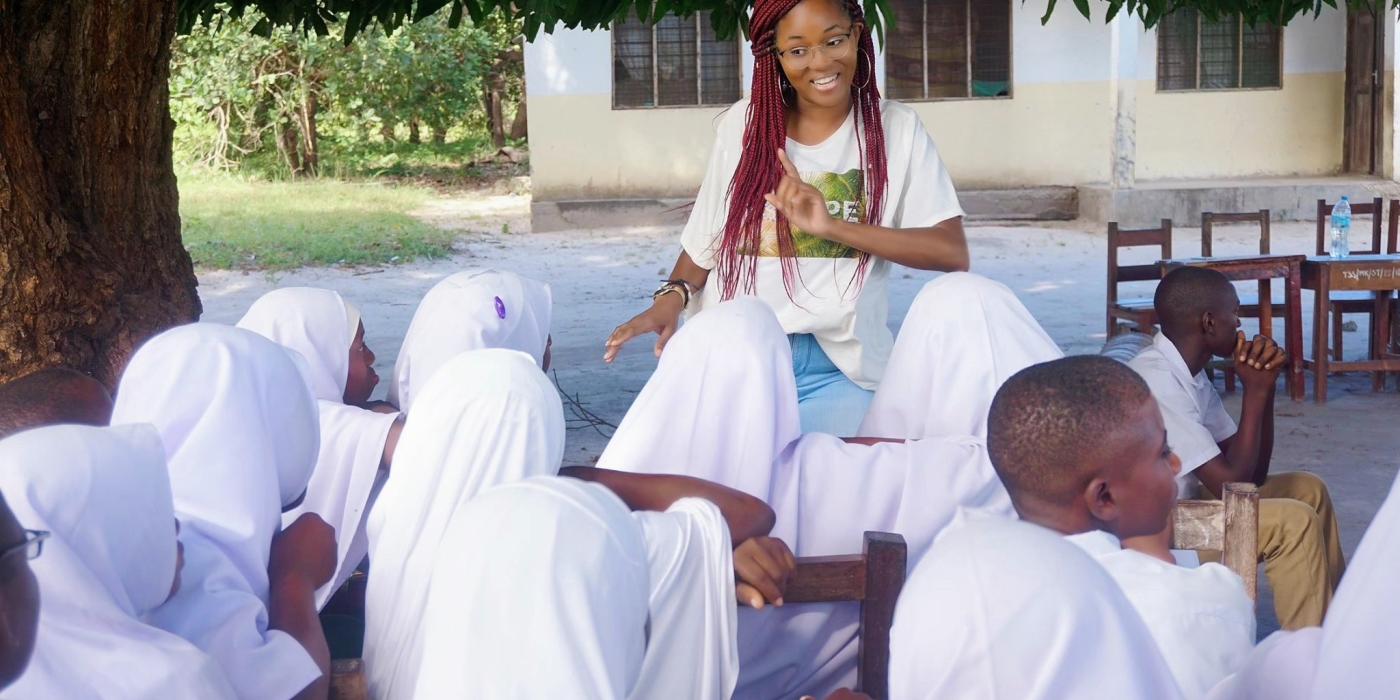
Today, IGlobal operates as a virtual extracurricular club for middle school students worldwide. Each week, five sessions accommodate different time zones, with undergraduate students from the three universities serving as club leaders.
What sets IGlobal apart from traditional university partnerships is its direct community engagement model. “It sort of breaks down that university wall,” Witt notes. “With Collaborative Online Intentional Learning projects or other virtual exchanges, it’s usually university-to-university. In this case, it’s university-to-community.”
The program connects directly with families, schools, librarians, and community centers. Current partnerships include communities in Angola, Argentina, Chile, China, India, Senegal, and Vietnam, as well as local schools in Illinois. “We don’t charge those schools to participate,” Witt emphasizes. “It’s not an economic arrangement. It’s based on education practice.”
This approach requires careful navigation of cultural sensitivities—IGlobal has brought middle school students together from countries that have experienced conflict, such as Armenia and Turkey, as well as Russia and Ukraine.
“I think it’s really important that those groups talk to each other,” Witt says. “But you have to [facilitate] it with a great deal of sensitivity and with informed participants to really help negotiate and navigate that.”
The setup is intentionally challenging for the undergraduate students, who are mostly education majors. “It’s the most challenging space they’ll ever teach [in],” Witt explains, “because we put them in with kids from five different countries. Middle school students are a very challenging group to keep engaged.”
The topics can be difficult, too—discussing sustainability with 10- and 11-year-olds means addressing challenging and sometimes intimidating subject matter together.
However, language barriers become learning opportunities. Rather than requiring English, the program embraces multilingual communication. “The chat [can have] 10, 15 languages going at once,” Witt describes.
International students studying at the University of Illinois also serve as cultural and language translators, helping facilitate communication while maintaining connections to their home countries.
Our goal is really to make sure that every one of our students has an opportunity to engage with global audiences. —Dean Chrystalla Mouza
The choice to focus on sustainability and global collaboration also presents unique challenges, particularly in the U.S. educational context. Attracting U.S. middle school teachers has proven more difficult in the current political landscape, as many are hesitant to engage with controversial topics such as climate change or global perspectives.
Supporting Campus Internationalization
IGlobal’s goals include contributing to campus internationalization. Preliminary research findings indicate that participating undergraduate students who serve as teachers increase their global citizenship, develop greater understanding of the SDGs, and enhance their intercultural communication skills. Among University of Illinois researchers, the program has generated multiple research articles and conference presentations, and it serves as the basis for two ongoing dissertations. The college’s graduate degree programs in international education administration leadership and global studies in education have used IGlobal as a laboratory to study ideas about global citizenship, global engagement, and international partnerships.
College of Education Dean Chrystalla Mouza says the program represents a broader institutional commitment: “Our goal is really to make sure that every one of our students has an opportunity to engage with global audiences.”
Additionally, IGlobal aligns with the university’s Vision 2030 global strategy, which emphasizes building relationships in Africa, Latin America, and parts of Asia where the institution has historically had less engagement. The program has also helped strengthen internationalization at the Urbana-Champaign campus. IGlobal’s partnership with the Language Institute of IECA in Huambo, Angola, exemplifies this approach. The connection through the program led to study abroad opportunities, with several University of Illinois students and staff traveling to Angola.
Another unexpected outcome of IGlobal has been its ability to connect disparate units across the University of Illinois’s large, decentralized campus. The program now involves multiple partnerships between the College of Education and the Gies College of Business, the Center for Innovation in Teaching & Learning, the Siebel Center for Design, International Student and Scholar Services, and the Illinois Global Institute.
The program’s first cohort of undergraduate participants have graduated and begun their teaching careers. Some of these new teachers are implementing virtual exchanges in their own classrooms, carrying forward the program’s mission of global dialogue.
“They all tell me how they miss being in IGlobal and how much they enjoyed all that creativity and creative space,” Witt shares. “By providing that opportunity, [they learned] to look for creativity and to make room for it in their classroom to whatever extent they can.”
In IGlobal, the College of Education at University of Illinois Urbana-Champaign has created a model program for how higher education institutions can foster meaningful global dialogue while preparing the next generation to understand and address the world’s most pressing challenges.
More 2025 Spotlight Award Winners
Saint Louis University