
2010 Comprehensive Hobart and William Smith Colleges
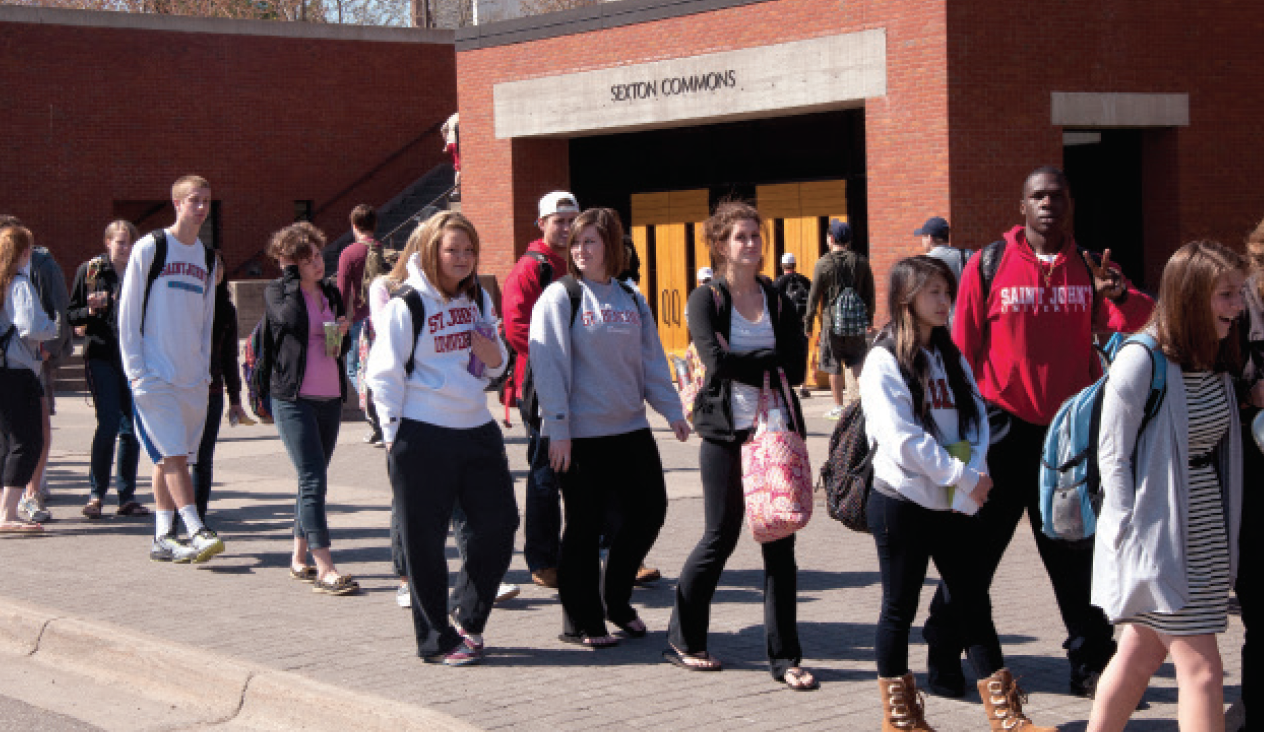
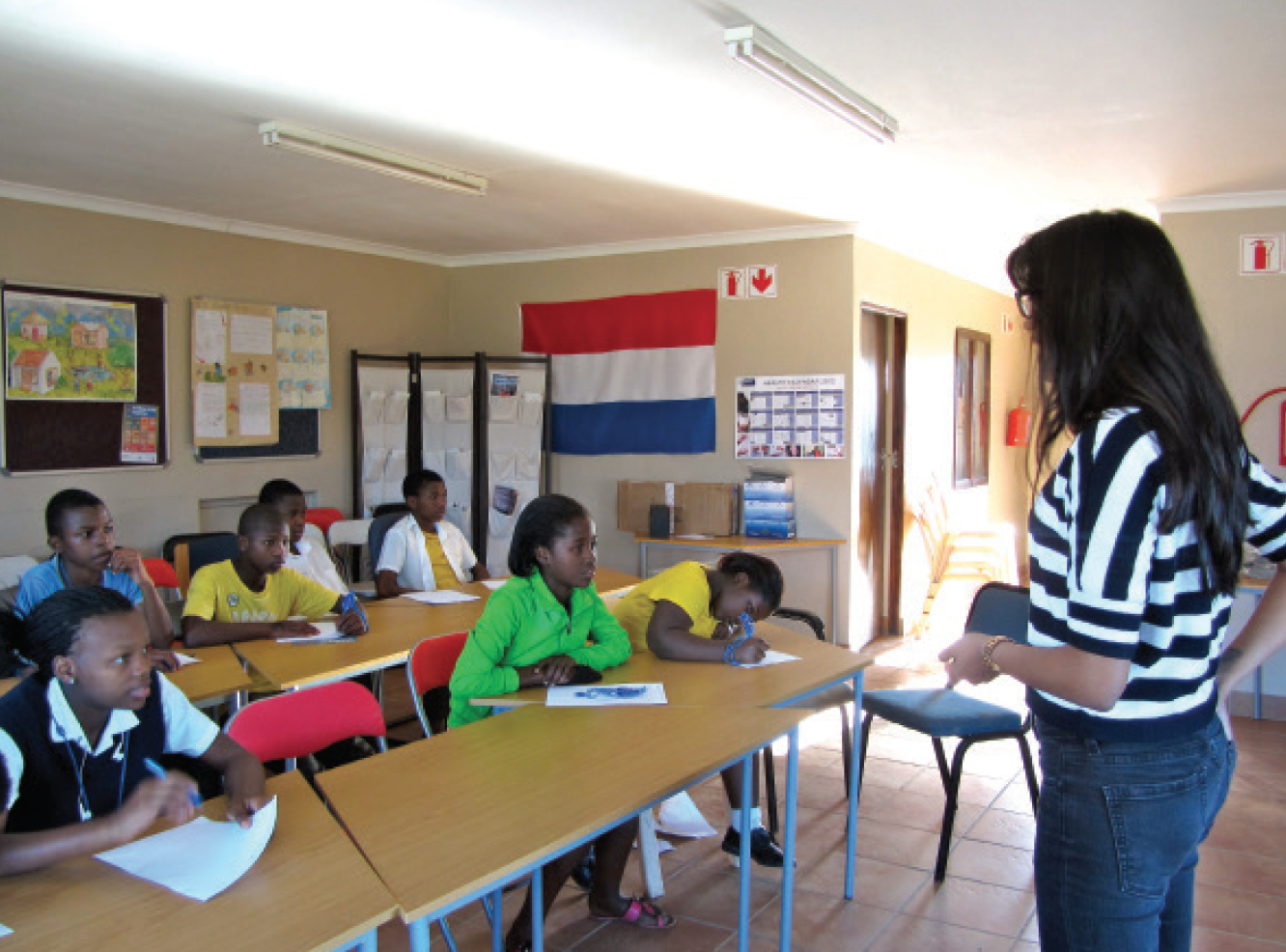
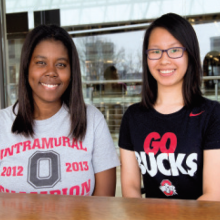
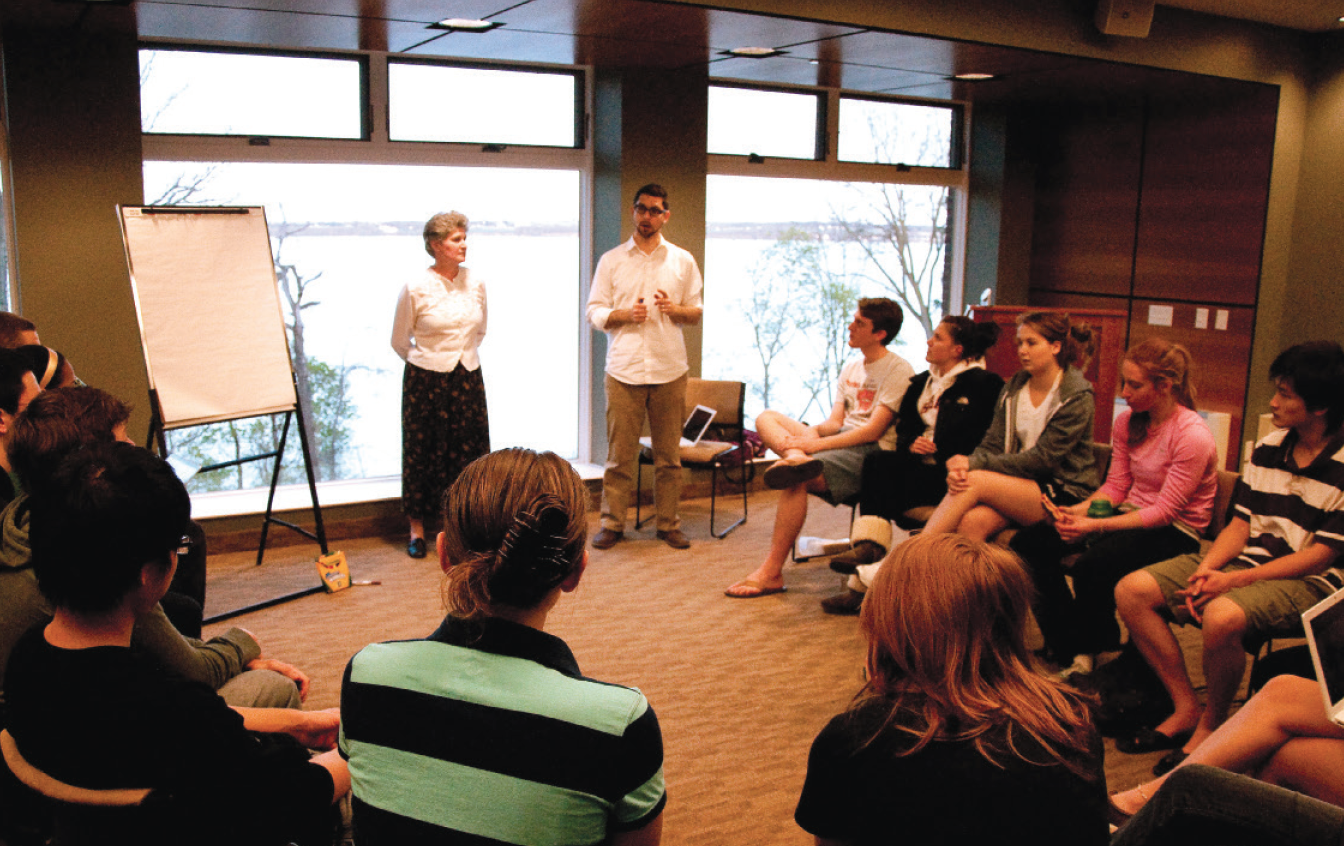
Dozens of Hobart and William Smith Colleges (HWS) students occupied every seat and nearly every square inch of floor. Others crowded the doorway and spilled into the hall. It was late on a sunny spring afternoon—no time to be indoors—but the colleges’ annual Global Visions celebration of student photography and research projects exerted a powerful attraction. The promise of sushi afterward helped, as did the door prize: a $500 digital camera for the best photograph of the year (you had to be present to win). Still, the turnout testified to how well the colleges’ Center for Global Education does what many colleges aspire to: weaving education abroad into campus life and crafting thoughtful ways for students to relive and rethink experiences upon return home.
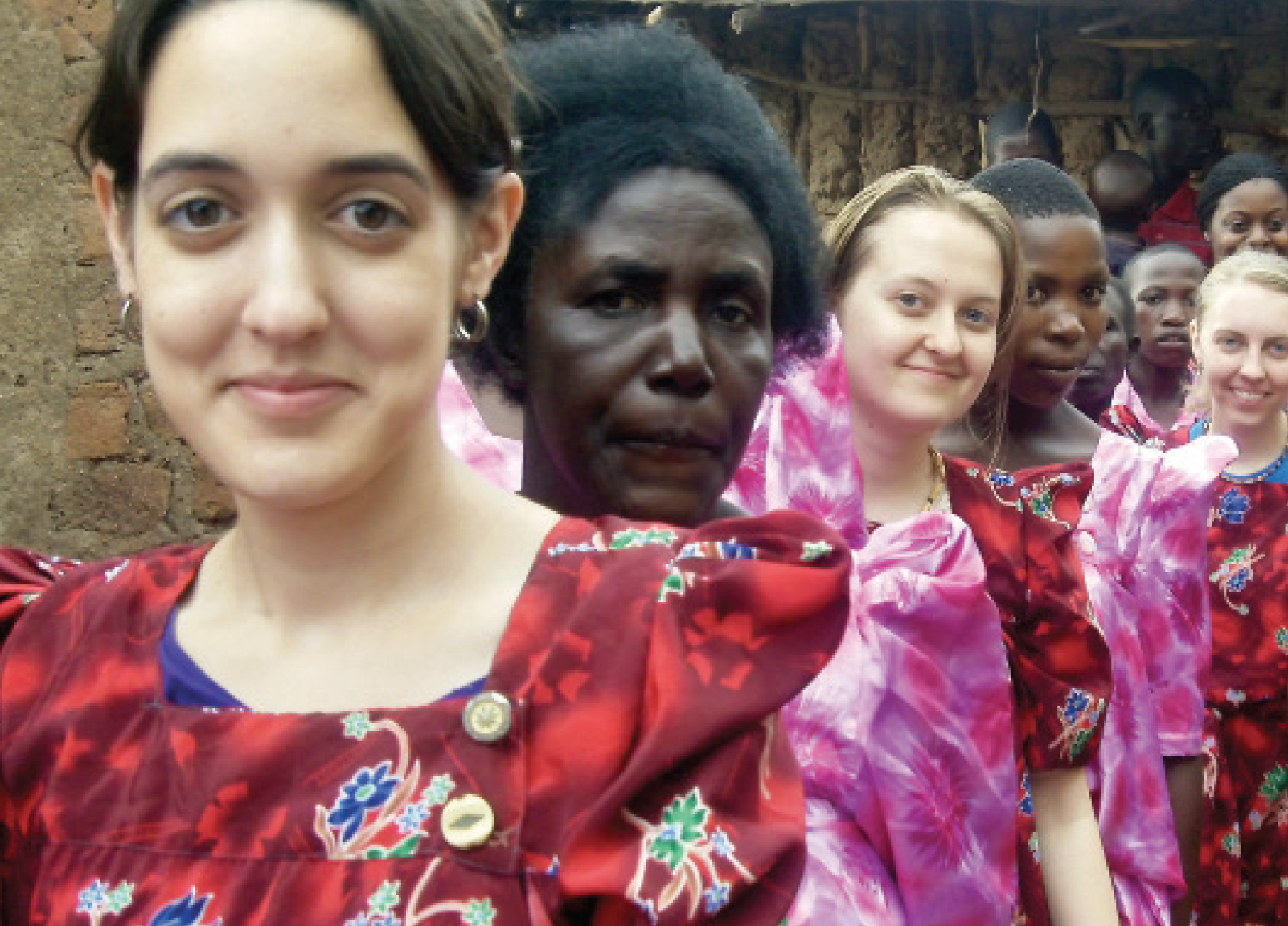
Hobart and William Smith Colleges offer photography and journal writing workshops and give small grants to encourage students to delve into the life of the communities where they live and study. On return, their stories and photographs may be published in The Aleph: A Journal of Global Perspectives, a full-color publication produced with Union College, or Abroad View magazine, which several colleges sponsor. Photography serves as a “gateway into the culture” of the countries where HWS students study, said Doug Reilly, programming coordinator for the Center for Global Education. The Center for Global Education also stages an open mic night called “the Away Café” in the campus pub for students to share stories from overseas.
Founded as separate colleges for men (Hobart) and women (William Smith) in 1822 and 1908 respectively, Hobart and William Smith are now closely coordinated with the same classes, faculty, and president but retain separate traditions, diplomas, deans, and athletic nicknames (Statesmen and Herons). From its 195-acre campus overlooking Seneca Lake in Geneva, N.Y., HWS send hundreds of students annually on more than 40 semester-long programs in 32 countries, nearly two-thirds outside Western Europe.
“We made a commitment that no matter what happened to the economy, we were going to hold steady the percentage of our students who studied abroad.”
Finding a Leader at the Peace Corps
The selection of then-Peace Corps Director Mark Gearan as president in 1999 underscored the emphasis at HWS on internationalization. Gearan directed the Peace Corps during President Bill Clinton’s second term after serving as a senior White House official during the first. Gearan, an attorney and high school principal’s son, sent the first Peace Corps volunteers to South Africa, Jordan, Bangladesh, and Mozambique and created the Crisis Corps, which deploys returned volunteers for short stints to places dealing with disasters.
Gearan, a graduate of Harvard College and Georgetown Law School, said he was drawn by the colleges’ approach to global education. “When you have so many faculty members who have lived and led programs around the world, it really internationalizes the campus.”
The percentage of students’ studying abroad has risen to roughly 60 percent. That is “a great statistic and point of pride,” said Gearan, but he is also concerned about internationalizing the education of those who “are parked here in zip code 14456.”
Gearan has concerns, too, that education abroad not be just “a one-off” experience for the students who do go overseas.
Safeguarding Education Abroad
Gearan and Provost Teresa Amott protected the education abroad program from budget cuts that most academic departments had to absorb last spring. “We made a commitment that no matter what happened to the economy, we were going to hold steady the percentage of our students who studied abroad,” said Amott.
Education abroad, said Gearan, “is mission central, in our judgment, if you really want to prepare well-educated, twenty-first century citizens.” Gearan does not denigrate study in London, Paris, Rome, and the other capitals of Europe, but he emphasizes the added value of sending students to Vietnam, Senegal, South Africa, Peru, China, Brazil, and other “very twenty-first century places.”
A strategic plan drafted upon Gearan’s arrival led to the creation of a Center for Global schools’ progreEducation. The ss down this path was accelerated by a generous grant from the Andrew W. Mellon Foundation that underwrote a formal Partnership for Global Education with Union College in Schenectady, New York. Both institutions ramped up predeparture and reentry programming. Political scientist Thomas D’Agostino has led the partnership and directed the HWS Center for Global Education since it opened. He is now associate dean for global education.
Unfinished Business: Attracting International Students
An unfinished objective at HWS is attracting more international students, Gearan said. HWS enrolled 77 international students in 2009–10, or 4 percent. A first step has been to resuscitate exchange agreements that had gathered dust. Amy Teel, the Center for Global Education’s program manager, said, “We went from no exchange students in 2005 to about 35 a year coming in now.”
Felix Spira, 22, a German exchange student from Maastricht University in the Netherlands, came for the spring 2010 semester. “My home university has seven different partner universities in the United States. I chose Hobart and William Smith because it’s a small college where you have a high chance to get closer interactions with your teachers. I’m on a first-name basis with two of my professors,” said Spira.
Languages Encouraged but Not Required
HWS offer majors in Spanish, French, Chinese, Japanese, and the classics; German is offered only as a minor. Eric Klaus, the sole tenure-track faculty member in German, recently scouted locations in Leipzig and Berlin for the Center for Global Education where science majors could study in English and “get a taste of German culture.” With such a small program, Klaus said, “you have to make yourself indispensable and recognizable on campus.”
There is no language requirement at HWS. “The culture of this institution is anti-requirement; we’re not an institution that requires students to do things. But we have goals,” said Amott, the provost. Students must demonstrate “a critical knowledge of the multiplicity of world cultures.” They can do this in a myriad of ways, including courses in language, history, literature, religion, economics, and the arts. Still, Amott, an economist born in Bolivia to a U.S. Foreign Service officer and Brazilian mother, added, “I wish we had more students’ achieving competency in a second language.” The Self-Instructional Language Program allows students to study Arabic, Vietnamese, and Hindi independently, with biweekly tutorials from a native speaker. Sometimes Polish, Korean, and Portuguese are supported in this way as well.
Patrick McGuire, a professor of economics who has led semester programs in London, Galway, Ireland, and Central Europe (where the students visit Germany, Romania, and Hungary), agreed that learning another language is important, but argued that it should not be a deterrent to students’ gaining rich experiences in courses taught overseas in English.
Fellow Professor of Economics Scott McKinney regularly leads students to Ecuador and Peru to study development economics and pre-Columbian history and culture. McKinney was born and raised in Lima, Peru, to American parents who worked in the airline and shipping business. McKinney speaks Spanish fluently—he even does home-stays himself with Ecuadorian families when he takes students to Quito—but he, too, believes there should be no language bar to education abroad. For HWS students who may pursue careers in banking or finance, it is paramount to see poverty firsthand, he said. “What we’ve really emphasized here is that everybody should go. You shouldn’t have to study three years of Spanish to go abroad to a Spanishspeaking country.”
Returns to India and Turkey
Lisa Philippone, 20, a junior anthropology major, spent a semester in India and returned there in summer 2010 to live on an organic farm in the desert state of Rajastan, teach, and work on an honors project examining how Hindus reconcile their beliefs in the purifying aspects of water in places where water is scarce or polluted. She won one of three $15,000 summer travel awards supported by alumnus Charles Salisbury, who also helped underwrite the renovation of historic Trinity Hall, where the Center for Global Education is housed.
Philippone said that her choosing to study in India was “a big deal” to neighbors and friends back home in Rochester, New York. “People just talked about it. They see India as a Third World country and wanted to know why I’d go there, why I’m studying India’s culture, and where that’s going to take me,” said the budding anthropologist. It reaffirmed her judgment that HWS was the right place for her. “It may sound corny, but it allows me to study what I love. I’m going to leave here with a sense of clarity on what I want for my future.”
Alexandra Hallowell, 22, a senior international relations and French major from Duxbury, Massachusetts, was studying at Maastricht University in the Netherlands when she won two HWS grants totaling $1,000 to spend a fortnight in Istanbul, Turkey, interviewing Islamic women about politics, religion, and culture. She self-published a small magazine about the project that helped her win a Fulbright scholarship to return to Turkey as an English teaching assistant and to interview more women about how they balance religious and cultural norms in a secular society.
“It may sound corny, but it allows me to study what I love. I’m going to leave here with a sense of clarity on what I want for my future.”
Emphasizing Global Citizenship for Town and Gown
HWS help to internationalize the community of Geneva as well. Last winter the colleges mounted a community-wide campaign to get the 13,000 residents of Geneva as well as faculty and students to read Three Cups of Tea, the best-selling account of mountain climber Greg Mortenson’s ongoing crusade to build schools for girls across Pakistan and Afghanistan.
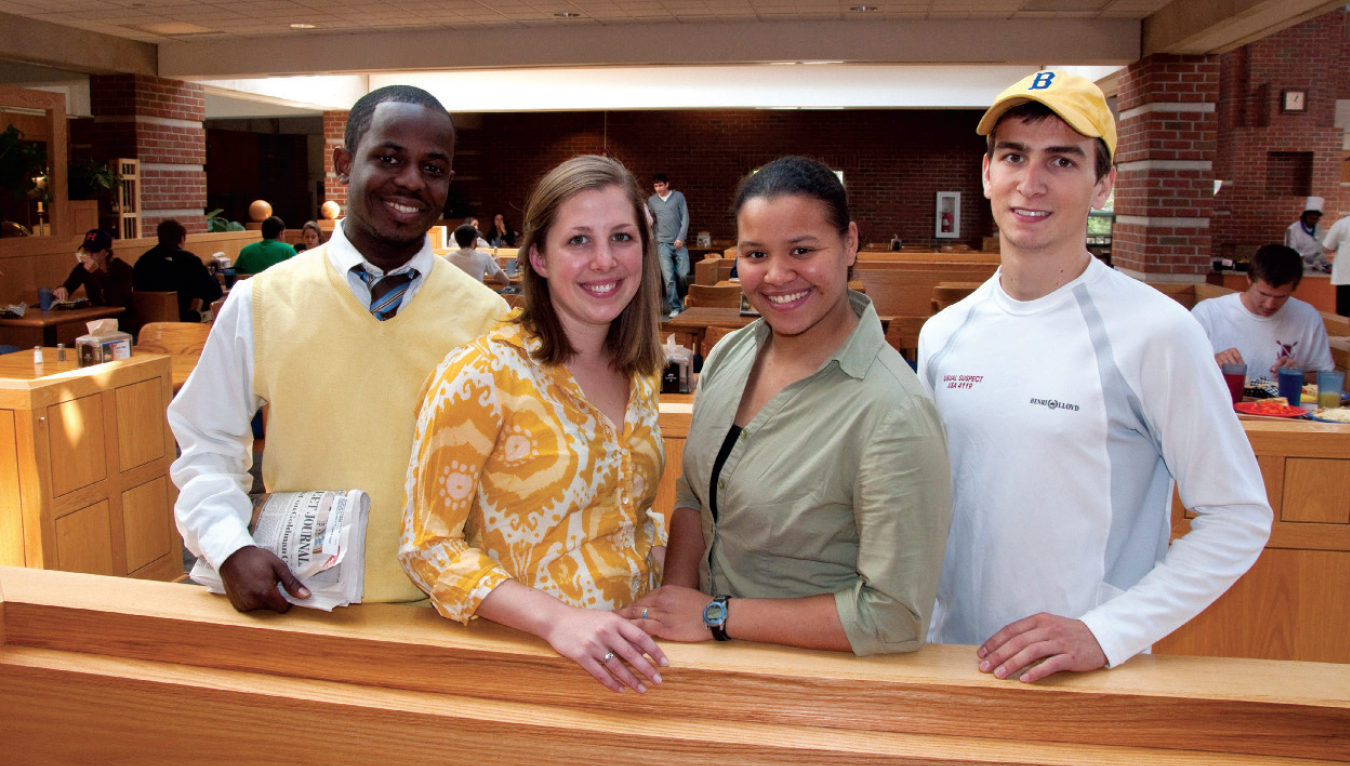
Posters went up around town showing high school coaches, Gearan, and other civic leaders engrossed in Three Cups of Tea, and school children raised thousands of dollars for Mortenson’s “Pennies for Peace” campaign to build more schools. Students, faculty, and townspeople filled the local opera house when Mortenson’s coauthor, journalist David Oliver Relin, came to speak. The Center for Global Education’s Amy Teel and Doug Reilly also use Three Cups of Tea in a workshop they teach on the global aspects of leadership.
The Vietnam Connection
HWS’ education abroad program in Hanoi, Vietnam, started 15 years ago when Marie-France Etienne, a professor of French who was born in colonial Vietnam, led students there. The program gained a champion in Professor of Sociology Jack Dash Harris, who was first exposed to Vietnam while teaching in the Semester-at-Sea program. He is now an authority on changing roles of men and women in Vietnamese society. HWS and Union College began sending students to Hanoi for a full semester in fall 2000.
Harris chairs the faculty Committee on Global Education, which provides strong oversight for the education abroad programs. He and D’Agostino co-directed a federally funded project that produced study guides to help prepare students for their immersion in Vietnam. The In Focus: Vietnam project enlisted the expertise of HWS and Union faculty and students as well as outside experts to make short films on Vietnamese history, culture, economy, and contemporary life, each accompanied by a list of suggested readings.
Science faculty, too, weave global education into their curricula. Paleontologist Nan Crystal Arens, a Harvard-educated associate professor of geoscience, is spending the fall 2010 semester with HWS students in Queensland, Australia. It is the third time she has led that program. “We can talk about tectonic plates until we’re blue in the face, but it’s really a different experience to go and stand in the fault zone or in the volcano,” she said. “It brings the material alive in ways that we can’t do in a classroom, no matter how good we are as teachers.”