Internationalization

Advocacy for Comprehensive Internationalization

International Partnerships

Internationalization at Home (Curricular and Cocurricular)

Mitigating Organizational Risk

Sustaining Internationalization

2015 Comprehensive North Central College

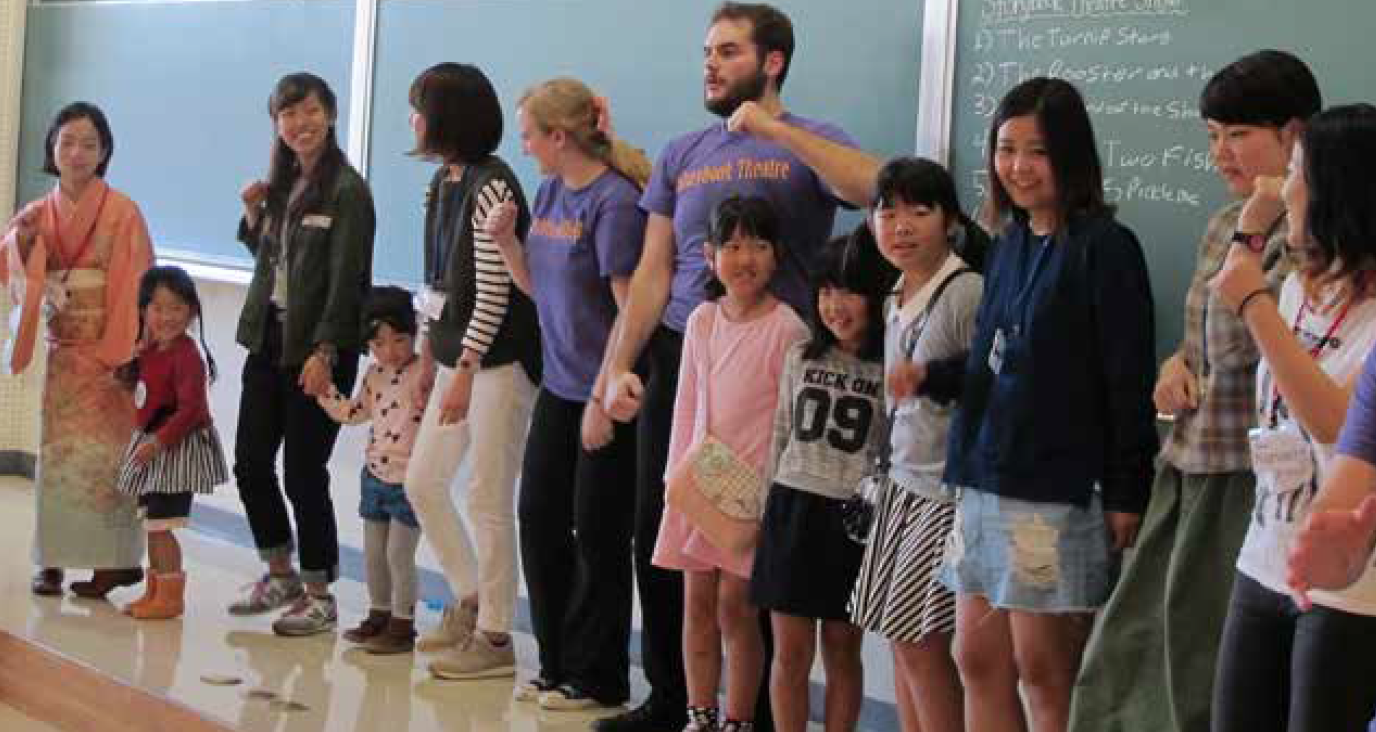
The message is impossible to miss. One day each fall at North Central College dozens of senior administrators, faculty, and students don maroon T-shirts emblazoned with a three-word imperative: Please go away!
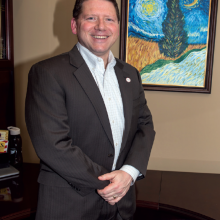
ITC 2015 North Central President
President Troy Hammond says the college ‘punches above its weight’ on internationalization.

Students are heeding the study abroad pitch, not just because of the human billboards, but because the college has hired more advisers, made study overseas possible at no additional cost beyond airfare, and nearly tripled the number of semester offerings. North Central has come a long way since opening a small Office of International Programs two decades ago at a time when it enrolled fewer than 30 international students and sent only 23 abroad. Now 10 percent of the 3,000 students study in other countries each year. Recruiting efforts and copious financial aid now bring nearly 100 international students to the United Methodist–affiliated college in the suburbs of Chicago each year. At an institution where 90 percent of students are from Illinois, North  Central is progressing toward a goal of a 5 percent international student population.

The college was founded in 1861 by leaders of what is now the United Methodist Church to serve the families of German immigrants. The 65-acre campus sits in downtown Naperville, an upscale suburb 30 minutes from Chicago’s bustling Loop and lakefront. It changed its name from NorthWestern College in the 1920s to avoid confusion with much larger Northwestern  University. Early graduates served as missionaries in Japan and China. “Service and civic engagement are an important part of the culture of this campus,” said President Troy Hammond, who has a PhD in atomic physics from the Massachusetts Institute of Technology, but came to academe from the business world. 

Nudging a Campus to Internationalize

Hammond’s long-serving predecessor, Harold Wilde, set the regional college on a course to internationalize in 1994 when he tapped English professor Jack Shindler to direct the fledgling international office, a job he still holds today. Shindler wrote a dissertation on Shakespeare’s The Winter’s Tale, but turned early in his career to directing the English as a second language program at Texas Southern University before joining the North Central faculty in 1981. When the international office started, it was just Shindler and a part-time secretary but he now runs a heavily trafficked, six-person shop with its own English Language Institute. Framed above the door to Shindler’s den-like office is a poster inspired by a salute from Wilde calling Shindler the campus “nudge” on all things international. “I nudged not just faculty but students out of the nest,” said Shindler, who as a Williams College student once convinced a chapel board to convert an empty fraternity house into a coffee house and gathering space. “I feel like we’re still doing that. This is a kind of coffee house in the best sense of the word where people come, share talents, talk to each other, network, and make this place more international.”

“We couldn’t have gotten where we are without him,” said Devadoss Pandian, the now retired vice president and dean of the faculty. Norval Bard, a professor of French, said Shindler “has a disarming way about him. He rarely says no. When you come to him with a new idea, he might say, ‘We’ll look into it,’ but he always leaves the door open to explore new ideas.” Francine Navakas, a humanities professor and associate dean who directs interdisciplinary studies, credited Shindler’s “magical planning” with helping land nearly $1 million in Title VI and foundation grants to build East Asian and Middle East/North African (MENA) studies. The college’s structure, with four academic divisions but no separate schools dividing liberal arts from business and science, helped, too, said Navakas. “We don’t have the big walls and barriers that some institutions do.”

Broadening Student and Faculty Horizons

North Central has marshaled resources to give students and faculty ample opportunities to learn and do research in other countries. The college provided grants to 33 faculty over the past five years for projects overseas. The  Office of International Programs arranges lectures, film screenings, and other events on campus focusing on global themes and works closely with faculty to incorporate these topics into courses. It once switched topics yearly, but now spends three years drilling deeper into a single global concern. The current cycle examines globalization and its ramifications. Islam, environmental change, and human rights have each been the focus in the past. The college provides stipends for faculty to join a summer reading and discussion group and sends them to a summer institute at the University of  Chicago’s Center for International Studies.
Image
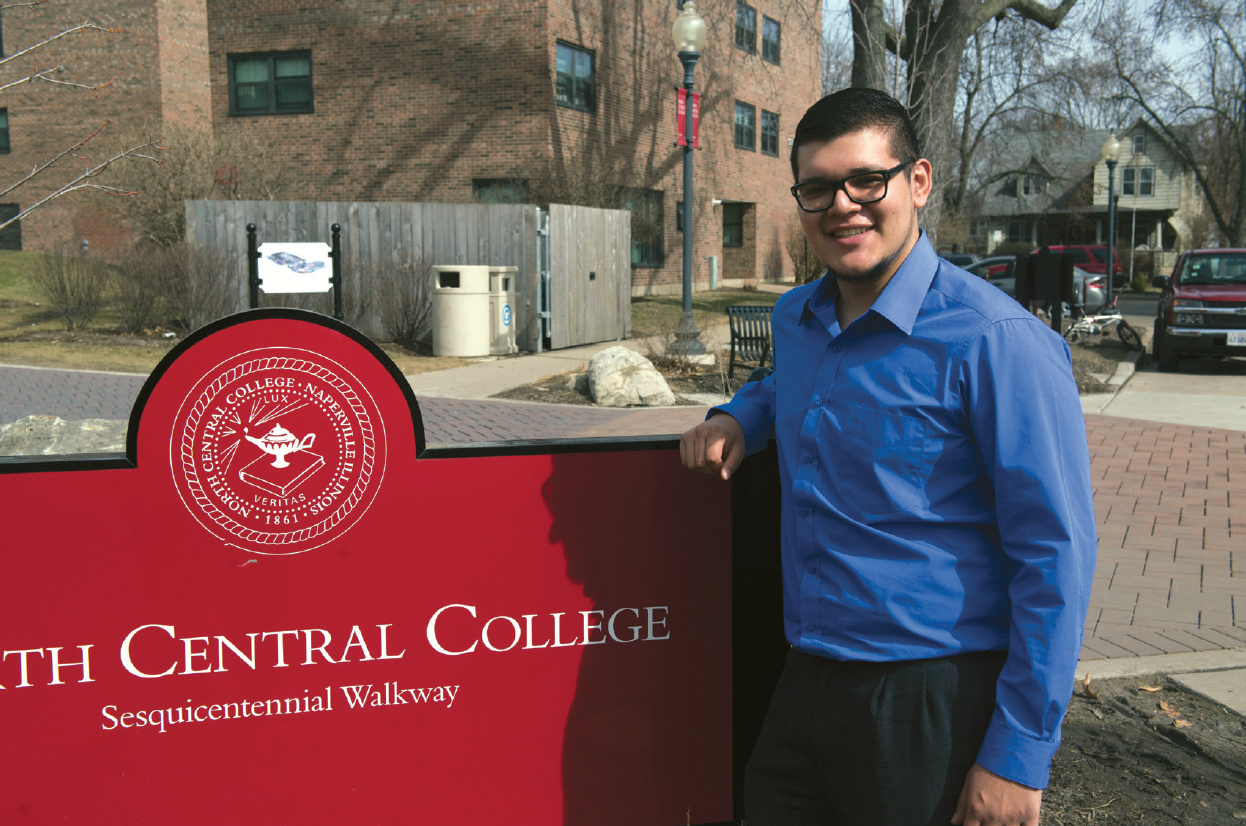
ITC 2015 North Central Research Grant
Junior Miguel Purgimon Colell used his $4,000 Richter research grant to weigh the impact of the World Cup on the lives of ordinary Brazilians.

Perry Hamalis, professor of religious studies and director of the College Scholars Honors Program, has taken part in nine of those seminars. His honors students are required to study abroad. “We’ve just redone the curriculum and added a new history of ideas minor,” said Hamalis. “The new curriculum now is truly global, pulling from the Indian subcontinent, Africa, Asia, South America, as well as European and North American sources. Previously, it should have been called history of Western ideas.”

The college distributes $40,000 to $50,000 each year in Richter Grants for undergraduate research anywhere in the world. These awards up to $5,000 date back to 1977 and for many years were funded by the Paul K. and Elizabeth Cook Richter Trusts, which provided similar opportunities at other colleges. Recently the college has supported the grants with its own funds. Miguel Purgimon Colell, a junior from El Salvador in the honors program, used his award to fly to Rio de Janeiro during the World Cup in 2014 to study the economic impact of the games on the lives of ordinary Brazilians. His economics professor, a Brazilian, put him in touch with academics and a government official in Rio, and he interviewed residents from all walks of life. He also managed to snag a ticket to the Brazil-Colombia match. “North Central has allowed me to do things I never would have imagined I could do,” said Colell, who is president of the International Club and is studying to become an actuary.

International Students’ Outsize Impact
ITC 2015 North Central Student
North Central fit the bill for Uyen Lam, who was recruited at her school in Ho Chi Minh City, Vietnam.

North Central had just 51 international students when Jesús Velasco was hired as international student adviser in 2012. Two autumns later there were 94 from 40 countries. “Our exchanges from partner universities really boomed,” he said. But the college also stepped up recruiting to enroll more four-year students. It once took “an armchair approach,” said Marty Sauer, vice president for enrollment management. “We didn’t do much outreach or travel. It was simply a matter of accommodating international students who found us.” Now Megan Otermat, an assistant admissions director, recruits overseas and devotes full time to working with international applicants and advising those who enroll.

Otermat found Uyen Lam, 20, at a college fair at an international school in Ho Chi Minh City, Vietnam. Lam had spent a year at high schools in Florida and “had a long list of criteria that I wanted for college. North Central fit about 80 of them,” said the finance major. A $20,000-a-year scholarship clinched the deal.

Rosa Moraa received a full scholarship when she transferred from a sister school, United States International University, in Nairobi, Kenya. Now, with a bachelor’s in international business in hand, she is completing a master’s in leadership studies and overseeing student activities as a graduate assistant. Moraa, raised on a farm, said she was once “very introverted” but discovered “it was very easy to make friends. I’d recommend this school to anyone, even those who are scared to come, as I was.”

Exchange student Youssef Balti was among 80 young Tunisians chosen by the U.S. State Department for scholarships and sent to institutions across the United States for a year. “I’m here to learn about democracy and the American culture and take the best from it and bring it back to Tunisia,” said the 20-year-old finance student. A Thanksgiving feast with a friendship family “was a huge experience for me.”

A new pipeline opened with the launch of the English Language Institute in 2014. Applicants are conditionally admitted to the college and already four of the first 15 students have gone on to matriculate. “It will take a little time to measure how many stay and how many go, but the early signs have been very positive,” said Katherine Pope, the director.

Making Study Abroad Affordable

North Central has put study abroad within the reach of students by charging a flat $3,500 fee on top of tuition regardless of whether a program costs two to three times that much, as some do.

When Kimberly Larsson was hired in 2003 as the sole study abroad adviser (she also advised international students), North Central had only nine exchanges and a half-dozen direct enrollment programs. Now it has 17 and 31. It operates programs of its own—one in Costa Rica, one in England, and a third in which students study in both China and Japan. “Study abroad at North Central is very personal. It’s not an assembly line. When we started, we didn’t have a study abroad fair or even a brochure,” said Larsson, who herself studied and worked in Sweden and taught English in Japan. North Central has three 10-week terms with some classes in December. If students choose a fall program abroad that extends into December, they can earn 15 credits without paying an overload fee. Financial aid also carries over. “It can be a fantastic deal,” said Larsson.

The faculty-led December courses now are more “professionalized,” said William Muck, a political science professor who coordinates global studies. “It used to be the faculty would pitch an idea and say, ‘I’d like to take a group of students here.’ It was very loose in terms of organization. Now the faculty must propose courses a year in advance, submit syllabi, and go through a rigorous academic review process.” For long-term study abroad programs, students must take a two-credit seminar that meets weekly in the term before departure, write an essay while abroad, and upon return participate in reentry activities and write a capstone essay. 

Pushing Students Out of Comfort Zones

Kimberly Sluis, vice president for student affairs and dean of students, who coteaches a preparatory class, credits Shindler and Larsson with “busting open the possibilities” for study abroad. Sluis has twice taken students to Ghana, where she was once a Peace Corps volunteer.

International business professor Robert Moussetis has led hundreds of students on classes and cultural trips to more than a dozen countries, including Mongolia. “I tell them, ‘That will be the best and most wonderful learning experience you will ever have. You will survive. You will figure it out.’”

Three North Central students were in Nairobi, Kenya, when the Westgate shopping mall massacre occurred in September 2013. Two left, but Ben Redmond resisted entreaties to come home, and kept studying at United States International University and volunteering in an AIDS clinic. A biochemistry major who aspires to work for Médecins Sans Frontières, he credits North Central with “sparking my interests by pushing international experiences so much.”
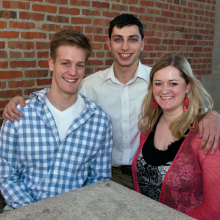
ITC 2015 North Central Student Group
Students Ben Redmond, Aaron Laskey, and Heidi Nelson

Three seniors won Fulbright scholarships in 2014 and two more in 2015, including Heidi Nelson, 21, an education major who’ll teach English in Argentina. She studied in Costa Rica and Peru. “They’ll do anything to support us with our international goals,” she said. “When I had questions on my applications and on my Fulbright, I knew I could go in there any time and they’d stop what they were doing. It’s always an open door.” 

Marie Butnariu had a remarkably global upbringing in Tivoli, Italy, and Chicago. She got U.S. citizenship by virtue of being born on a New York–bound flight from Italy. She spent her first December term studying in France and the second in Israel and Palestine, then took a full semester at the University of Glasgow. The 20-year-old sees international work in her future. “You don’t just get an education here, you build character. It’s special.”

North Central’s enrollment has risen 20 percent over a decade. It opened a $30 million concert hall in 2008 and broke ground in May on a $60 million science center. When Hammond became president in 2013, he recalled a bit of wisdom he heard from his days as a business consultant in New Zealand: for that small, island nation to prosper in the global economy, it had to “punch above its weight.” That strategy is evident in North Central College’s international programs.

Read More

2015 Comprehensive Mount Holyoke College

When Mary Lyon opened the Mount Holyoke Female Seminary in western Massachusetts in 1837, the United States had 120 colleges for men and none for women. FDR’s path-breaking labor secretary Frances Perkins, obstetrical anesthesiologist Virginia Apgar, and playwright Wendy Wasserstein passed through its Gothic halls and strolled the campus landscaped by the son of Frederick Law Olmsted. Even 16-year-old Emily Dickinson, the poet and “Belle” of nearby Amherst, attended classes for a year.

Following in their footsteps today are more than 600 international students, over a quarter of the student body. “You walk through a mini-U.N. on campus,” said Eva Paus, director of the McCulloch Center for Global Initiatives. President Lynn Pasquerella calls it “a microcosm of the world.” It is the second largest concentration of international students at any four-year college. International and domestic students alike are drawn to the country’s oldest college for women with a longstanding commitment to admit young women of talent with little regard to their ability to pay.

Mount Holyoke is not a newcomer to internationalization. The first international student, a Canadian, arrived two years after Lyon opened the doors to a college offering advanced instruction in “science, literature, and refinement” for the good of “our country and for the world.” Mary Woolley, a storied successor and the only female U.S. delegate to a League of Nations disarmament conference in 1932, wrote, “Internationalism has been woven into the very warp and woof of this institution from the beginning.” Today’s mission statement speaks of providing “an intellectually adventurous education in the liberal arts and sciences” to prepare students “for lives of thoughtful, effective, and purposeful engagement in the world.”

Steering a Distinctly International Course

But it is in this century that Mount Holyoke has steered its distinctly international course. A 2003 strategic plan laid the groundwork for the McCulloch Center. By 2007 admiring accreditors were saying that “with little fanfare” Mount Holyoke had created “a veritable world college” in the Connecticut River Valley. While faculty and administrators across the campus share that responsibility, Paus and her five-person staff make it happen. The McCulloch Center has a $12 million endowment of its own and, all told, the college has raised $30 million in endowed funds supporting international studies, teaching, research, and other activities, with more than half generating scholarships for international students.

Image
ITC 2015 Mount Holyoke Sculpture
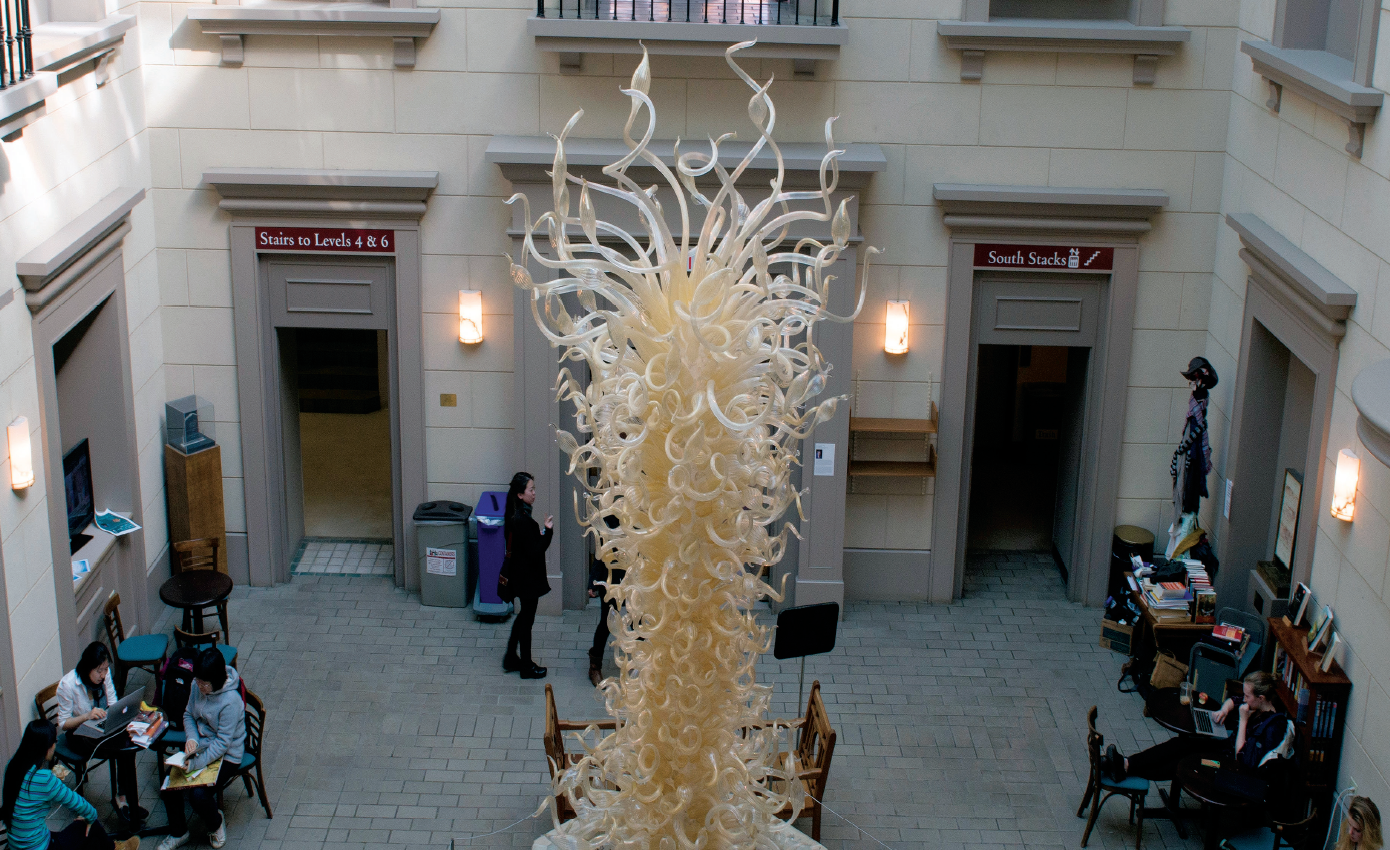
A 12-foot blown-glass sculpture, “Clear and Gold Tower,” in the library atrium.

The McCulloch Center runs study abroad, develops curated international internships, and provides international student services. It also serves as the fulcrum for activities such as bringing a global scholar to campus each fall (former Norwegian President Gro Harlem Brundtland and Liberia’s Leymah Gbowee, the 2011 Nobel Peace Laureate and parent of a Mount Holyoke student, among them) and organizing biennial Global Challenges Conferences. Paus, a development economist, said the center’s overriding purpose is “to bring greater cohesion and visibility to global learning and to deepen it through new cross-disciplinary initiatives.”

Prizing the Contributions of International Students

Faculty, a quarter of them foreign-born, relish the diversity in their classrooms. When Jon Western, a professor of international relations, needed assistants for a foundation-funded project tracking civilian deaths in Syria, three of the eight students he hired spoke Arabic. “If I talk in my human rights class about Islam, I’ll have Sunni and Shia students who can elaborate on distinctions,” he said.

Politics professor and alumna Kavita Khory, originally from Karachi, Pakistan, said international students often “are much more politically engaged and aware” than U.S. classmates, but the latter “love that we present ourselves as an international college in so many ways.”

ITC 2015 Mount Holyoke Senior Student
Multilingual senior Schuyler Cowan, an Italian and politics major, won a Fulbright to teach English in Germany.

“Mount Holyoke is a fantastic place to teach the history of global inequality,” said Holly Hanson, a Uganda expert who as a teen volunteered in Africa for a year on her mother’s advice to “do something useful for the human race” before starting college. “I had this very profound African experience. The classes that I’m teaching 40 years later are answering the question (about inequality) that was formulated for me as a teenager.”

Mount Holyoke relies on tuition for over half its budget. Nearly 80 percent of students receive aid, but the college also looks for students whose families can pay. “We have expensive values… but we have to bring in a class that we can afford,” said Sonya Stephens, vice president for academic affairs and dean of the faculty.

Nearly two-thirds of international students come from China, India, Vietnam, Pakistan, and South Korea. Pasquerella said the college decided last year to recruit and admit more students from the Middle East, Africa, and South America because “if you want to be truly multicultural and international, it can’t be all Asian students.”

Paying for Internships at Home or Abroad

Although it might be assumed that a college with a $700 million endowment was well insulated from the financial pressures felt by other private liberal arts colleges, it is not. That made all the bolder the college’s decision in 2014 to fund with its own dollars summer internships for sophomores or juniors. They are guaranteed $3,000 if they land an unpaid U.S. internship or $3,600 to work internationally. 

A third of the 400 students who took the college up on the offer in 2014 landed international placements in 52 countries. Their contributions ranged from participating in community outreach for an archaeological project on Easter Island to advising Fulbright applicants in Brussels to teaching poor farmers in India to become beekeepers.

Alumnae abroad help the students find openings and often directly super vise and mentor them. “Mentorship is really important because we see the internship not just as a preprofessional experience, but a cocurricular experience,” said Kirk Lange, director of international experiential learning. Students must show how the internships fit their learning goals “and both the host organization and the student’s faculty adviser must sign off on them.” 

Maggie Jacobi, a senior majoring in economics, worked as an AIDS educator in Gulu, Uganda, and said she “only had to pay $10 out of pocket for the entire summer. This is a good environment to have really big dreams.”

Schuyler Cowan, an Italian and politics major from Lake Placid, New York, spent her internship in Venice translating documents for the website of Ca’ Foscari University. She believes it helped her win a Fulbright, as four other seniors did this year. Cowan will teach English in Germany.

When Jenny Watermill was hired by the Career Development Center in 2008 to coordinate internships, two others did similar work. Now there are four full-time staff and a dozen others who also spend time on internships.

“The wonderful thing is students are no longer evaluated for internship (grants); if you’re a student, you get it. What we evaluate are the quality of the internships,” said Eleanor Townsley, associate dean of the faculty. 

The guaranteed funding for an internship is part of the college’s Lynk Initiative to connect academic work with practical applications of the liberal arts. The college emphasizes course work and skill-building in preparation for the summer intern ships and research. Back on campus afterwards, many make presentations at a student showcase on their experiences.

Supplementing, Not Supplanting, Study Abroad

The internships are intended to supplement, not supplant, study abroad. “The most important thing for us, actually, is the blend of international internships and study abroad opportunities,” said Stephens. Students who enroll in classes abroad pay the tuition and fees charged by the program or host university.

Students who are on financial aid receive Laurel Fellowships to help pay for Mount Holyoke’s own study abroad programs in Montpellier, France; Shanghai, China; and Monteverde, Costa Rica, or other preferred programs and exchanges. When Sinafik Gebru, a biology major from Addis Ababa, Ethiopia, told her father she had won a Laurel Fellowship to study environmental challenges in Costa Rica, he asked, “Aren’t you already studying abroad?” International students cannot use Laurel Fellowships to study in their home country.

Students’ past preference for spring study abroad “created difficulties on campus. We had overcrowding in the fall and empty beds in the spring,” said Joanne Picard, dean of international studies. It righted the imbalance by waiving a $900 administrative fee for studying abroad in the fall.

Bringing International Experts to Class Remotely

ITC 2015 Mount Holyoke International Student
Serbian student Jelena Jezdimirovic tracked the history of international students at Mount Holyoke back to the nineteenth century.

Most faculty research grants in recent years have supported work done in other countries or with global partners. Many collaborations cross disciplines. International relations professor Western and Spanish professor Rogelio Miñana team-teach a course that combines human rights law and new media in Latin America. The students’ main assignment is to build a bilingual website for a mock human rights organization and to mount a media campaign aimed at local Latino communities. “Students love the connection between the foreign and local aspects,” said Miñana, an authority on Cervantes’ Don Quixote and the seventeenth century character’s enduring cultural impacts.  

With guidance from a nine-member Faculty Advisory Board, the McCulloch Center keeps a hand in numerous projects aimed at internationalizing the curriculum. In 2011, working with Library, Information and Technology Services, it induced faculty to bring expert voices from around the world into their classes. 

A dozen faculty took a seminar on the pedagogy, techniques, and logistics of videoconferencing, from simply using Skype and Adobe Connect to relying on high-end equipment in designated classrooms. More than 50 faculty have participated and the project, dubbed VP-50, won an award in 2014 from the American Council on Education and the SUNY Center for Collaborative Online International Learning (COIL).

The McCulloch Center offered a carrot to encourage faculty and their international guests to participate in the hook-ups. Faculty members get $150 the first time they arrange an international speaker, and the guest receives a $100 stipend. “It’s just a little gesture, but videoconferencing is a wonderful, economical way of bringing in international perspectives,” said Paus.

Language professors connected classes with universities in France, Italy, and Russia, and an Asian studies class on Chinese opera heard from a renowned performer of traditional Yue opera in Beijing.

Making the Case for Women’s Colleges

Senior Jelena Jezdimirovic from Uzice, Serbia, researched the history of international students at Mount Holyoke while working in the college’s Archives and Special Collections. The economics and critical social thought major catalogued 5,000 alumnae from other countries, including the first from the Balkans nine decades ago. “I couldn’t believe it. People still wonder how I found Mount Holyoke. How did someone in 1924 find out about it?” she asked.

Graduates include the first female editor of the Bombay edition of the Times of India, a spokeswoman for the government of Ethiopia, novelists, and diplomats. “It’s important for students to see that there’s a legacy. Tradition is very important to Mount Holyoke. We’ve always done some things that other schools haven’t done,”  Jezdimirovic said

Half a century ago there were 200 U.S. colleges for women. Today there are barely 40. “In the landscape of higher education, being a women’s college is not the norm. That’s OK with us. Mount Holyoke was an anomaly in 1837, and we have remained a women’s college by choice,” the Mount Holyoke website says. “We know that women thrive in an environment where all the resources are designed for and dedicated to them.”

Professors attest to that. Western, who also teaches international relations at the other members of the Five College Consortium— Amherst, Smith, Hampshire, and the University of Massachusetts-Amherst (students have reciprocal rights to take classes at the other campuses)— calls the classroom atmosphere at Mount Holyoke “profoundly different.” Paus said that in coed settings, male students often speak out “whether or not they have something to say while women wait to have the perfect answer.”

“The cooperativeness of the way the students interact in classes is really striking,” said Darby Dyar, an astronomy professor who conducts lunar and solar system research for NASA and the National Science Foundation. Dyar is an alumna of Wellesley College, another of the Seven Sister schools.

At a time of great financial pressure on private colleges, staying single-sex comes at the price of cutting off half the potential pool of applicants. “It’s a question that we’ve asked ourselves,” Pasquerella said. “We looked in our most recent strategic plan at coeducation and reaffirmed our commitment to women’s education, believing that it is more important than ever before. It’s a tough sell, but we have so much to offer.” Referring to the attempted assassination of Malala Yousafzai, the Pakistani teenage advocate for girls’ education, Pasquerella said, “If women are still dying around the world to get an education, then Mary Lyon’s historic mission hasn’t been fulfilled.”

Khory, the politics professor, said faculty share a conviction that Mount Holyoke is doing the right thing in making internationalization its calling card. “That’s really what we see as our past, present, and future.”

Read More

2016 Spotlight University of North Carolina at Chapel Hill

The University of North Carolina at Chapel Hill’s (UNC-Chapel Hill) relationship with the Universidad San Francisco de Quito (USFQ) in Ecuador started in an Amazonian jungle. Biology Professor Stephen Walsh first met Carlos Mena, who would become his PhD student and then later join USFQ as a professor, during a research trip to Ecuador in the late 1990s. Their personal relationship paved the way for a comprehensive partnership between their two institutions that culminated in the establishment of the Galápagos Science Center in 2011. UNC-Chapel Hill’s relationship with USFQ has subsequently expanded to include interdisciplinary research, student and faculty exchange, and community engagement, much of it focused on developing local capacity in the Galápagos Islands.

Building Strategic Partnerships

UNC-Chapel Hill’s collaboration with USFQ is characteristic of its larger approach to internationalization. According to Katie Bowler Young, director of global relations, UNC-Chapel Hill has chosen to focus on creating deep relationships that span multiple disciplines and ultimately result in engagement with local communities.

“Our key partnerships were established through faculty-to-faculty connections. Partnerships grow to include additional faculty, departments, and areas of study. Our team from UNC-Chapel Hill Global then helps develop partnerships, trying to extend them into new areas,” she says.

UNC-Chapel Hill’s long-term engagement in Ecuador was born out of Walsh’s and Mena’s joint research in the Galápagos, which Walsh first visited in 2006 as part of a project with the Galápagos National Park and the Nature Conservancy. “I continued to go back and forth to the Galápagos trying to understand their local needs, but to also begin to develop a UNC vision of what a long-term commitment in the Galápagos might look like,” Walsh says.

USFQ was interested in trying to identify a partner in the Galápagos to expand from undergraduate teaching to a more comprehensive research mission. “For us, we needed to make our presence in [the] Galápagos stronger. We needed an ally for that,” Mena says.

Infrastructure as Key to Sustainable Research

According to Walsh, the two institutions jointly identified infrastructure development as key to creating a sustainable research program in the Galápagos, which he says often suffers from a “one-and-done mentality where people go, gather data, write papers, and go home.”

“What we wanted to do is break this traditional approach to research and create something that is more connected to the needs of the Galápagos. Usually, research is done by foreign scientists who come to the Galápagos, and take their results with them when they leave. We wanted to change from that to something that is growing up from the community,” Mena adds.

In addition to discussing student mobility, they decided that there was a need to build a physical structure as the core of the collaboration between the two institutions.

“If we could build the Galápagos Science Center (GSC) and equip it with needed laboratories, providing unique capacity for science and education in the Galápagos, that would be the basis for an important increase into understanding the social, terrestrial, and marine subsystems in the Galápagos,” Walsh says.

It took almost five years from the time when UNCChapel Hill and USFQ first signed a general memorandum of understanding in 2007 to when the center opened its doors in 2011. Although UNC-Chapel Hill cannot legally own property in the Galápagos due to Ecuadorian law, the funding and construction were equally shared between the two institutions. More than 50 faculty members have subsequently been involved in the partnership.

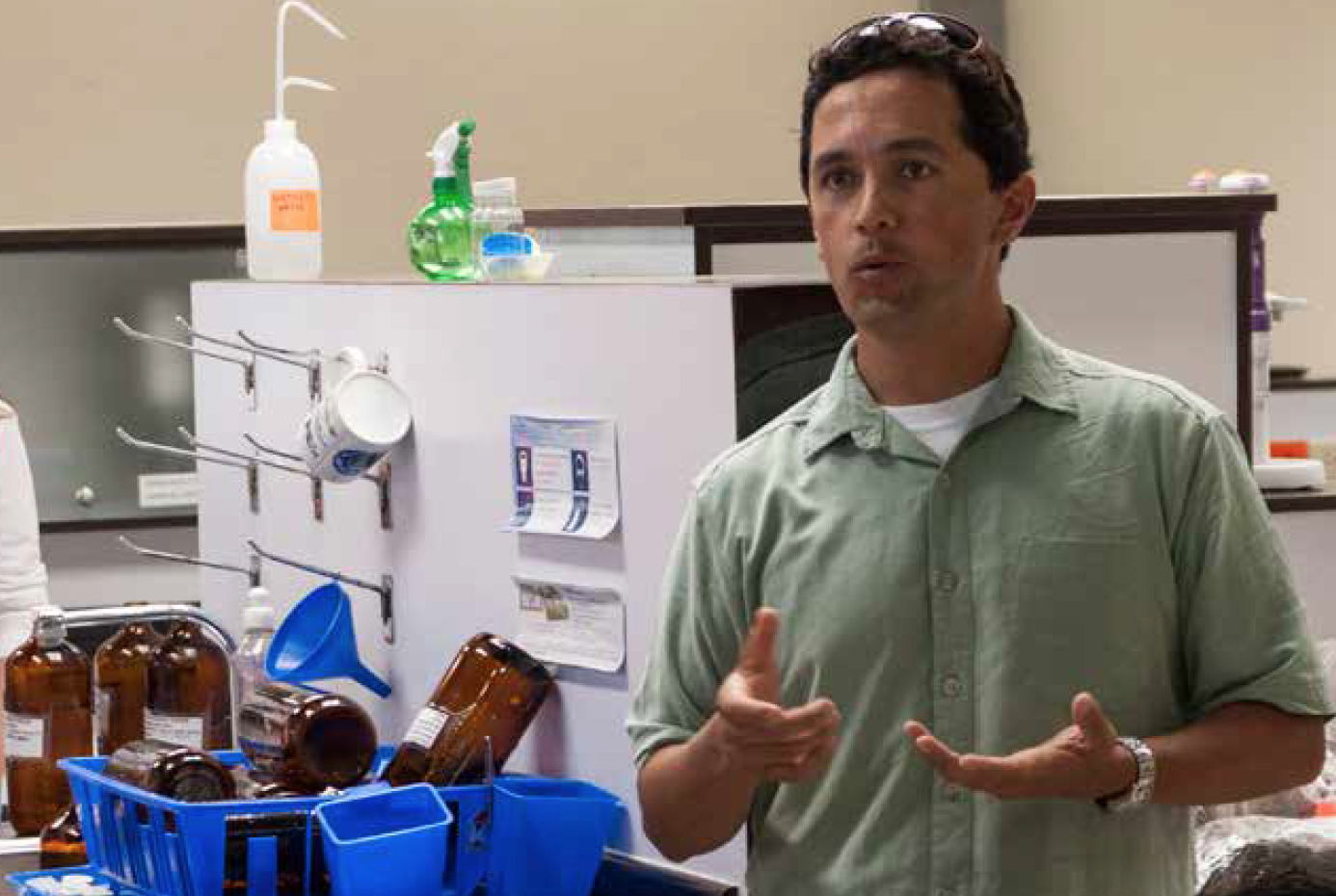
Having a local base has made research easier for visiting faculty. Diego Riveros-Iregui is a physical geographer in the emerging field of ecohydrology—  “where life and water intersect,” as he puts it. He has spent time at the Galápagos Science Center studying the relationship between water, plants, and soils in tropical regions.

“I have been working in the tropics for several years and have run into many of the same challenges that everyone faces: customs, permits, maintenance of equipment, data collection, sample preservation, etc. When the opportunity to work in the Galápagos came up, working with the staff at the GSC facilitated many of the aforementioned challenges, giving me time to focus on research,” Riveros-Iregui says.

Image
ITC 2016 North Carolina at Chapel Hill Professor
Diego Riveros-Iregui, assistant professor in the Department of Geography, explains his work at the Galápagos Science Center to a group of visitors. Photo credit Shannon Harvey.

Human and Ecological Systems Meet in the Galápagos

Mena says that scientific research in the Galápagos has traditionally been focused on hard science in areas such as botany, zoology, and evolution. From the beginning, they wanted to position the Galápagos Science Center as an interdisciplinary hub.

“The Galápagos are oftentimes thought of as Darwin’s paradise. But when you’re there, you can’t help but understand that the environment is changing and interacting with people, and shaping their behaviors,” Walsh says.

He adds that it was evident they needed to involve social sciences: “Two hundred twenty-five thousand tourists came to the Galápagos in 2015. About 30,000 residents live in the Galápagos Islands on four populated islands. It’s clear that it’s not just about ecology. It’s about the connection of people and ecology.”

Image
ITC 2016 North Carolina at Chapel Hill Delegation at USFQ
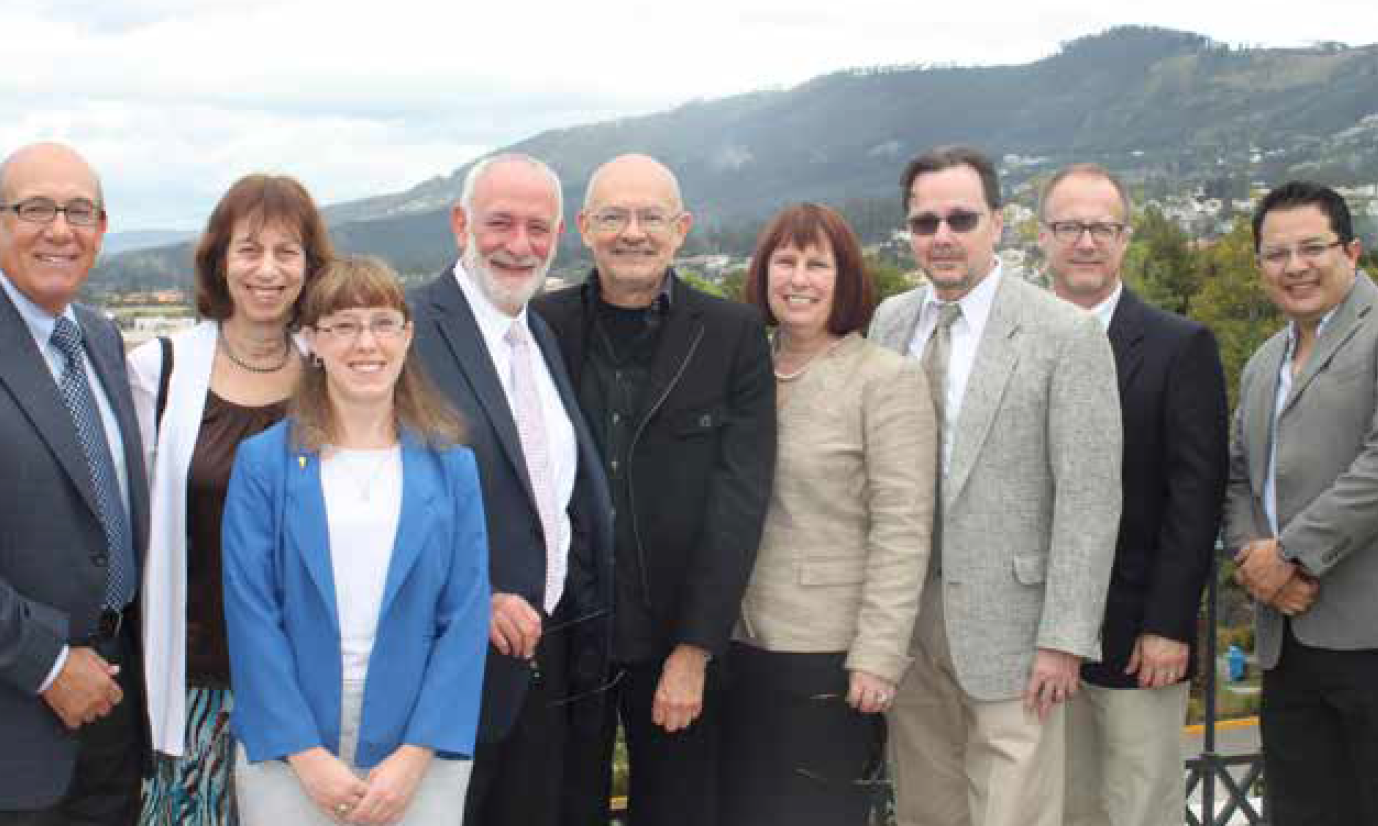
UNC-Chapel Hill delegation at USFQ with then president Santiago Gangotena (5th from left) and Carlos Mena (far right). Photo credit Melissa McMurray.

Maya Weinberg is a Latin American studies and political science major who took a gap year from UNC-Chapel Hill to do an internship at the GSC. She worked with Walsh on a project using global information software (GIS) to map out human development on San Cristóbal. She was involved with mapping buildings and putting together a report on infrastructure development.

She says that the interdisciplinary nature of the work at the GSC—and the opportunity to be involved in multiple projects in multiple fields—allowed her to make connections she wouldn’t otherwise have made: “With my experience working with human development, conservation, as well as geography I have become increasingly interested in policy and politics, as these are the disciplines that connect all three.”

The Importance of Engaging with the Local Community

Mena says that they built the center with the goal of providing more information to local communities and politicians to make informed decisions on issues such as health, tourism, infrastructure, and economic development.

He says that members of the local community are included in the research process. They work with a community board that keeps the GSC informed of local interests, and have close partnerships with Galápagos National Park and the local government council in order to find better ways to protect the islands.

UNC-Chapel Hill is currently engaging the community in the area of health. A new hospital was recently built on San Cristóbal, and representatives of both UNC and USFQ met with the director of the hospital and the ministry of health for the Galápagos. In 2016 the UNC-Chapel Hill School of Nursing sent a delegation to USFQ in Quito and to the Galápagos to visit the new hospital.

GSC also keeps the community informed about the results of its ongoing research. Kelly Houck is a biological anthropologist and UNC PhD candidate who studies human health. As part of her fieldwork on San Cristóbal, she collected samples of tap water to test for contamination as well as took blood, urine, and fecal samples from local residents to measure different health impacts.

“The water samples needed to be tested within 24 hours of collection and because of GSC infrastructure, we were able to give the results back immediately to the households and provide suggestions for treating contaminated water, such as boiling or using bottled water for drinking,” she says.

“In addition, we were able to provide them with preliminary results from their blood and urine test for indicators of infections, and advise them to seek further free testing at the hospital on San Cristóbal,” she adds.

ITC 2016 North Carolina at Chapel Hill Bird
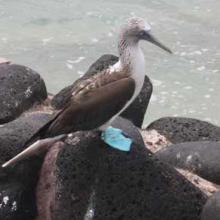
The iconic blue-footed boobie on San Cristóbal Island in the Galápagos. Photo credit Melissa McMurray.

Young adds that it is not only the local community in the Galápagos that benefits from the partnership. UNC-Chapel Hill’s undergraduate students have also been able to participate in opportunities through the partnership. In addition to semester or year-long exchanges to USFQ, undergraduates can also take advantage of faculty-led summer programs.
Billy Gerhard graduated in 2014 with a bachelor’s in biology and then earned a master’s of science in public health in environmental sciences and engineering. As an undergraduate, he did a summer program at the GSC in 2012. The next summer he returned as a winner of the Vimy award, a grant of up to $15,000 given annually to an interdisciplinary team of students working collaboratively to pursue research or service projects outside the United States. He is currently pursuing a PhD in environmental engineering at Duke University.

“The project definitely impacted my career trajectory. Working abroad required me to plan ahead, anticipate problems, organize contingencies, and communicate effectively. These skills are useful in any career and the opportunity to practice them was invaluable,” he says.

“I am currently writing the results of my research on drinking water in San Cristobal for publication,” he adds.

UNC has also sent local K–12 and community college educators to the Galápagos through its World View program, which strives to help teachers give their own students global competency. “We’ve seen this partnership benefit those beyond our campus as well,” she says.

Young says that having faculty members who are deeply committed to the local community has been key from a partnership development standpoint.

“It couldn’t have happened without two institutions that wanted it to happen, and two leaders, Carlos and I, who saw a vision, transmitted it to other faculty and students, and moved forward with a program that would be committed to community outreach, education, and research at a marvelous place,” Walsh adds.


Read more about University of North Carolina at Chapel Hill

Read More

2016 Spotlight Texas Tech University

Ellis Island is a little closer to Lubbock, Texas, than one might imagine. Groups of elementary school students get off the bus on the campus of Texas Tech University (TTU) and step onto ships travelling from faraway places. This immersive Ellis Island experience, where students role play as European immigrants entering the United States, is just one of the many cultural programs offered by TTU’s K–12 Global Education Outreach (GEO) initiative.

Founded in 1997, GEO currently creates opportunities for more than 20,000 local students, teachers, and community members to learn about the world. By visiting local classrooms and inviting local K–12 students to the TTU campus, GEO staff help promote awareness of other countries and cultures in a community where many young people do not have the opportunity to travel.

“GEO reaches a substantial number of students who normally would not get any kind of international exposure, because sitting in a classroom and having a teacher show you a map of the world doesn’t cut it anymore,” says Tibor Nagy, vice provost for international affairs and retired career U.S. ambassador.

Outreach—an Essential Element of Campus Internationalization

TTU sees community outreach through GEO as a central pillar of its campus internationalization strategy, with a mission to “build a globally engaged community of learners through outreach opportunities that foster intercultural understanding and exchange while enriching the quality of life for both the universities and local communities across West Texas.”

Kelley Coleman, director of K–12 international education and outreach, says when TTU wrote its most recent strategic plan, one of its objectives was to help close the gap between the university and the local community. “K–12 GEO’s role has expanded to build capacity in that area,” she explains.

Image
ITC 2016 Texas Tech Teachers
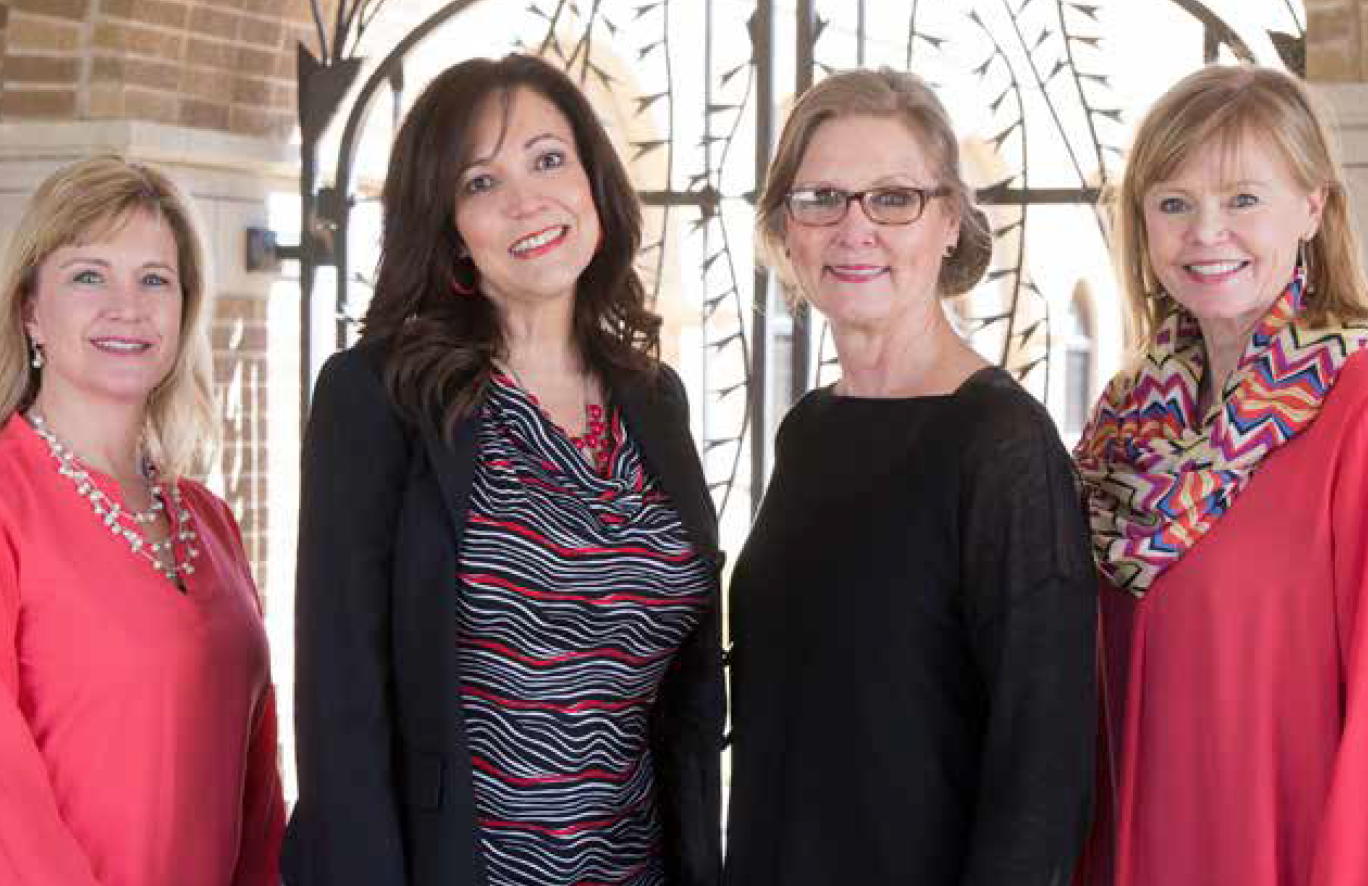
The K–12 Global Outreach team. Left to right: Randi Stevens, K–12 lead teacher; Kelley Coleman, director, K–12 Global Education Outreach; Helene Thorpe, K–12 lead teacher; and Carolyn Darden, K–12 lead teacher. Photo credit TTU.

TTU seeks to provide opportunities both to local K–12 students and to its own students to develop global competence. “Institutions must take the challenge head on to enhance the global competency of our youth. We must prepare our young adults to live and work in the globalized world of the twenty-first century. Both our K–12 program and broad internationalization efforts at the university promote global competence through education,” says Sukant Misra, associate vice provost in the Office of International Affairs.

Enhancing Local Classrooms with Multicultural Workshops

Coleman’s team tries to build an experiential, interactive, and hands-on program to really engage kids in international issues. “We want to provide innovative programs that enhance a district’s curriculum while also creating a world-class experience that can’t be easily duplicated in a teacher’s classroom” she says.

Teachers from local school districts can go online to reserve workshops at their schools or arrange to take their students to TTU. GEO programs include the Ellis Island experience, workshops on holidays in different cultures such as Chinese Lunar New Year and Mexico’s Day of the Dead, the history of Ireland’s music and dance culture, and an exploration of Kenya’s Maasai culture.

Kay Spikes Moore, coordinator of the International Baccalaureate (IB) program at Lubbock High School, says that the programs offered by TTU support the IB curriculum. They have arranged for two Middle Eastern ambassadors to visit the high school and have taken students to the TTU campus to see a Korean tea service.

“GEO fills a niche that is difficult to fill. IB is centered on receiving an internationally minded education and GEO aids in the process. Speakers such as the visiting ambassadors always mesh with the IB curriculum, especially with IB World Topics, a course dealing with twentieth-century issues,” she says.

“It is very easy, out here in West Texas, to forget about the rest of the world, its issues, its culture. The K–12 Global Outreach Program helps fuel dialogue,” Moore adds.

GEO works with teachers and students at all grade levels. During the school year, for example, representatives visit the campus library at Roy Roberts Elementary School every six weeks and present multicultural lessons to each grade level. Library media specialist Kelli Kemp says that the programming helps meet state standards.

“The program content is aligned with the Texas Essential Knowledge and Skills (TEKS) that are taught at that grade level. It is a wonderful way to reinforce what the teachers are teaching in the classroom,” she says.

According to Kemp, the presenters from TTU come with maps, props, guest speakers, costumes, music, and materials to make arts and crafts. “It was absolutely awesome! The students are totally engaged and soak in all of the information on countries from all around the world,” she says.

“This is a wonderful program for our community. It teaches students to be respectful, tolerant, and interested in different people from different cultures, and to honor their traditions and customs.”

Image
ITC 2016 Texas Tech Presenters
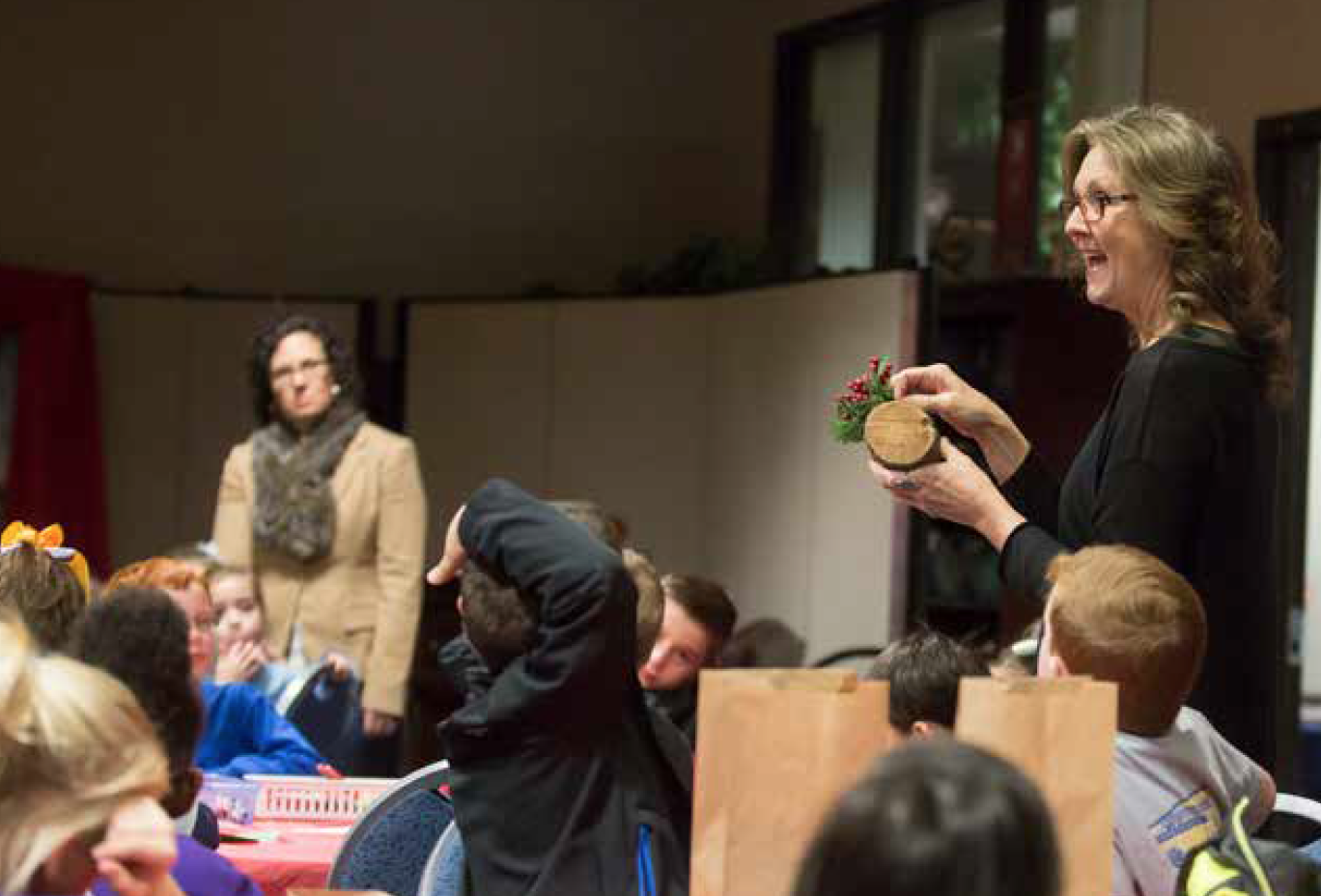
ITC 2016 Texas Tech Presenters. Photo credit TTU.

In addition to visiting local K–12 classrooms and hosting students on campus, GEO also works with preservice teachers to develop their own cultural awareness and to implement culturally responsive teaching practices in increasingly diverse classrooms. TTU also invites local K–12 students and teachers to hear internationally themed speakers and visit international art exhibits hosted on campus.

Creating Opportunities for Ttu Students to Interact with the Community

The K–12 GEO program is part of TTU’s Office of International Affairs, which also oversees international student services, education abroad, and international research and development. According to Coleman, the program allows TTU students, especially the more than 3,000 from abroad, and faculty an opportunity to interact with the larger community. It also gives community members a chance to interact with people from different parts of the world.

Image
ITC 2016 Texas Tech Holiday Customs
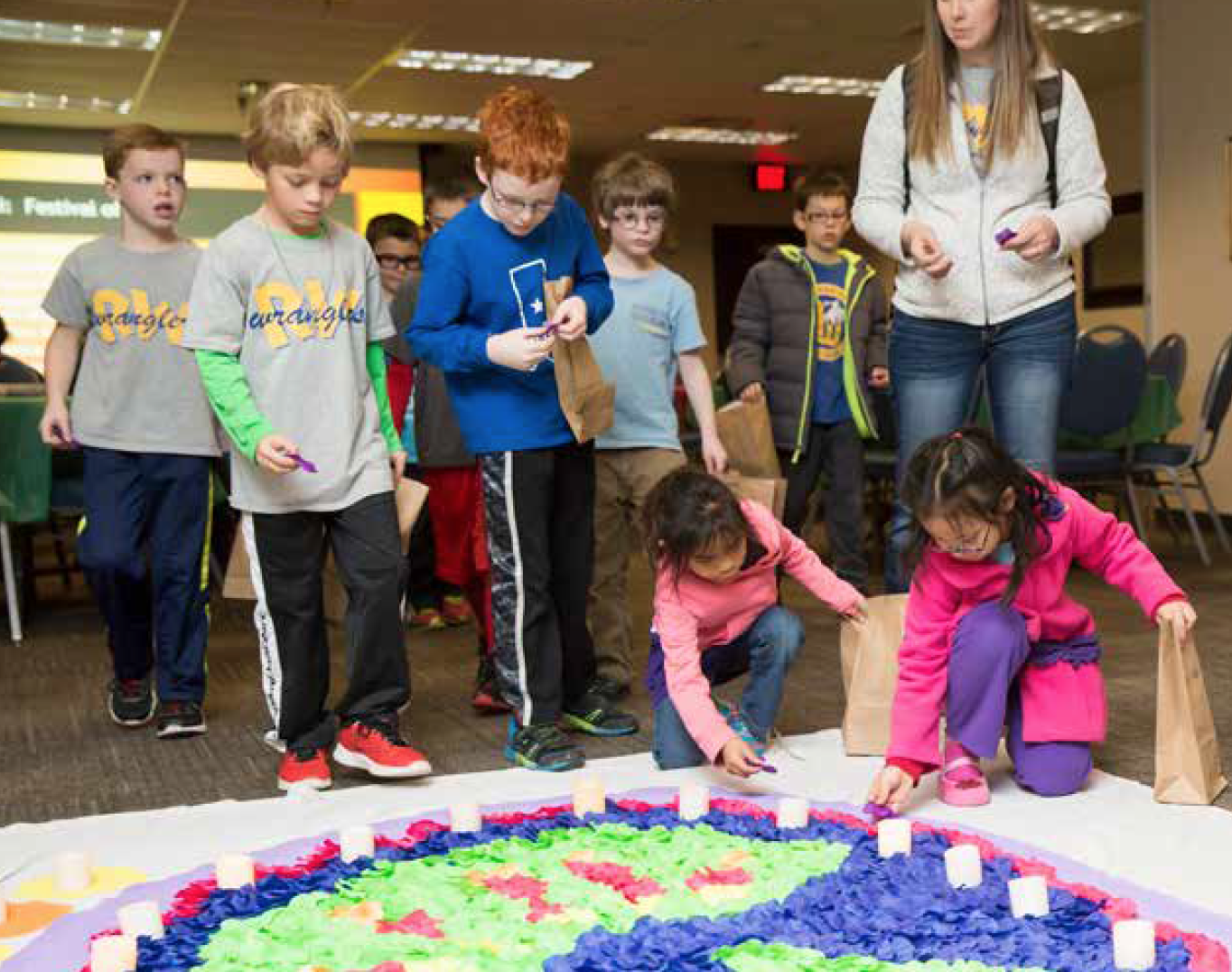
Local children learn about holiday customs from around the world. Photo credit TTU.

“One of the most important things has been the benefit for international students. It’s helped our international students feel more connected to the university and to our community,” Coleman says.

Priyanka Kumari is a graduate student in computer science from India. As president of the India Student Association (ISA), she has participated in several presentations on Indian festivals such as Holi and Diwali, and demonstrated henna tattoos. “Sharing Indian culture is something that the ISA as a team... values a lot. Our K–12 sessions have been very interactive, and the kids have been very responsive,” she says.

Image
ITC 2016 Texas Tech Panel
Tibor Nagy (bottom left) is TTU’s vice provost for international affairs and is a former U.S. ambassador. He recently hosted a panel of his fellow U.S. ambassadors who spoke to high school students on U.S. involvement in the Middle East. Photo credit John Weast.

In addition, TTU faculty have been able to integrate community outreach into their classes. German Professor Marlene Selker and her students host an annual Weihnachten celebration to introduce around 500 local K–12 students to German Christmas traditions.

“The event allows our students and faculty to present themselves and their work to the local community. [My students] love to share their passion for German language and culture. We always have volunteers to lead groups in singing German songs, teach basic phrases, get kids involved in a bilingual puppet play, or introduce them to artifacts, arts and crafts, and cultural differences. Teaching increases their own understanding of the subject matter,” Selker says.

Nagy reiterates that community outreach is central to TTU’s larger internationalization efforts: “We really see global engagement and internationalization as having moved from the margins of the university’s priorities to the very core. The GEO unit is extremely significant because there are few international outlets in Lubbock. It has engaged many more areas of the campus in interacting with the larger community.”


Read more about Texas Tech University

Read More

2016 Spotlight East Carolina University

At first glance, Greenville, situated in eastern North Carolina, might seem to be an unlikely international education hub. The town of around 90,000 is home to East Carolina University (ECU), a public research institution serving students from the surrounding rural areas. Since the 1950s ECU has been a leader in distance education in North Carolina, and it was one of the first universities in the United States to offer an online degree. With a mission to maximize access through innovative learning strategies, ECU has capitalized on this leadership in online learning to bring global opportunities to its campus.

Technology Boosts Internationalization

With few international students on campus and low study abroad participation rates, ECU views technology as a medium to boost internationalization. The Global Academic Initiatives (GAI) program was started as a way to promote international collaborative learning through technology. “Our charge is to use innovative technology-based learning strategies to provide ECU students with international education experiences,” says Jami Leibowitz, GAI interim director. GAI coordinates the Global Understanding (GU) program, which virtually connects ECU students and faculty with partners around the world. The program has been running for more than a decade, starting with a two-week pilot course in 2003. Elmer Poe, professor emeritus and technology specialist, cofounded the program with former ECU psychology professor Rosina Chia, after discussing the lack of opportunities for cultural exchange available to ECU students.

Image
ITC 2016 East Carolina Global Understanding Cofounders
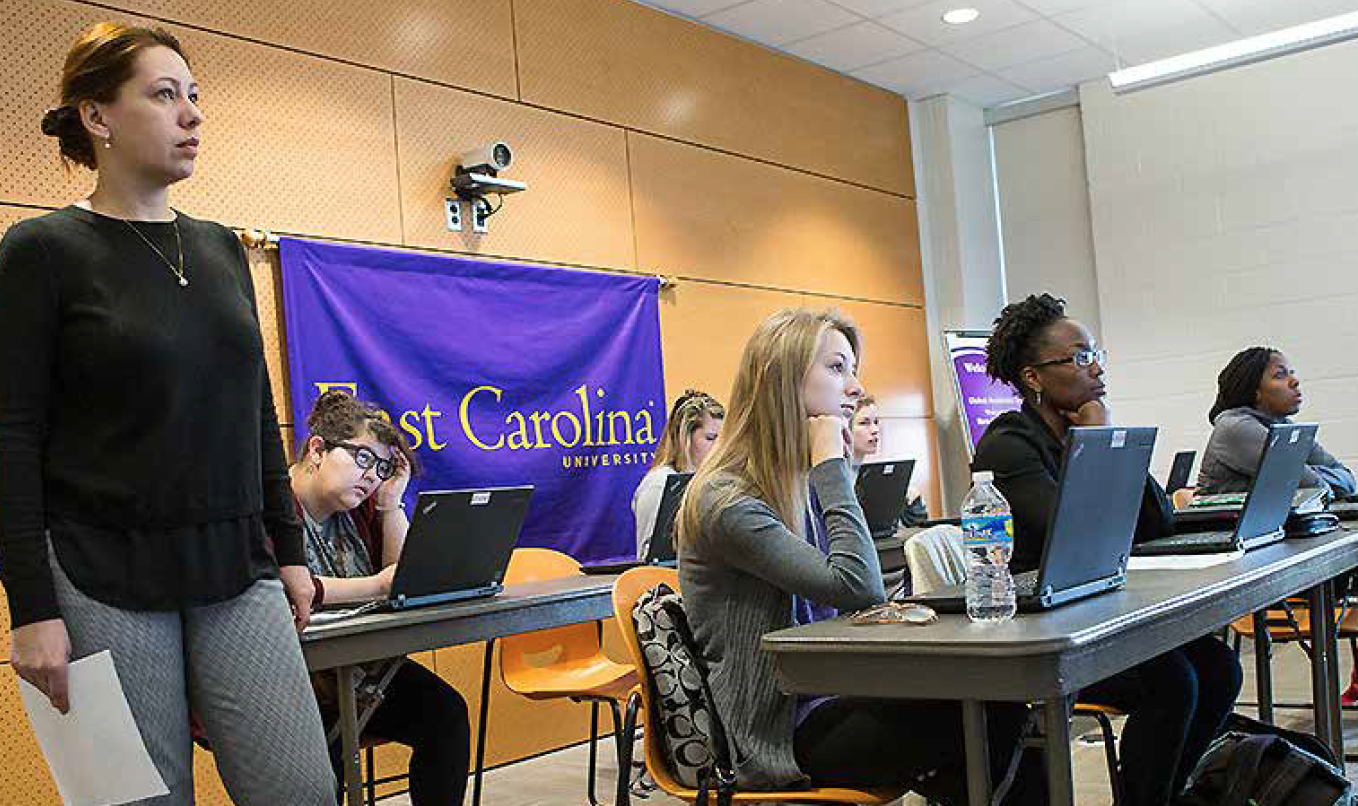
Irina Swain, assistant professor of Russian in the ECU Department of Foreign Languages and Literatures, leads a class talking to students in China. Photo credit Cliff Hollis.

“One day we were commiserating about how we could provide experiences to more students that would really give them an opportunity to interact with students from other cultures. We decided that we would try using some form of electronic communication,” Poe says.

They used their assessments of the pilot program as the basis of what would later become the Global Understanding courses. “We took the lessons that we learned and began to work with our anthropology and political science departments to create a course that would introduce students to cultures,” Poe adds.

The program has grown significantly since its inception. Today ECU boasts more than 60 partners in approximately 30 countries. Each year the program connects approximately 1,400 ECU students with 2,700 partner students—a total of 21,000 students since the program started.

The program was built on simple video technology that engages partners from all over the world. “We use technology that allows the partner with the lowest connectivity to interact with the partner with the highest connectivity,” Poe explains.

Broad Topics Lead to Cultural Conversations

GU courses are multidisciplinary with a broad focus so that classes of different subjects can connect. Each GU class works with three international partners for approximately four weeks each. The partners switch off to work with all of the other partners over the duration of the course. Students discuss topics such as college life, family, cultural traditions, and religion. The class then concludes with an online collaborative project.

Sixty percent of class time is spent online with partners, and the remaining time is for the professor to facilitate disciplinary-based discussion. For example, a business class learning about multigenerational households in another country may discuss marketing strategies for that culture.

Anthropologist Blakely Brooks has taught in the program with partners in more than 10 countries. His students are generally nervous at the beginning but often become close with their partners: “I have had several students come up to me on campus and say ‘Dr. Brooks I am still talking with my global understanding partner in Nigeria!’”

Leibowitz says that students often switch to a more internationally focused major and have incorporated international perspectives into their theses after taking GU courses. ECU also sees the Global Understanding program as a stepping stone for future study abroad.

Enhancing Upper-Division Classes

ECU uses the same technology to provide enhancements to upper-division courses. Brooks, for instance, has used the technology in his anthropology courses. In a course on peoples of Central and South America, ECU students discussed topics such as favelas, racism in Latin America, and the 2016 Olympic games with Brazilian and Peruvian peers. “Utilizing [technology] gave students the opportunities to discuss complex cultural topics,” Blakely says.

Image
ITC 2016 East Carolina Foreign Languages and Literatures
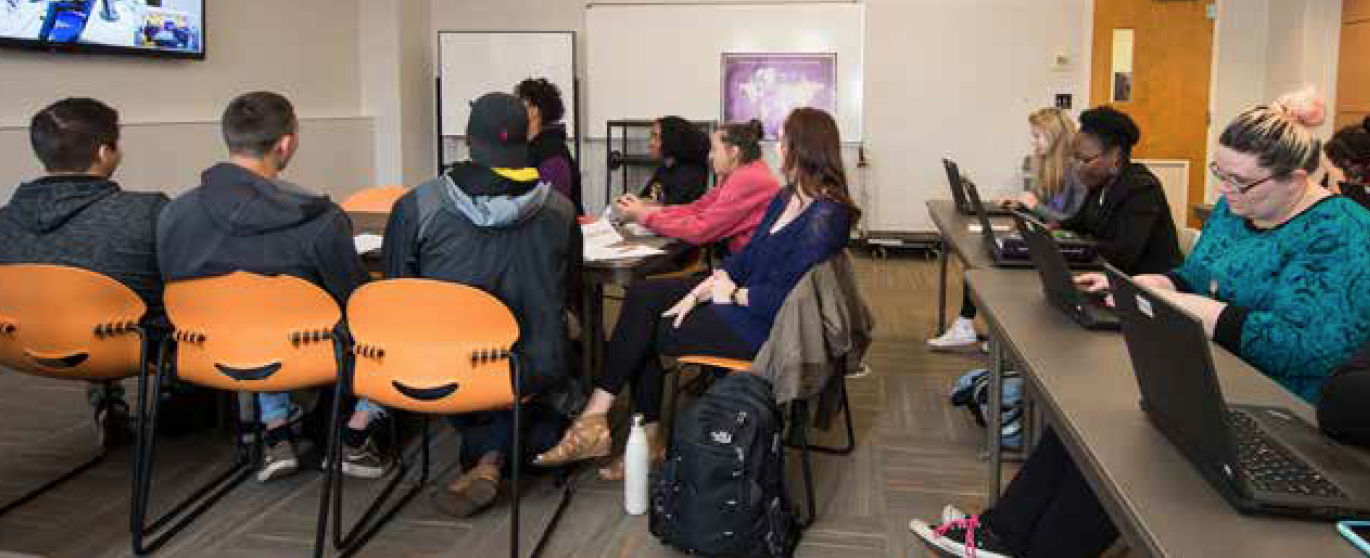
Students in a foreign language class talk to students at Henan Polytechnic University in China. Photo credit Cliff Hollis.

Professor Patricia Clark runs a class for youth theater majors in which she links to partners in Egypt and Japan. They collect cultural stories from their partners and turn them into dramatic scripts. “We perform at various schools and community centers to try to promote an interest in different cultures,” she says.

Clark has worked closely with counterparts at University of Shimane in Japan, which created an opportunity to take three students with her to Japan to meet their partners. “They produced a show that was a collection of worldwide tales” Clark explains.

Providing High-Level Logistical Support

One of the pillars of the GU program is providing a high level of technical and logistical support to both ECU faculty and partners.

Leibowitz says one of her biggest challenges is coordinating the master schedule. For the 2015–2016 academic year, ECU offered 37 sections of the Global Understanding courses. “We have to take into consideration time zones, different academic calendars, different holidays, and different class days,” Leibowitz says.

ECU has also created a community among its partners by instituting an umbrella organization, Global Partners in Education (GPE). Every year, a partner institution hosts an annual conference, which involves networking, presentations on best practices, opportunities to learn about the host institution and country, a review of the previous year, and setting future goals.

Image
ITC 2016 East Carolina Students
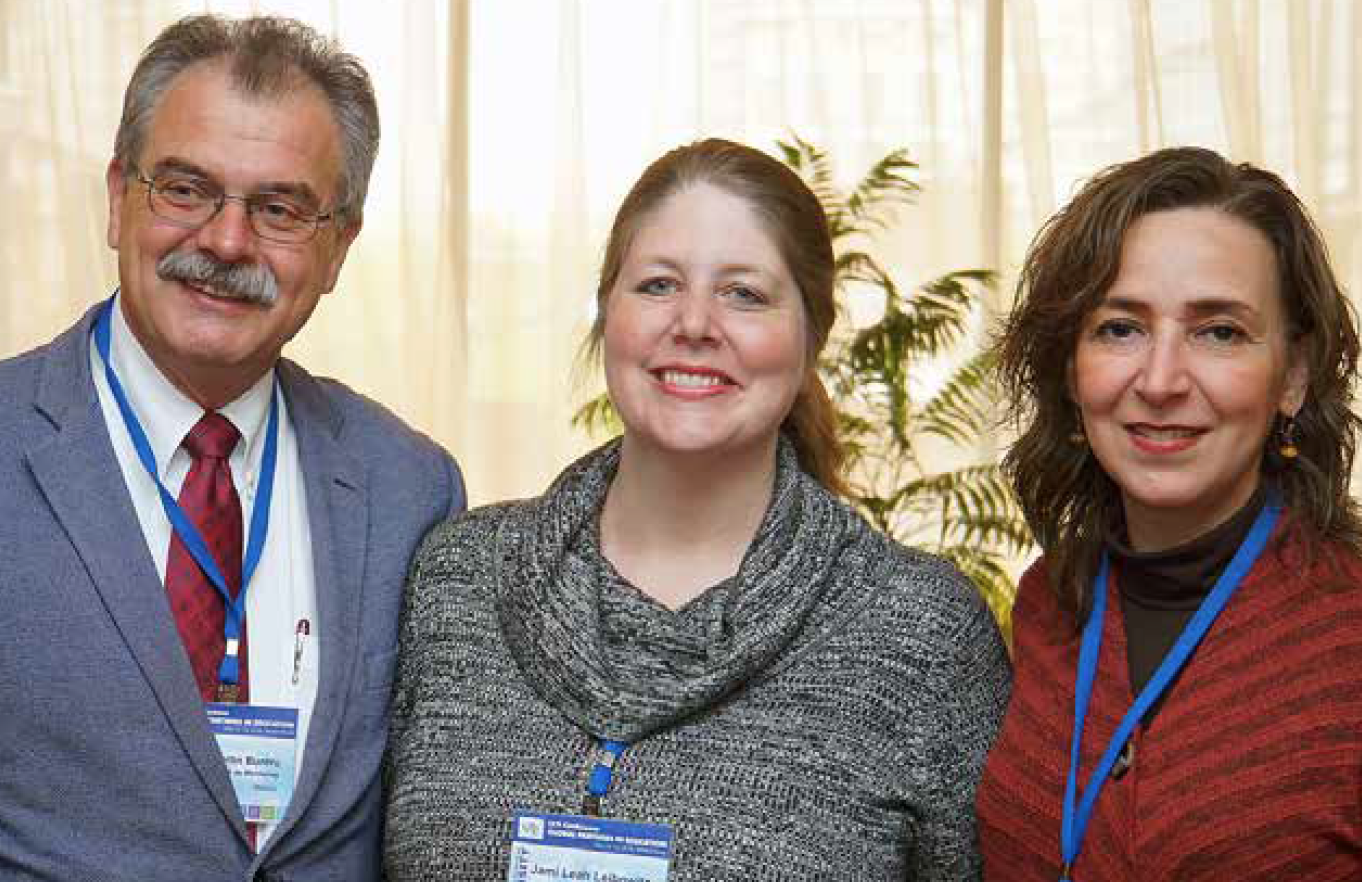
Jami Leibowitz (center) with Thomas Buntru (left) and Maria Olivia Villareal (right), both from Universidad de Monterrey, at the ninth annual Global Partners in Education conference in Yekaterinburg, Russia. Photo credit Vadim Osipov.

“The conference is an opportunity for partners to meet, learn about each other, and open conversations of activities that they can do with each other,” Leibowitz says.

For many partners, participating in Global Understanding creates international experiences for students who are unable to travel. According to Cajetan Nnaocha, a Nigerian professor teaching at the University of The Gambia, Global Understanding was the first time his students were able to engage in cultural exchanges. “Most of them were for the first time interacting with white students,” he says, adding that another significant benefit of the program was learning IT skills.

Other partners see it as a significant part of their own “internationalization at home.” “Offering GU has given us a great opportunity to bring direct intercultural experiences to more students,” says Kathrin Ullrich, head of international programs at Universidad Regiomontana in Monterrey, Mexico.

Changing What It Means to Be International

According to Leibowitz, the impact of the GU program has been felt across campus: “We’re changing the attitude on campus about what it means to be internationalized, and that you don’t have to necessarily offer a summer study abroad trip for your class to be international.”

GAI is working to extend the initiative beyond the classroom to reach even more students. This fall ECU will pilot a student organization, WorldWise, with four partners. Each month, students will link with an international partner to engage in a cocurricular collaborative activity on a common theme.

Provost Ron Mitchelson says that Global Understanding has been an effective way to promote comprehensive internationalization. “It really has provided a marquee program that elevates interest and administrative awareness across the campus. This program is sort of priming the pump and getting folks energized about opportunities,” he explains.

Vice President of Academic Success Chris Locklear says ECU is also currently looking at ways to capitalize upon the existing GU partnerships for recruitment purposes: “We want to increase our international presence on campus. We have around 529 international students on campus right now. We hope to grow that to 1,500 over a five-year period.”

Part of ECU’s ability to expand its partnerships includes closer future collaboration between Global Academic Initiatives and the Office of International Affairs, which manages international student services and study abroad, under a global affairs umbrella.

GAI recently launched its first course with a travel component. Working with a language teacher at University of Shimane, an ECU faculty member led an ethnic studies course focused on culture in Vietnam and Japan that culminated with ECU students meeting their Japanese peers for a service-learning trip to Vietnam.

Image
ITC 2016 East Carolina Global Partners
ECU students and students from University of Shimane performing at a local school in Hamada, Japan. Photo credit Patricia Clark.

Anthropology major Sara Heath was one of 13 participants to travel to Vietnam: “As a nontraditional student, I have worked full time as a certified nursing assistant. Because I have paid for my own education, it was never possible for me to take off for a summer program or a semester-long study abroad. This two-week experience was perfect for my situation.”

Leibowitz hopes that in the future ECU is able to offer more courses that integrate the virtual component with study abroad: “I think that it will just be a natural that some of these courses have a mobility component. You can connect and continue those relationships you develop when you’re abroad and establish some relationships before you go to enhance the on-the-ground activity. We’re actually really excited about that, especially in terms of comprehensive internationalization.”


Read more about East Carolina University

Read More

2016 Comprehensive University of Tampa

On January 31, 1891, the Tampa Bay Hotel, the pet project of railroad magnate Henry B. Plant, opened its doors with 500-plus rooms and quarter-mile long corridors. More than 125 years later, Plant Hall, as it’s known today, serves as the main administrative and academic building of the University of Tampa (UT), which moved into the iconic building in 1933. Just as tourists flocked to the Tampa Bay Hotel at the dawn of the twentieth century, the University of Tampa itself has become a destination for more than 8,000 students from 50 states and 140 countries.

Ronald L. Vaughn, who became president in 1995, says that UT began internationalizing in the early 1990s. “Early on we invested heavily in exposing our faculty to the world and different cultures. That definitely helped to speed along our development,” he says.

Early international initiatives paved the way for comprehensive internationalization, culminating with a 2005 accreditation review by the Southern Association of College and Schools Commission on Colleges (SACSCOC). UT chose to create and implement a quality enhancement plan (QEP), Building International Competence, as part of the accreditation process.

“When I look at us now, compared to where we were several years ago, we really have opened up the world of opportunities for our students and faculty. We’ve built a broad portfolio that everyone can take advantage of,” Vaughn says.

Leveraging Accreditation to Push Internationalization

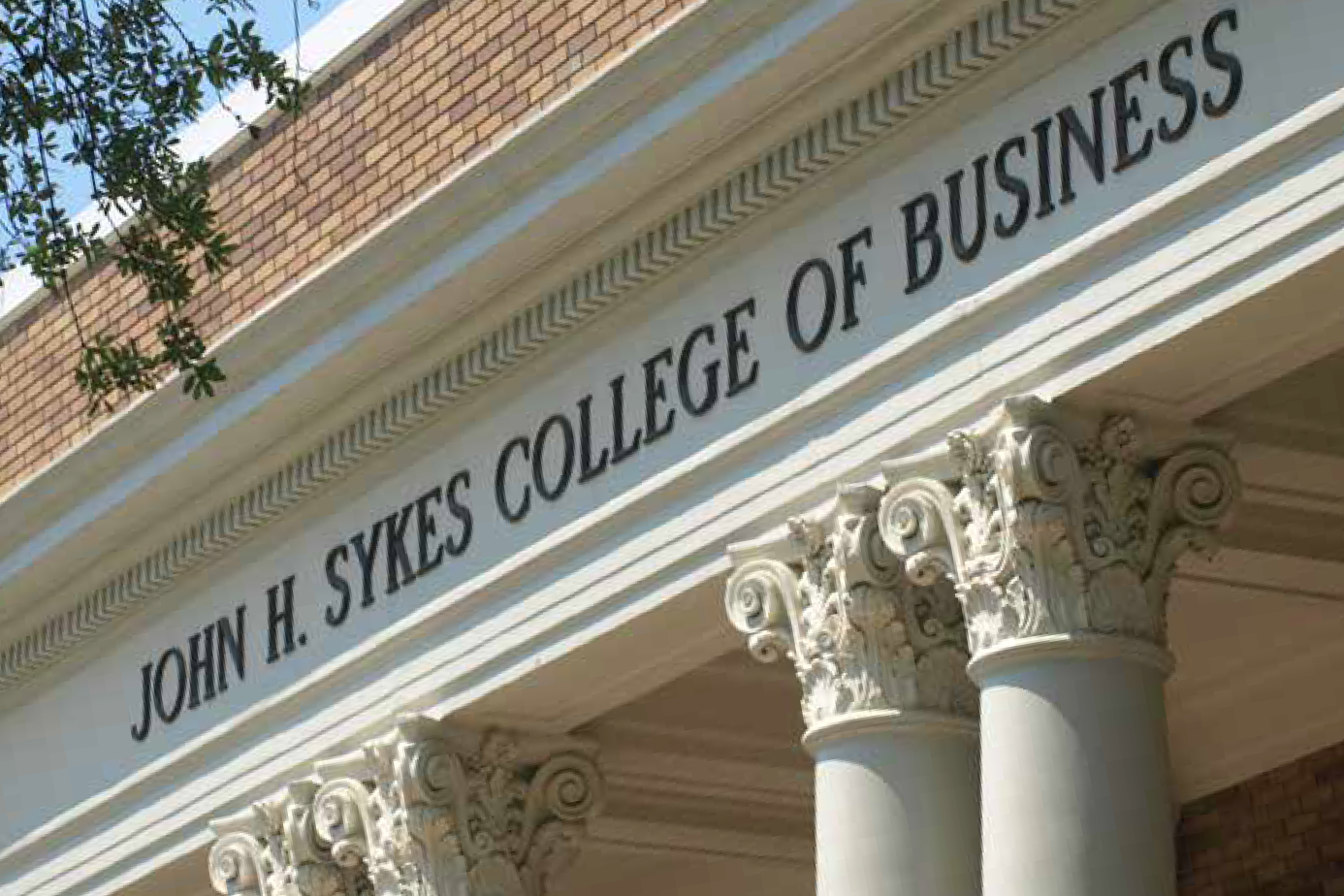
The current structure of UT’s international programming has been in development since the mid-1990s, when under President Vaughn’s leadership, the university made internationalization a strategic priority. By 2005 those early efforts became the foundation for UT’s QEP, according to Marca Marie Bear, PhD, associate dean of the International Programs Office (IPO) and associate professor of management and international business at the Sykes College of Business.

“We were able to leverage the QEP and build internationalization into the vision that President Vaughn had for the university,” she says.

As the center for international programs of all kinds, the IPO oversees education abroad, international student and scholar services, and on-campus global programming. A sampling of its portfolio includes semester abroad, travel courses, international internships, service learning, research and athletics abroad, immigration advising, and advising for postgraduate opportunities abroad.

The office provides comprehensive support for any university-sponsored activity abroad, ranging from predeparture orientations to assistance with logistics and health insurance. The IPO also sponsors more than 50 international events each academic year, including its Global Scholar Speakers Series, and publishes World View, an annual magazine showcasing the institution’s international initiatives.

A number of other initiatives came out of the first QEP, including funding for faculty to explore international issues. Annually, the Office of International Programs sponsors five to six faculty members to participate in International Faculty Development Seminars (IFDS) organized by the Council on International Educational Exchange (CIEE).

Celebrating Global Competence with a Certificate of International Studies

Another achievement of the QEP was the development of UT’s Certificate of International Studies (CIS). According to Bear, approximately 40–50 students are working toward the certificate at any given time.

Students must obtain intermediate foreign language proficiency, participate in education abroad, and complete five global engagement projects. Students are also required to take 12–16 credits in non-Western and global awareness courses and complete a capstone course. Students are recognized at graduation with a cord of distinction.

Image
ITC 2016 Tampa International Program
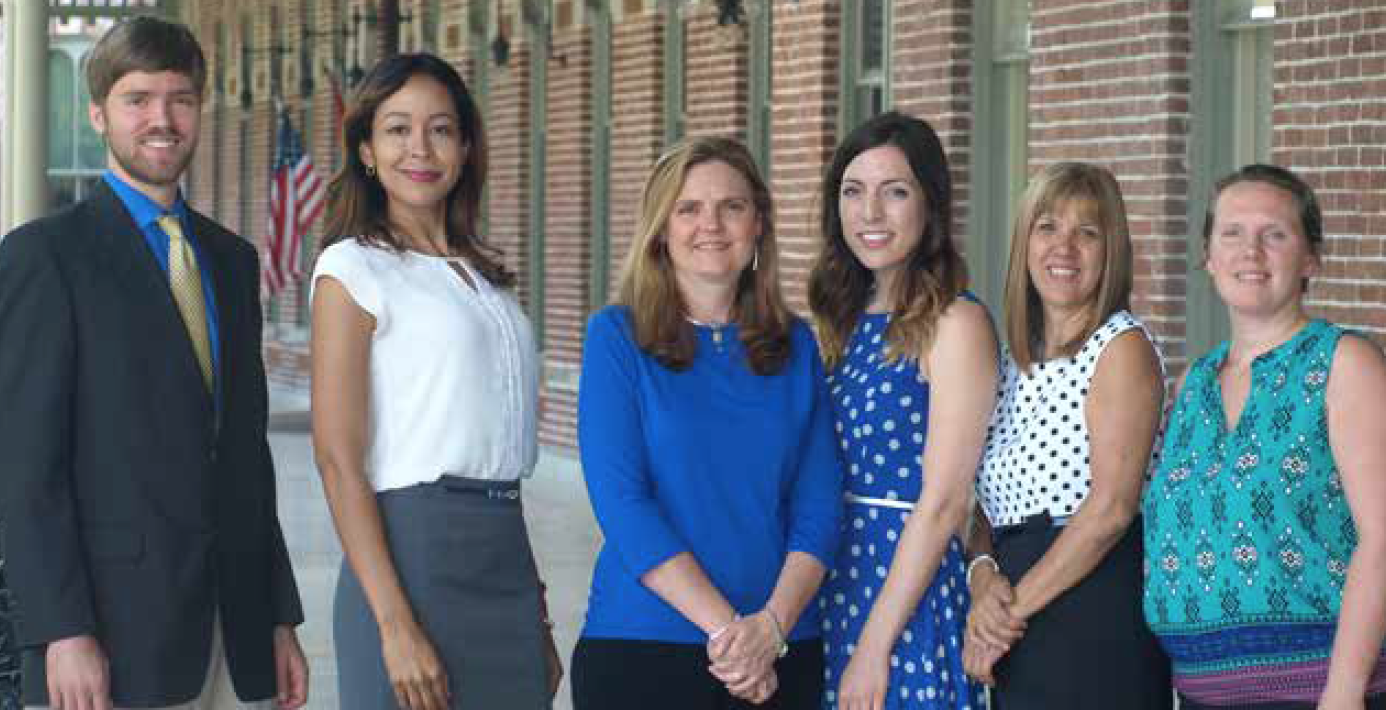
Associate Dean of International Programs Marca Marie Bear (center) with the Office of International Programs team on the terrace of Plant Hall. Photo credit Charlotte West.

Victoria Tully, a 2016 graduate, majored in international and cultural studies and completed the CIS. “The certificate allowed me to get involved on campus. You do internationally based projects and events,” says Tully, who studied abroad in both Spain and Brazil and is currently serving in the Peace Corps.

One of the ways the Office of International Programs encourages students completing the CIS is to get involved with Spartans Abroad Ambassadors, which helps build awareness of education abroad options throughout campus. “As a Spartans Abroad ambassador, I have been able to help other students in going abroad by sharing my experience,” Tully says.

Creating a Study Abroad Pipeline Through Early Global Experiences

In 2016 UT launched a new QEP, Learning by Doing, which focuses on experiential learning. Bear says the new QEP will have increased focus on international internships and service learning. Provost David Stern adds that it will also create an impetus to develop opportunities for undergraduate research abroad.

ITC 2016 Tampa Cuba
Junior journalism major Selene Sanfelice (left) studied in England through the Honors Oxford Program. Benjamin Kee White (right), a senior government and world affairs major, participated in a faculty-led program to Cuba. Photo credit Charlotte West.

One recent initiative that bridges the two QEPs is the creation of a four-year study abroad pipeline beginning with opportunities for freshmen to go abroad during—or even before—their first year. Two groups of first-year students will have the opportunity to spend the second semester of their freshman year in Ireland or Spain. In August 2016 UT will also launch Spartans Academy Abroad, a summer pre-enrollment program in Costa Rica aimed at incoming freshmen.

Working through the admissions office, UT has leveraged the programs to attract highly qualified incoming freshmen that they expect to become “repeat participants,” as Stern puts it, when it comes to international engagement. The idea is to expose students to international experiences early in their college careers in order to maximize impact.

For the Costa Rica program, UT has partnered with the Monteverde Institute to offer eight credits in biology and social science to approximately 20 students. Biologist Mason Meers and political scientist Kevin Fridy will teach a two-week multidisciplinary course that focuses on environmental politics, conservation, sustainability, and biological diversity. Upon return, the students will study 
together in a freshman learning community for the rest of the year.

Fridy says that the program will also give students a chance to engage with research early on in their college careers. “We hope we can encourage them to become not only more international, but also more scholarly,” he says.

Exploration Through Inspiration in the Honors Program

Recruiting for Spartans Academy Abroad has been done in close collaboration with the UT Honors Program. According to Director Gary Luter, some 1,300 students are enrolled in the honors program, which requires a 3.5 GPA.

“One of the pillars of our mission statement is to prepare honors students to be global citizens,” Luter says.

To achieve this goal, UT offers a number of honors travel courses with a research element. It also provides travel scholarships of approximately $1,000 to 20 honors students each year to help them go abroad. One student a year is also awarded $2,500 through the Timothy M. Smith Inspiration Through Exploration Award.

“This is a unique experience where students create their own itinerary. They have their own objectives and we underwrite the cost,” Luter says.

The UT Honors Program also sends three students per semester to study at Oxford University in the United Kingdom, covering the cost of tuition and housing.

Last year Selene San Felice, a junior journalism major, took part in the program, which is run on a tutorial system where students work one-on-one with a professor. She says it gave her a chance to study underground rap and hip hop and the history of sexuality in the twentieth century.

“I got to do really intense academic work. I wrote between 10 and 12 research papers during the eight weeks I was there. It’s not the typical study abroad, but it was really rewarding,” she says.

Promoting Sportsmanship Abroad

UT tries to make international opportunities available for all students, regardless of major. For student athletes, fitting study abroad into training schedules can be a particular challenge.

“Athletes don’t get the opportunity to study abroad like most students do because they can’t leave for the entire semester. We think it’s important that the coaches take them abroad and expose them to other cultures,” says Larry Marfise, UT athletic director.

The UT Spartans play in Division II for the National Collegiate Athletic Association (NCAA) with eight men’s and 11 women’s varsity sports. The NCAA allows teams to go on international trips every four years, an opportunity of which Marfise tries to take full advantage.

Marfise adds that increased cultural awareness is not the only benefit of sending his teams abroad. “Every single team that has gone has not only come back with a better appreciation for what goes on in this world, but they also come back as better teammates,” he says.

In recent years, he sent the UT volleyball team to Sweden and both men’s and women’s soccer teams to Germany. In January 2014 they also sent the UT baseball team to Cuba, where they participated in cultural exchange activities and played—and won—three exhibition games with minor league Cuban teams.

Fostering Cultural Connections with Cuba

The baseball team playing in Havana isn’t the only recent connection between the University of Tampa and Cuba. For more than five years, UT has participated in a number of educational, cultural, and artistic exchanges with various Cuban institutions. In March 2016, for example, UT’s Scarfone Hartley Gallery hosted an exhibition of contemporary Cuban art that was visited by more than 2,000 community members.

UT has also participated in two different educational delegations to Cuba in the last year. In October 2015 UT was part of a group of 12 U.S. higher education institutions selected to travel to Cuba as part of an Institute of International Education (IIE) initiative to increase the number of partnerships between the United States and Cuba.

Through its Global Access Partnership, coordinated through the Sykes College of Business, UT also ran its own travel program in March 2016 designed to provide a platform for university faculty and community partners to understand business opportunities in Cuba. President Vaughn led the delegation.

In addition, UT has been deepening its own partnerships with Cuban institutions. In April, UT and the University of South Florida (USF) hosted the first UT-USF International Conference on José Martí, a nineteenth-century political activist and man of letters who was instrumental in the Cuban fight for independence from Spain.

During the conference, UT was inaugurated as the first U.S. affiliate of the Center for José Martí Studies (Centro de Estudios Martianos), a research institution in Havana that promotes Martí’s work.

Professors Denis Rey and James Lopez have taken the lead in establishing the academic partnership between the two institutions. They have been leading travel courses to Cuba since 2009, when U.S. President Barack Obama lifted restrictions for educational travel.

Rey and Lopez currently offer an honors course, Cuba and the U.S.: Then and Now, which examines U.S.-Cuba relations throughout the twentieth century. Rey says that his students have the opportunity to visit the Center for José Martí Studies. “What’s unique about our course is it’s one of very limited opportunities that U.S. students have to hear the Cuban perspective,” he explains.

Rey adds that the relationship with the Center for José Martí Studies has been instrumental in closely linking UT with a wider network of Cuban institutions. “In regards to the University of Havana, there exists mutual interest in fostering greater ties between the two institutions,” he says.

Senior Benjamin White traveled to Cuba with Rey and Lopez in January 2013. “Cuba is a nation that not many Americans have had the opportunity of visiting. It was a very good experience to have another perspective. It adds a layer to your thinking and analysis, and an understanding of the complexity of the negotiations that are occurring right now,” he says.

Academic Excellence Abroad Through Travel Courses

UT’s education abroad portfolio promotes opportunities for approximately 500 UT participants per year. One of the main ways that UT has sought to expand its education abroad portfolio is through the development of travel courses, which include an on-campus component followed by a faculty-led experience abroad. UT currently offers 17–20 travel courses to approximately 19 countries in a variety of disciplines.

Faculty members are provided with a stipend on top of their teaching salary. “It is a symbol that we recognize the value that they’re adding,” Stern says.

French Professor James Aubry leads a travel course to France every year. His course, Paris, Study of a City Throughout its History, explores the history of the French capital with a focus on lesser known landmarks.

Students who participate in the course are required to take at least two semesters of French prior to traveling. “When it comes to the language, I make them participate in everything from purchasing subway tickets for the group to ordering meals in French,” he says.

Image
ITC 2016 Tampa Student Event
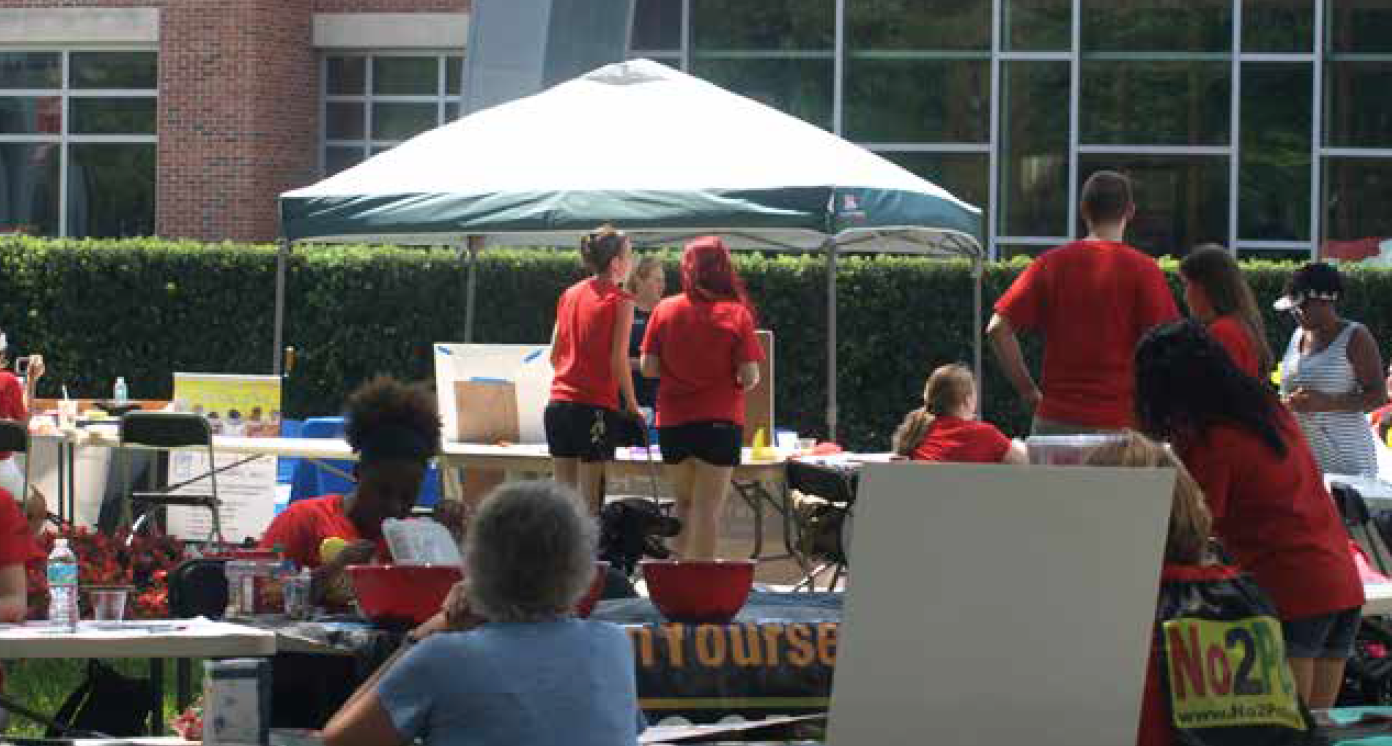
Students attend an event in front of the Sykes College of Business. Photo credit Charlotte West.

Aubry appreciates that UT allows him to run the program with a small group of five to six students. “The students get more out of the experience,” he says.

Professor Tressa Pedroff leads a travel course to Costa Rica for nursing and public health students. The course, Transcultural Healthcare in Latin America, covers concepts such as community health promotion and disease prevention.

Pedroff says the course is an opportunity for future health care providers to understand their own medical system in a comparative context: “It’s a way of becoming much more culturally aware. It makes them have a new appreciation for other cultures and the resources that they have here in the United States.”

The Sykes College of Business also offers a range of travel courses for both undergraduate and graduate students. Business Professor Julia Pennington leads a travel course in qualitative market research to Swaziland in Africa. Her students visit game parks and interview local residents about their views on rhino conservation. “What I found out in my teaching is that qualitative research in study abroad is fantastic because you really have to connect with the locals,” she says.

Sykes also offers travel courses that look at international markets for graduate students. Amy Beekman, director of graduate business programs, says that it’s harder for graduate students to spend a semester away, so travel courses are an attractive option.

“Our international travel courses are a combination of business programs and cultural excursions, and they do projects for companies that we visit,” she says.

For their executive MBA program, Beekman recently led a 10-day trip to Ireland where students consulted for high-tech companies at a business incubator in Dublin. The students spent a few days on site with the company and then worked virtually after returning home.

Image
ITC 2016 Tampa College of Business
The Sykes College of Business is home to international business, the largest undergraduate major on campus. Photo credit Charlotte West.

“Particularly in the executive MBA program, it’s all about the application. Our students already have a lot of professional experience. It’s a great learning experience for our students to be able to take everything they’ve learned in the program and to be able to apply it. Then you have the cultural dimension on top of it,” Beekman says.

Using Diversity as a Recruitment Tool

Over the last decade, the University of Tampa has increased not only its total enrollment but also the share of international students on campus. Total enrollment has increased from around 5,000 students in 2005 to nearly 8,000 in 2015, with the percentage of international students growing from approximately 9 percent to 20 percent during the same period.

When Vice President for Enrollment Dennis Nostrand came on board eight years ago, he couldn’t help but notice just how internationalized the campus had become. “I felt that it was something from a marketing standpoint that I really needed to take advantage of, and make sure that students that were going to come to the University of Tampa realized how internationally diverse the student body was,” he says.

To help attract international students, Nostrand created a bridge program with an English as a Second Language (ESL) provider. It is unique because it only enrolls students who plan to matriculate into UT once they achieve English proficiency, thus building a strong enrollment pipeline.

UT’s success in internationalization has also become one of its major selling points. “We want to make sure that students really understand the advantages of having an international campus,” he says.

Read More

2016 Comprehensive University of Massachusetts Boston

As Boston’s only public research institution, University of Massachusetts Boston (UMass Boston) sets itself apart in a number of ways, including the composition of its student body. The diversity of UMass Boston, with minority students making up 48 percent of its more than 17,000-student population, means that the global truly starts at home.

Chancellor J. Keith Motley says the university’s current mission goes far beyond its original mandate from 1974: “While we are an institution that began as one that was born to serve the citizens of Boston, we realized that in doing that we also serve the citizens of the world because this campus has transformed into one with over 90 different languages spoken on campus and 150 different countries represented.”

Designated as an Asian American Native American Pacific Islander-serving institution (AANAPISI), UMass Boston is recognized by the U.S. Department of Education as a minority-serving institution. Many students are first-generation college students who come from immigrant backgrounds.

Senior anthropology major Michelle Chouinard says she has benefitted from opportunities to travel abroad as well as the global composition of the student population: “Our student population is so diverse. As someone who grew up in suburbia, it’s altered the way that I look at my own backyard.”

Embracing the Urban Context

Chancellor Motley and Provost Winston E. Langley view UMass Boston’s profile as an urban public research institution as central to its global vision. The university’s mission statement, which was revised in 2010 as part of its strategic plan, explicitly links the urban and the global: “The University of Massachusetts Boston is a public research university with a dynamic culture of teaching and learning, and a special commitment to urban and global engagement.”

According to Langley, the goal is to make UMass Boston the most cosmopolitan public urban research university in the United States. “By cosmopolitan, we mean that our students upon graduating should be able to live, thrive, and establish their social wellbeing any place on earth and do so with cultural ease. If our students are going to be citizens, not just occupants, of that society, they must be actively engaged and must be capable of crossing cultural cleavages and borders with facility,” he says.

A Systems Approach to Internationalization

One of the first things Langley did when he became provost in 2009, after more than two decades serving UMass Boston in a variety of other academic and administrative positions, was to establish the Office of Global Programs. Global Programs currently manages all internationalization efforts at UMass Boston under the leadership of Schuyler S. Korban, who came on board in 2013.

The Office of Global Programs has become the campus’s internationalization hub under Korban’s leadership as vice provost. Global Programs oversees a wide portfolio, including international student and scholar services, education abroad, exchange partnerships, an international visiting scholar academy, international internships, and a Confucius Institute, among others.

Robyn Hannigan, dean of the School for the Environment, has seen a huge change in terms of internationalization at UMass Boston in the seven years she’s been at the institution: “Since Schuyler has come on board, there has been a culture shift where what the faculty are doing (with international opportunities) is not only appreciated, but it’s expected and it’s merited. Our provost and our chancellor are fully aware when we’ve travelled abroad.”

Korban says he draws on his academic background as a molecular biologist in his approach to internationalization. “We think in terms of systems, so I look at internationalization as a system. I’m interested in expanding our network and along with the expansion of that network, identifying nodes of strength in terms of our partnerships overseas,” he explains.

One example of a “node of strength” is the Center for Governance and Sustainability (CGS). Under the leadership of Robyn Hannigan and Maria Ivanova, codirector of CGS, UMass Boston has received an Integrative Graduate Education and Research Traineeship (IGERT) grant from the National Science Foundation for its transdisciplinary program, Coasts and Communities. This grant, focusing on international research in the Horn of Africa, has helped shape internal campus development by promoting collaborations among the McCormack Graduate School for Policy and Global Studies, the College of Science and Mathematics, the School for the Environment, the College of Management, and the College of Liberal Arts.

Image
ITC 2016 Massachusetts Boston Cape Town
Honors College Dean Rajini Srikanth took students in Honors 490 Epidemics to Cape Town, South Africa, to explore and engage with stakeholders who impact public health, sanitation, housing, resistance to police violence, and other issues of equality. Photo credit UMass Boston.

Ivanova approached Korban about offering a short course in Ethiopia. “I said, ‘Think about it in the bigger context. Let’s think about it as an opportunity to create something sustainable,’” Korban says.

He gave Ivanova funding to establish a regional environmental diplomacy institute that brought together representatives of the Ethiopian ministries of foreign affairs and environment with parliamentarians, academics, and nongovernmental organizations. “We shared our research findings about how countries are implementing their obligations under international environmental conventions,” Ivanova says.

Seed Funding to Increase International Engagement

One of Korban’s first initiatives as vice provost of global programs was to launch a competitive seed grant program that supports internationalization of teaching, research, and outreach. In total, the Office of Global Programs has dedicated $150,000 to the initiative.

“The idea is to support faculty who are interested in internationalizing education, research, and service. As a result, our faculty-led programs have increased. Then, in turn, they develop these new courses that end up impacting our study abroad programs,” Korban says.

Last year, Felicia L. Wilczenski, associate dean of the School for Global Inclusion and Social Development, received a $5,000 seed grant to bring in representatives from John Paul II Catholic University of Lublin in Poland for an international conference, Building Inclusive Communities, in December 2015. She also used the funding to help take a group of UMass students to Poland for a course and study tour titled Focus on Inclusive Policy, Practice, and Educational Reforms in Poland.

Image
ITC 2016 Massachusetts Boston Poland
Members of the School for Global Inclusion and Social Development, College of Education and Human Development, and College of Advancing and Professional Studies went to Poland over spring break to study inclusive policies, practices, and educational reforms. Photo credit UMass Boston.

“The funds helped me to enact parts of the MOU that UMass Boston previously executed with the John Paul II Catholic University of Lublin (KUL) in Poland. These two activities helped to deepen the partnership between our two institutions. We also have a joint research collaboration in the planning stages,” Wilczenski says.

Since 2014 the Office of Global Programs has also committed $50,000 annually to incentivize faculty to internationalize their curricula for both undergraduate and graduate programs. Faculty and teaching staff can receive up to $1,500 for curricular enhancements, the creation of online modules, or travel abroad.
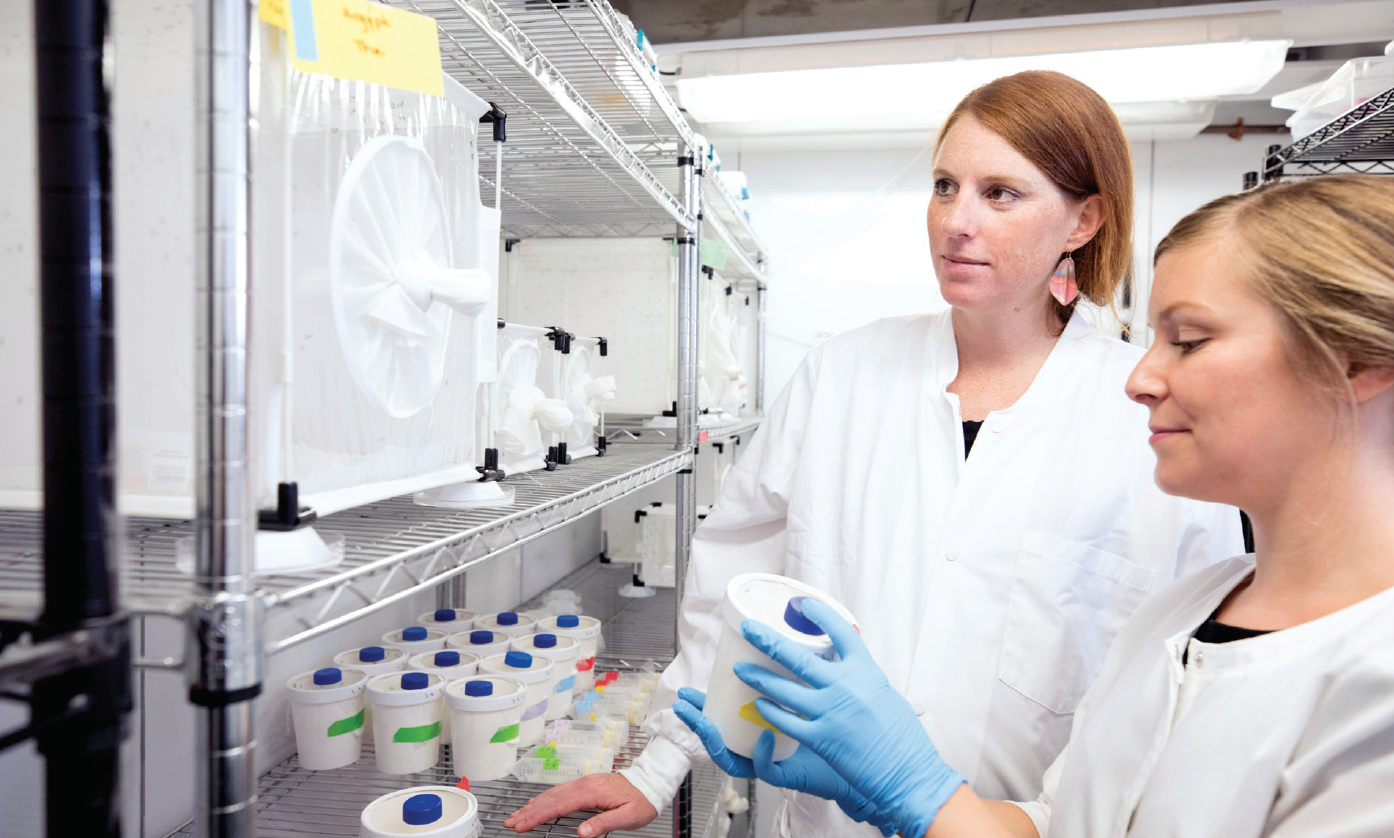
Student Mobility Through Exchange and Short-Term Programs

The Office of Global Programs has focused on developing short-term and exchange programs, largely due to the makeup of the student body. “With the demographics that we have, we have been focusing on short term as opposed to semester or year-long programs,” Korban says.

Over the last five years, the number of UMass Boston students studying abroad has increased from 75 students in 2009–10 to 466 in 2014–15, according to Ksenija Borojevic, assistant director for study abroad.

The Office of Global Programs has also focused on the development of reciprocal exchange agreements. UMass Boston currently offers its students more than 35 exchange options, which also help boost the number of international students on campus. In 2014–2015, 78 exchange students enrolled at UMass Boston.

Natalia Pisklak, a senior biology major, spent last summer at Oxford University in the United Kingdom. She worked one-on-one with a professor to study neurophysiology.

“It made me gain confidence in talking with professors about science. I was always scared of talking about a field that they know so much about, but now I am so much more comfortable,” she says.

Lurlene Van Buren, coordinator of student exchange, says that undergraduate exchange programs also serve as a recruiting tool to attract international students to UMass Boston graduate programs. Marco Bellin, an Italian MBA student, was such an exchange student in 2009–2010.
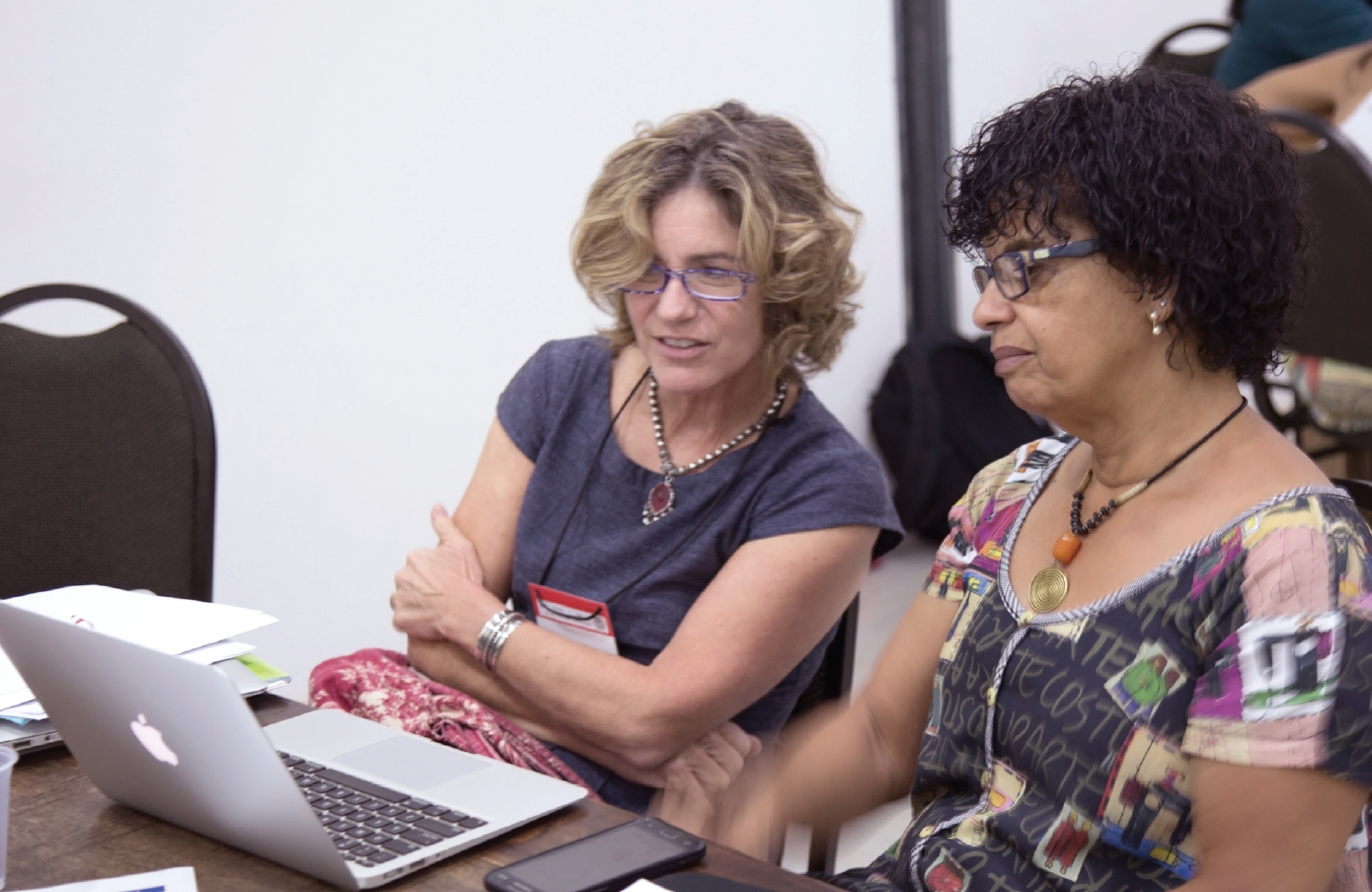
“I felt from my exchange program here seven years ago that this was a place I could call home. I saw UMass Boston as a good value for money option where I could get a top notch MBA at the fraction of a cost of other institutions,” Bellin says.

UMass Boston also offers 25 faculty-led programs, which have helped contribute to significant increases in students studying abroad. The number of students participating in these programs jumped from 132 in 2011–12 to 219 in 2014–15.

The Honors College offers one such program, a year-long seminar called International Epidemics. In between the two semesters, students participate in a 12-day field experience over winter break to South Africa led by Rajini Srikanth, dean of the Honors College, and Louise Penner, associate professor in English. Last year, Srikanth and Penner also took students to India for the first time.

Penner says that the discussion in the classroom is much richer the second semester after students have returned from their field experience. “The spring semester is very gratifying in some ways, because students make complex associations and analyses, and conversations become very far ranging. That’s why we are both always surprised at the kind of impact that 12 days has on them,” she says.

An Entrepreneurial College Working Across the University

Most of UMass Boston’s faculty-led programs are run through the College of Advancing and Professional Studies (CAPS), which collaborates with all academic departments and the Office of Global Programs. In addition to administering faculty-led programs, CAPS oversees an English as a Second Language (ESL) program, online learning, and a number of certificate and degree programs.
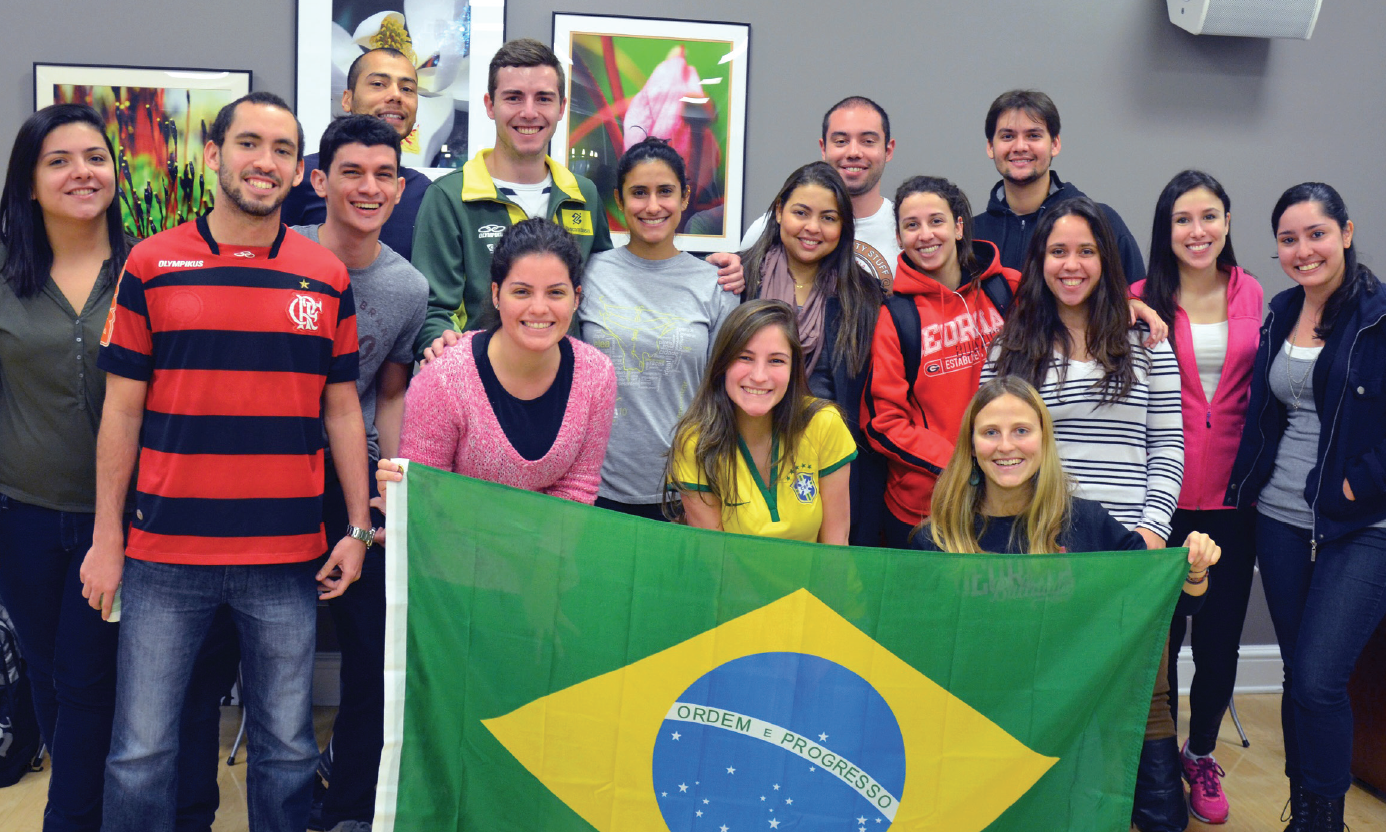
Dean Philip DiSalvio describes CAPS as “the entrepreneurial arm of the university.” However, he stresses that the aim of CAPS, as a self-sustaining unit, is not to generate profit but to contribute to the intellectual life of the campus. DiSalvio’s team works hard to make study abroad affordable to as many students as possible, with programs generally operating at cost.

CAPS often builds on relationships that professors bring with them to UMass Boston. One recent program was Conflict Transformation Across Borders in Quito, Ecuador.

Building on his affiliation as a Fulbright fellow to the Department of International Studies and Communication at FLACSO (Facultad Latinoamericana de Ciencias Sociales) Ecuador, Assistant Professor Jeff Pugh wanted to continue running study abroad programs in Ecuador when he joined UMass Boston. During the three-week summer course, students learn about conflict resolution, and acquire skills such as negotiation and proposal writing. They also visit indigenous communities along the border between Ecuador and Colombia. “We talked about how the refugee issue has been affecting their identity as a border community where a lot of people have family on both sides of the border,” says Pugh.

Abdul Aziz, a master’s student in conflict resolution and Fulbright scholar, was one of 14 participants in the program. He was able to find parallels to his own experiences in his native Indonesia. “I didn’t expect to be able to relate my own stories with those of the refugees that I met. It feels very similar with what happens at home in Indonesia with all the identitybased conflict,” he says.

International Exposure for First-Year Students

Within the College of Science and Math, Dean Andrew Grosovsky has helped establish the Scotland Exchange Program in partnership with Glasgow Caledonian University (GCU), an urban university in Scotland. UMass Boston freshmen majoring in science and mathematics engage in the exchange as part of their participation in a freshman success community.

Since 2011 UMass Boston and GCU each send six freshmen to the other institution for a week-long exchange. At UMass Boston, each of three freshman success communities within the College of Science and Math nominate two student ambassadors to travel to Glasgow for a week during the fall semester. Other members of the freshman success communities are responsible for hosting the visiting Scottish students.

Grosovsky says that the larger goal of the exchange is to strengthen and better integrate the three freshman learning communities, which are made up of around 70 students in total. They benefit from working together to host the Scottish students, and at the same time, gain exposure to another culture.

“Sometimes people say that six students for one week doesn’t sound like a lot, but we have had more than 10 times that number who are participating. They are all interacting closely with the Scottish students and are experiencing the value of the exchange,” Grosovsky says.

Image
ITC 2016 Massachusetts Boston Galasgow Caledonian University
Andrew Grosovsky, dean of the College of Science and Math, with freshman science and math majors who participated in an exchange with Glasgow Caledonian University in Scotland. Photo credit Charlotte West.

Megan Fung is a freshman biochemistry major who traveled to Glasgow as an ambassador. “There’s a lot more to the exchange than people understand. A lot of it is about networking and developing relationships not only with the Glasgow Caledonian students, but also with each other,” she says.

The School for the Environment also offers its freshmen an early international experience. In fact it is the only academic unit on campus that requires students to have an international experience before graduation. As part of the freshman seminar for environmental science, 15 freshmen traveled to the Azores islands in Portugal to learn about geology, ecology, and land-use practices.

Erika Welch, a sophomore environmental science major, said that having an international experience so early in her college career made her want to study abroad again. During summer 2016, she spent three weeks in Brazil in another program piloted through the School for the Environment.

Global Engagement Outside the Classroom

Kim Montoni, director of international education, organizes a number of programs geared toward engaging the larger campus community in global affairs. Her flagship initiative is Global Ambassadors, a leadership program that requires students to commit to working with international programming for an academic year.

Five to 10 students are selected each year to serve as global ambassadors. Throughout the year, they participate in workshops and professional development opportunities. They are also responsible for organizing activities for international students on campus, and they assist Montoni with international student orientation and with the U.S. Department of State’s International Education Week.

“Our job as global student ambassadors is not only to be a bridge, but also to create a very strong community,” says Aroma Kazmi, a psychology major from India.

The students traveled with Montoni to New York City, where they visited the United Nations (UN) headquarters. Last year, global ambassadors also attended the NAFSA 2015 Annual Conference & Expo in Boston.

Montoni collaborates with other offices on campus, offering predeparture orientations and health and safety support for non-credit-bearing servicelearning trips offered through the Office of Student Leadership and Community Engagement. She also works closely with the Division of Student Affairs, whose activities often dovetail with those of the global ambassadors.

Growth Through Strategic Recruitment

The last five years have seen a remarkable increase in the number of international students on the UMass Boston campus, from 675 in 2009–10 to nearly 2,500 in 2015–16, currently making up approximately 12 percent of the entire student body. The boost in international student enrollment has largely been a combination of an active recruitment strategy abroad and pathway programs such as the Navitas at UMass Boston Undergraduate Pathway Program. UMass Boston has focused on the development of pathway programs that allow students to work on language skills prior to pursuing a bachelor’s degree.

According to Michael Todorsky, manager of international partnerships, UMass Boston’s first pathway program began 14 years ago with four students from one program with Tsinghua University in Beijing, China. Since then, it has expanded to Vietnam and South Korea. UMass Boston has also established a residential ESL program at the Massachusetts International Academy in Marlborough that currently serves around 300 students.

Lisa Johnson, vice chancellor for enrollment management, would like to increase the share of international students from its current 12 percent. However, the challenge lies in continued growth in domestic enrollment.

The freshman class of fall 2015 was the largest in the history of UMass Boston, with nearly 3,400 new students—and even more growth is projected in upcoming years. To accommodate the expected growth, the campus has been under construction with two new buildings completed in 2015 and 2016, with an investment of more than $700 million. In 2018 the university will open its first residence hall to provide housing for 1,000 students.

Johnson is excited about the prospect of on-campus housing to boost international student enrollment: “We just opened these two academic buildings. We’re building another. The residence halls are going to be beautiful. When all of these dirt piles are gone, you can get back to driving around this peninsula. Who would not want to come here from another country?”
 

Read More

2016 Comprehensive New York Institute of Technology

With seven campuses in four countries, New York Institute of Technology (NYIT) gives “global” an entirely new meaning. In addition to its presence around the world, NYIT boasts an exceptionally diverse student body, with nearly 20 percent of its students coming from more than 100 countries. The global perspective, as President Edward Guiliano is fond of saying, is infused into the institutional DNA.

NYIT’s high-tech environment also means that its global campuses in Nanjing, Beijing, Vancouver, and Abu Dhabi are just a few clicks away through state-of-the-art video conferencing that allows students to create and collaborate with their counterparts on the other NYIT campuses.

Developing a Global Network

Provost and Vice President for Academic Affairs Rahmat Shoureshi describes NYIT as a high-tech global network. “We have live connections in all of these places, and our students, as well as faculty, can benefit from all of the expertise we have distributed around our network,” he says.

Eschewing the branch campus model, NYIT campuses worldwide follow the same curriculum and are held to the same academic standards. All admissions decisions also go through the Old Westbury campus on Long Island. As Guiliano puts it, “We are one university and offer one curriculum and one degree.”

NYIT also encourages student and faculty mobility between campuses. Students from NYIT-Nanjing, for example, spend their senior year in New York. Shoureshi’s office will also provide travel scholarships for any NYIT student who wants to spend a semester at one of the global campuses. Faculty who propose research that requires collaboration with other campuses receive priority in allocation of research grants.

ITC 2016 NYIT Engineering Major
Amanjeet Singh, an engineering major from India known as “AJ,” toured several U.S. institutions before finally deciding on NYIT because of its diversity. Photo credit Charlotte West.

The first NYIT global program began in China in 1998; the oldest global campus, NYIT-Abu Dhabi, was founded in the United Arab Emirates (UAE) in 2005 as the first licensed and accredited American university in the UAE capital. NYIT-Nanjing opened its doors two years later, followed by NYIT-Vancouver in 2009. Most recently, NYIT opened a second campus in China in collaboration with the Communication University of China (CUC) in Beijing. NYIT has also just opened a new medical school campus on the grounds of Arkansas State University, in a region of the United States where many people lack access to healthcare.

NYIT also offers a number of dual-degree bachelor’s and master’s programs. With Centro Universitário da FEI in São Paulo, Brazilian students in engineering spend two and a half years at FEI, then come to New York for one and a half years, and then return to Brazil for their final year. NYIT also has degree partnerships with more than half a dozen Chinese universities, as well as with institutions in Brazil, France, India, Mexico, Taiwan, and Turkey.

Creating a Positive Experience for International Students

The presence of more than 2,500 international students on the main New York campuses in Manhattan and at Old Westbury on Long Island helps bring the world to NYIT.

Amanjeet Singh, an engineering major from India, feels like NYIT effectively bridges the gap between domestic and international students. He has done his part to help international students integrate into life at NYIT as an international student ambassador, a program managed by the Office of International Education.

“I take care of the freshmen students that come from India or other parts of the world. We have different events and programs so that people can get involved,” he says.

To ensure a positive experience for all international students, the institution convened an international student task force consisting of around 30 faculty and staff in Manhattan and Long Island in 2014–2015. They explored four areas: education, housing and food, jobs and career services, and customer service.

As a result, NYIT created workshops to help faculty and staff understand the challenges international students face, added a range of cultural foods in the dining halls, created on-campus job opportunities, and worked with units across the institution to improve customer service to international students.

The Office of Campus Life also collaborates with the counseling and wellness services offices. For example, it invited in therapists who spoke other languages to help international students understand what counseling entailed, and subsequently saw an uptick in the number of international students seeking counseling services.

Student service, according to Ann Marie Klotz, dean of campus life for Manhattan, is the heart of the NYIT experience. “If I can’t help you, I’m literally going to walk with you to the next office and make sure you have what you need. I think that is the difference maker for a lot of our students,” she explains.

“This is a very special kind of place if you allow yourself to get immersed in the life of students. It doesn’t feel overwhelming. It feels like an overwhelming privilege.”

Preparing Global Professionals

One of the core elements of an NYIT education is to prepare students to enter the job market upon graduation. President Guiliano says that NYIT fosters global competency by providing students with real-world experience and exposure to industry as well as opportunities to work with teams around the world. “Global competency means that work experience, connectivity, and collaboration are really part of what we do in the curriculum.”

Under the rubric of career services, Amy Bravo, assistant dean, oversees experiential education, internships, and service learning. Her office also coordinates job fairs and organizes mock interviews and networking opportunities.

They take special care to ensure that international students are also able to take advantage of opportunities to gain professional skills while still complying with immigration requirements.

Bravo created a number of alternative opportunities for international students to get practical experience. One such initiative is Consultants for the Public Good, which allows all students to work together on projects such as designing a multimedia art gallery for a school cafeteria.

“The idea is to get students to work in teams on community-based projects as opposed to signing up for a volunteer opportunity one time,” Bravo says.

Her office also oversees on-campus employment for both New York campuses. A few years ago, it created a job lottery for student employment, and several positions were earmarked specifically to international students, she says.

Localizing a Global Curriculum

The curriculum remains the same at each campus, but the content of courses can be adapted to the local context. “If students are taking a course in finance in New York, maybe the examples or the case studies are more focused on the types of investments, stocks, and so forth. The same class in Abu Dhabi follows the same curriculum. But the case studies will be on Islamic finance rather than on the stock market,” Shoureshi says.

Harriet Arnone, vice president for planning and assessment, explains it in terms of learning outcomes: “We have to guarantee consistency in learning outcomes across campuses....However, to be relevant to different cultures, particularly as we are so career-oriented, we allow faculty at different locations to add learning outcomes to courses… that reflect the environment...in which graduates will be working.”

NYIT is in the process of developing an occupational therapy program in Vancouver, British Columbia, which must be approved by the Canadian National Organization of Occupational Therapists. Jerry Balentine, DO, vice president for medical affairs and global health, says that as a result, students in the occupational health program in New York will be exposed to more information about the Canadian health care system.

Boosting Student Mobility

Education abroad at NYIT is housed in the Center for Global Academic Exchange, headed by Julie Fratrik. In addition to coordinating services for inbound international students coming to New York from exchanges or other NYIT campuses, her office also offers education abroad advising for outbound domestic students. In 2014–2015, 183 NYIT students participated in education abroad.

Kayla Ho, an American electrical and computer engineering major, spent spring 2015 at NYIT-Nanjing. Her family roots are in China, and she says the experience allowed her to learn more about her heritage as well as about her field of study.

“The chance to go to Nanjing was incredible.... Since it opened its doors, China has been developing technology at an astounding rate; there are new technologies and technology companies being created every day,” she says.

Eriana Burdan, a junior communication arts major, attended one of NYIT’s summer programs with its partner in Paris, École des Nouveaux Métiers de la Communication (EFAP). She took a course in documentary filmmaking that gave her a new perspective on her future media career.

She says it made her think about other career options in her field: “It made me realize that I was pigeonholing myself. There are so many more opportunities in and outside of the United States. It expanded the scope of what I could do with my major.”

Creating Alternative Opportunities to Travel the World

Beyond traditional study abroad, NYIT offers a number of noncredit opportunities for students to travel. Since 2014, President Guiliano has spearheaded Presidential Global Fellowships, which offers awards for NYIT students to engage in research projects, attend global conferences and symposiums, study abroad at another university, or do an internship at international nonprofit organizations.

Image
ITC 2016 NYIT Students
Students at NYIT-Nanjing. Photo credit NYIT.

Guiliano says the goal is to help students have “transformational experiences” at least 200 miles from students’ home campuses. Since the program’s inception, more than 50 students have received awards.

Usman Aslam is a second-year medical student who received a Presidential Global Fellowship in 2015 to travel to Guayaquil, Ecuador, to spend a week working at a mobile cataract surgery clinic, where he was part of a team that performed 128 cataract surgeries. He received $2,500 to cover the cost of his airfare and lodging.

Aslam says that the fellowship was instrumental in his ability to travel. “A grant like this allows us to expand our training, our experiences, and helps mold our understanding of what we want to go into. The fellowship provided me with funding to broaden my perspective on medicine,” he says.

In addition to providing funding for students to create their own “transformative experiences,” NYIT also offers a number of service-learning opportunities abroad. For example, the Office of Career Services organizes an alternative spring break that enabled junior Anthony Holloway to travel to Rivas, Nicaragua, with nine other students to work on a project aimed at improving water quality in the community.

“I had never left the country before,” says Holloway, an interdisciplinary studies major.

Internationalizing the Disciplines

At its New York campuses, NYIT has seven schools and colleges with more than 90 undergraduate, graduate, and professional degree programs. Schools have a variety of faculty-led programs abroad, opportunities to engage with international issues in the classroom, and programs for international students.

The School of Management, for instance, offers four study abroad programs to Costa Rica, India, the Netherlands, and Germany. Students can also do summer internships at destinations around the world.

Every summer, Associate Dean Robert Koenig runs a 27-day business program in New York for 20 students from Hallym University in South Korea. Students take English language and business leadership courses in the morning, and spend afternoons touring business and cultural sites in New York City.

Koenig received the 2015 President’s Award for Student Engagement in Global Education, given to faculty and staff who have made major contributions in the area of global education. His Korea program has been so successful that the School of Management will be launching a similar program next summer with the Tourism College of Zhejiang in Hangzhou, China.

The School of Architecture and Design also has a wide variety of study abroad options for its students. It runs three to four short-term study abroad programs every year, usually in the summer. Approximately 24–40 students participate in these programs per year.

Assistant Professor Farzana Gandhi has worked with a group of students to redesign beach architecture in Puerto Rico and led a program to India that examined the need for affordable mass housing. Many of her courses are focused on social impact design and seek socially and environmentally conscious solutions to global problems such as mass migration, disaster relief, and climate change.

Gandhi says that study abroad has helped her students see their professional practice in a new light: “They have an appreciation for the end user in a much more thorough way.”

From 2012–2014, Gandhi’s students were involved in the Home2O Project, research that led to the development of a roofing system made of recycled plastic bottles and shipping pallets, which has subsequently been patented. Starting with locations like Haiti, they were seeking to develop a kit-of-parts system that could be deployed very quickly at disaster sites in subtropical climates.

NYIT has also provided support for faculty to pursue international research. School of Architecture and Design Associate Professor Charles Matz, who is also director of NYIT’s Center for Data Visualization, received an institutional grant that allowed him to work with the Ethiopian government and the United Nations Educational, Scientific and Cultural Organization (UNESCO) to laser scan heritage sites.

Image
ITC 2016 NYIT Dhabi
Students at NYIT-Abu Dhabi. Photo credit NYIT.

He has also worked on a number of joint programs with international partners in countries such as Egypt, the United Kingdom, and Iceland. Matz says that international programs allow students to understand the global standard for the architecture profession.

“Students realize that what they’re doing here is exactly what other people in their situation are dealing with abroad. Their work and its seriousness ramps up because they realize they’re dealing with global issues,” he says.

As vice president for medical affairs and global health, Balentine directs NYIT’s Center for Global Health. “The Center for Global Health really teaches our students about other countries and health care needs there and how to deliver it,” he says.

Through the Center for Global Health, medical students and students in the health professions can pursue a global health certificate. In addition to core courses, students do global health fieldwork, a 2–4 week program where students deliver health care services in countries such as Haiti and Ghana. They also complete an independent research project on global health under faculty supervision.

Balentine says the goal of the certificate is much broader than just getting students to go abroad. “From a teacher’s point of view, the real value is that even if these students never again leave the U.S. to practice medicine, the experience, the difference in health care that they see, the difference in living, the difference in cultures that they see, makes them better physicians back home,” he explains.

NYIT’s College of Osteopathic Medicine also offers a unique Émigré Physicians Program, which each year enrolls approximately 30 students who were trained physicians in their home countries. It’s one of the few programs of its kind in the United States.

Paving the Way to the Future

In 2015 the institution launched a new long-term strategic plan, known as NYIT 2030 version 2.0. According to Arnone, “When the plan was first published in 2006 the emphasis was on NYIT’s footprint and its additional locations overseas. In the revised plan, the language of the relevant goal now focuses on the global impact of an NYIT education; correspondingly, the priority initiative in support of this goal focuses on increasing opportunities for deep engagement across cultures.”
 

Read More

2016 Comprehensive The College of William & Mary

The College of William & Mary (W&M) in Williamsburg, Virginia, carries on an educational tradition that traces back more than three centuries. As the second-oldest institution of higher education in the United States, William & Mary was founded by King William III and Queen Mary II of England. As current President Taylor Reveley puts it, “We were born global in 1693.”

William & Mary sponsored its first study abroad programs in 1924, and today the university boasts the highest percentage of undergraduates participating in study abroad programs among all public universities in the United States. As of 2016, more than 50 percent of William & Mary undergraduates study abroad before graduation;1 according to Reveley, W&M aims to increase that number to 60 percent by 2018.

Drawing on its historical commitment to innovative teaching and learning, today William & Mary has emerged as a leader in international education with opportunities such as undergraduate research on crucial global problems and a strong ethos of public service. For example, W&M is currently one of the top producers of Peace Corps volunteers among institutions of its size.

“The students who come here want to come to a university that not only has study abroad opportunities, but that also gives them the tools to involve themselves in tackling problems in the developing world or global issues ranging from climate change to health,“ says Stephen Hanson, vice provost for international affairs.

Creating a University-Wide Internationalization Hub

ITC 2016 William & Marry Sign
The Reves Center oversees education abroad, international student and scholar services, and global engagement. Photo credit Charlotte West.

At the forefront of all things international at William & Mary is the Reves Center for International Studies, established in 1989 with a mission “to support and promote the internationalization of learning, teaching, research and community involvement at William & Mary.”

The Reves Center provides support for international initiatives at W&M’s five academic schools—the Faculty of Arts and Sciences, the Raymond A. Mason School of Business, the School of Education, the School of Law, and the Virginia Institute of Marine Science (VIMS). In addition to managing study abroad, offering support for international students and scholars, and providing travel safety advice, the Reves Center promotes and supports international research and organizes on-campus events for the wider campus—and Williamsburg—community.

Since Hanson became director in 2011, he has broken down institutional barriers and worked with offices and academic units across the campus. “We just made it really clear that this is a universitywide internationalization hub,” he says.

Global Engagement Through Outreach and Assessment

The Reves Center is divided into three offices: Global Education; International Students, Scholars, and Programs; and Global Engagement. During his tenure at the Reves Center, Hanson has very intentionally built out the global engagement team, which works with internationalization more generally.

Kate Hoving, public relations manager, oversees the Reves Center’s outreach efforts. She says her job is important to building an internationally minded community. “It’s important to nurture a sense of connection with students and faculty who have come through Reves—whether through study abroad or as international students, scholars, and families,” she says.

Another recent addition to the global engagement team is Nick Vasquez, international travel and security manager. Vasquez, who previously worked for the U.S. State Department, assesses risk for students, faculty, and staff who go abroad on university-sponsored travel. Vasquez, who is a member of the university’s Emergency Management Team, says that being aware of the potential risks associated with international travel is an important aspect of running a safe program. In that capacity, Reves serves as a clearinghouse for the entire campus.

Growing Education Abroad with University-Wide Support

ITC 2016 William & Marry Ancient Ophiolite
Students, led by Professor Chuck Bailey, get up close with an ancient ophiolite (an exposed section of the earth’s upper mantle). Photo credit Pablo Yañez.

The first stop for the more than 800 W&M students who go abroad each year is the Global Education Office, overseen by director Sylvia Mitterndorfer. In addition to the resources available through financial aid, W&M provides more than $400,000 a year in education abroad scholarships. Students can choose from among W&M’s 45 faculty-led programs, 17 semester-long exchange programs, or options through third-party providers.

One of the newest faculty-led programs is an interdisciplinary course, affectionately dubbed “Rock Music Oman,” developed by geologist Chuck Bailey and ethnomusicologist Anne Rasmussen. Students spent two weeks in January 2016 exploring the natural landscape and geological formations of the Omani desert and coastal regions and the vibrant arts scene in the capital of Muscat.

William & Mary also strives to create programs, many with a research component, that make study abroad available to all majors. Senior Alpha Mansaray, a double major in public health and kinesiology, participated in a summer program in Antigua.

“For science majors, it’s hard to fit study abroad into your curriculum. When I heard about this program, I got so excited because I didn’t think I could study abroad. As part of the trip, we also visited hospitals and learned about a different medical system,” Mansaray says.

Comprehensive Services for International Students, Scholars, and Their Families

In addition to sending 800 undergraduates abroad each year, William & Mary also hosts nearly the same number of international students and scholars. Stephen Sechrist is the resident expert on immigration regulation as the director of the International Students, Scholars, and Programs Office (ISSP). According to Sechrist, ISSP operates in three core areas: immigration and visa services; programming, advocacy, and outreach; and English language programs.

Sechrist and his staff try to build relationships with students and their families before they even set foot on campus. Recently, they have partnered with the Dean of Students Office to offer admitted students days abroad, starting in Beijing and expanding to Seoul, Hong Kong, Shanghai, and Tokyo. “For a lot of our international students abroad, it’s just not feasible to fly over for a one day event,” Sechrist says.

W&M will be launching its first intensive English program this summer. Students will start online in their home countries and then do a residential week at W&M prior to the regular international student orientation.

Staff also find other ways to help new international students connect to the W&M community before they arrive on campus. Through the virtual conversation partner program, which was designed by W&M School of Education alumna Jingzhu Zhang to help international students feel connected to campus and practice their English, April Yuezhong Zheng, a senior history major from China, was paired with a U.S. student. “I started talking with my partner Connor over Skype. We started in late May and then we basically did it at least two to three times a month until I arrived. He even picked me up at the airport,” she says.

In addition to serving international students, ISSP also tries to provide support to the families of its approximately 100 international scholars.

Ettore Vitali is a postdoc from Italy who studies theoretical environmental physics. His wife, Gabriella Lettini, accompanied him to Williamsburg. She has been able to take English classes as well as find ways to get involved in the community through volunteering at a local animal shelter. “It is very helpful for me to improve my English and also to meet other people,” she says.

“We have a very thriving international family network to support the families of our international students, scholars, and faculty,” Sechrist adds.

At the graduate level, the law and business schools have more active recruitment strategies for their LLM and MBA programs. Amanda Barth, director of MBA admissions for the Mason School of Business, says that approximately 40 percent of the 110 students in each MBA cohort are international.

Image
ITC 2016 William & Marry Students
English Professor Colleen Kennedy (center) oversees W&M’s joint degree program with the University of St Andrews in Scotland. History major Jui Kothare (left) and economics major Cooper Nelson (right) serve as peer mentors for new students in the program. Photo credit Charlotte West.

Deep Connections Abroad with International Partners

Since 2011 W&M has offered a unique joint degree program with the University of St Andrews in Scotland that grew out of a 25-year study abroad and exchange relationship. The program currently has four tracks: economics, English, history, and international relations; new tracks in classics and film studies have also just been approved.

According to Associate Professor and Program Director Colleen Kennedy, the program recruits approximately five students in each major at each school, for a total of 40 students per cohort, the first of which graduated in 2015. In total, students complete two years at each institution.

History major Jui Kothare says one of the reasons she chose the program was the history of the two institutions. She began her freshman year at St Andrews before moving to W&M her sophomore year. “The second year is really tough just because you have to be a freshman again and make the same connections all over again,” she explains.

To help students make the transition, Kennedy created a peer advising program. “Our job is basically to help the first and second years come over here, and integrate into the community,” says economics major Cooper Nelson.

Nelson says the program’s uniqueness helped him secure a position at a consulting firm in Washington, D.C., after he graduates: “The program provides such a great talking point. It’s provided an easy way to connect with employers. They have to question: ‘why did you go to two different schools at the exact same time?’”

Bringing International Partnerships to Campus

Established in 2011, the William & Mary Confucius Institute (WMCI) is a joint program with Beijing Normal University in China, sponsored by Hanban, a nonprofit organization under the Chinese Ministry of Education. “Our mission here is to promote Chinese language learning and Chinese language culture, on campus and also in the neighboring community,” says Lei Ma, Chinese director.

Ma says the institute has collaborated with various departments, including the Chinese Studies department, to organize events and lectures. It also assists the Reves Center in predeparture orientations for study abroad to China and helps host a summer program for 40 undergraduate students from Beijing Normal University.

“We also do quite a bit of community outreach here. For example, we collaborate with local K–12 schools,” adds Ying Liu, WMCI assistant director.

Another flagship program overseen by the Reves Center is the William & Mary Cross-Cultural Collaboration with Keio University in Japan. Each summer, W&M hosts 40 Japanese students for a three-week program that allows them to study U.S. culture and society alongside William & Mary students.

William & Mary also participates in the Presidential Precinct, a nonprofit organization operated in collaboration with the University of Virginia, Thomas Jefferson’s Monticello, James Madison’s Montpelier, James Monroe’s Highland, and William Short’s Morven. The consortium hosts 25 young African fellows through the Mandela Washington Fellowship, the flagship program of President Obama’s Young African Leaders Initiative, for a six-week program every summer. 

A Longstanding Commitment to Undergraduate Research

William & Mary has been described by Dan Cristol, a biology professor, as having “the heart of a liberal arts college with the brains of a research university.” Nowhere is this more evident than in the university’s commitment to undergraduate research opportunities.

“What makes undergraduate education here great is the way the faculty teach. A lot of them increasingly teach through research. I publish articles with my students,” says Sue Peterson, government professor and director of the international relations program.

In fact, approximately 70 percent of William & Mary undergraduates participate in mentored research with a faculty member or take a course in which research is a primary component.

Senior Hispanic studies major Stephanie Heredia participated in a five-week summer study abroad program to Cádiz, Spain, where she researched Spanish pop culture as part of her capstone project: “At the end of the project, we had to do a 15-page paper and a presentation all in Spanish. This experience really helped me get acquainted with the culture and field research practices.”

W&M offers incentives for faculty to collaborate with students on research projects. Through its faculty fellows program, Reves offers grants of $5,000–$10,000 for “projects that involve students either through student-faculty collaborations on an international research project, or that involve research, teaching, and learning through community-based engagement.”

In 2012 Francis Tanglao-Aguas, professor of dance and theater, received a $10,000 grant to travel to Bali, Indonesia, with a fellow faculty member and five students. As a result of the trip, he produced the Sitayana (Sita’s Journey), an original dance theater epic inspired by the story of the wife of a Hindu poet. The five students who traveled with him assisted with training the other students who took part in the production.

“The fellowship led to the creation of an original piece. It was a major component of my body of work with students. I took five students, but when you count the more than 150 students who were part of that project afterwards and the 1,000 students who saw the show, it was a worthy investment,” Tanglao-Aguas says.

A Campus Hub for Student-Faculty Collaboration on Policy-Relevant Research

A hub for interdisciplinary undergraduate research on campus is the Institute for the Theory & Practice of International Relations (ITPIR), headed by Director Michael Tierney.

ITPIR’s mission is “to produce innovative and policyrelevant research; to provide students with research skills and experiences; and to make a difference in the world.” There are currently more than 20 faculty and 250 undergraduates involved with ITPIR in various ways.

ITPIR has projects on topics ranging from the impact of cell phone technology on women’s empowerment and development in Africa to using computer algorithms to forecast political violence. Other programs include an undergraduate think tank in international peace and security and a summer program in Bosnia during which W&M students run an English immersion camp for kids.

AidData is a W&M research and innovation lab affiliated with ITPIR that focuses on international development finance. According to Carey Glenn, junior program manager, around 120 student researchers work on aid tracking programs. AidData sends 15–20 of these student researchers abroad for 10 weeks through its summer fellows program.

Breanna Cattelino, a senior public policy major, spent last summer in Uganda to train local organizations in global information systems (GIS). “It was a lot of actual on-the-ground work,” she says.

Curriculum Reform to Provide International Experiences for Everyone

According to Provost Michael Halleran, William & Mary’s goals in the next several years are to “become even more international, interdisciplinary, and engaged with student research in the coming years.” A big step toward achieving these aims is the implementation of a new undergraduate general education curriculum in the Faculty of Arts & Sciences this year.

The new curriculum replaces the previous “breadth requirements” with an integrated series of courses. Freshmen take courses that introduce them to “big ideas,” followed by courses rooted in natural science, social science, and humanities that nevertheless take an interdisciplinary approach their sophomore year. Their junior year, students take “COLL 300,” which requires a global or cross-cultural experience. Students then complete a capstone project during their final year.

“One of the things that we are trying to do in the new curriculum is put a greater emphasis on things international and global and be sure that everybody one way or another gets involved,” says President Reveley.

Image
ITC 2016 William & Marry College Building
Visitors on the campus of William & Mary take a tour of the Christopher Wren Building, the oldest college building still in use in the United States. Photo credit Rachel Folis/William & Mary.

Hanson says COLL 300 is the “internationalization pillar” of the new curriculum. Most students will meet the COLL 300 requirement through study abroad. Students can also meet the cross-cultural requirement through study away in the United States or through specific on-campus courses with a global focus.

Halleran adds that COLL 300 was designed from a perspective of “opportunities more than requirements. I’m very pleased with how the faculty addressed a broader international piece in the curriculum,” he says.

Faculty members are equally as pleased with the new curriculum. “All the initiatives with COLL 300 are really to institutionalize what a lot of us have already been doing,” says ethnomusicologist Anne Rasmussen.
 

Read More

2018 Spotlight University of Georgia

As an ecologist studying vector-borne diseases, Courtney Murdock had long been interested in conducting research in Brazil, which made headlines around the world in 2015 due to the Zika virus epidemic. Her opportunity to travel to Brazil came in 2016 due to an innovative partnership between the University of Georgia (UGA), where Murdock is an assistant professor, and the Brazilian state of Minas Gerais. After participating in a university-sponsored faculty workshop designed to foster research collaboration with several Brazilian institutions, Murdock and faculty from Brazil’s Federal University of Viçosa (UFV) received a $15,000 seed grant. The project, which will include the training of Brazilian and U.S. PhD students, explores how temperature variations affect the mosquito-Zika virus interaction. 

Murdock’s grant was part of UGA’s strategic, data-driven approach to building international partnerships in Brazil. UGA has combined targeted use of incentive funding with facilitated faculty mobility to enhance research collaboration with five institutions in Minas Gerais. The partnership aims to not only strengthen faculty involvement in campus internationalization, but also focus resources on complementary research areas. 

Balancing Individual Initiative and Centralized Coordination

As a comprehensive land- and sea-grant institution made up of 17 schools and colleges, UGA faces many of the same challenges that other large public universities encounter when it comes to international research collaboration. Many areas of the university are actively engaged in international research, but opportunities for synergies are often lost. While centralized coordination is essential, collaborative research is ultimately driven by the faculty. 

“Particularly if you move beyond student mobility, you have this challenge of relying on individual faculty initiative to generate lasting research and service interactions,” says Brian Watkins, director for international partnerships. When Noel Fallows became the associate provost for international education and senior international officer in 2016, he wanted to address this issue by strengthening the role of the UGA Office of International Education in establishing research partnerships. “I wanted to position the international office as a major nexus for international research on campus,” he says. 

Fallows and Watkins worked together to pinpoint where they wanted to focus their efforts. “We wanted to figure out where in the world we have an existing critical mass of relationships where there is also potential for further collaboration in priority research areas,” Watkins says.  

Using Data Analysis to Identify Strategic Partners

Using an internal faculty database and Clarivate Analytics’s InCites platform, Watkins performed a bibliometric analysis to identify the Brazilian state of Minas Gerais as a region where UGA already had substantial engagement. While the university had always viewed Brazil as a strategically important partner, the analysis showed that an outsized portion of UGA’s collaborations in Brazil could be traced to several institutions in Minas Gerais. Furthermore, there was significant overlap in several priority areas—such as human and animal health, life sciences, agriculture, and environmental sciences—that suggested possibilities for future research collaboration.

Image
ITC 2018 Georgia Researchers
Courtney Murdock working with postdoc Christine Reitmeyer and several researchers from Brazil’s Federal University of Viçosa to study the impact of environmental temperature on the interaction between mosquitos and the Zika virus. Photo credit University of Georgia.

One of the outcomes of Watkins’s analysis was the UGA-Minas Gerais Joint Research Accelerator, which offers a four-year, $240,000 seed grant program in collaboration with the Minas Gerais State Agency for Research and Development (FAPEMIG). UGA quickly established, or refocused, institutional partnerships with three universities in that region that had overlapping strengths across one or more strategic research areas. 

The next step was to bring faculty from UGA together with their Brazilian counterparts for a two-day faculty workshop in Tiradentes, Brazil. The UGA Office of the Provost and the Office of Research, among other units on campus, provided financial support for the workshop. Twenty-four participants were tasked with developing new joint research proposals to be presented to their peers. Faculty developed 12 new joint research proposals, half of which were refined into applications for the UGA-FAPEMIG seed funding program, and two of which were ultimately selected for funding.

Planting the Seeds for Future Collaboration

Murdock expects that the seed funding she, her UGA colleague Melinda Brindley, and their Brazilian collaborators received from UGA-FAPEMIG will lead to larger external grant opportunities. The initial investment will result in two or three collaborative publications, and the preliminary data from the project will form the backbone of a National Institutes of Health Research Project Grant (R01) application.

“In order to successfully obtain funding for large-scale international collaborations, teams need to be in place with a sufficient track record of research,” Murdock says. “This is incredibly difficult to initially set up without seed grant opportunities. Initiatives such as this one [are] hugely helpful in facilitating the formation of these international teams and building the groundwork for future, larger-scale research collaborations.” 

Image
ITC 2018 Georgia Social Work
Jane McPhereson, assistant professor of UGA’s School of Social Work, and Zélia Maria Profeta da Luz, director of Fundação Oswaldo Cruz (Fiocruz) Centro de Pesquisa Renê Rachou, consulting on a new research proposal at a workshop held in Tiradentes, Brazil. Photo credit University of Georgia.

The seed funding was not limited to faculty who participated in the workshop in Tiradentes. UGA linguistics professor Pilar Chamorro Fernandez and Fabio Bonfim Duarte, a linguist at the Federal University of Minas Gerais (UFMG), received funding to build on their previous work on indigenous languages in Brazil. “Given that these languages are normally in remote areas, we need funding to do this kind of research,” Fernandez says. “It’s made me feel like the research we do as linguists has finally been acknowledged.”

The project has also created opportunities for graduate student research on both sides. Brazilian graduate students from UFMG worked with Fernandez and Duarte to document endangered languages in Brazil’s Tenetehara communities. Three graduate students at UGA will begin working on the project in fall 2018. 

In addition to the institutional relationships built upon the seed funding, UGA has developed strong ties to Minas Gerais through its Latin American and Caribbean Studies Institute (LACSI). LACSI is a Title VI National Resource Center (NRC) funded by the U.S. Department of Education. According to LACSI Director Richard Gordon, they were able to use NRC funds to help support the partnership between FAPEMIG and UGA. 

Image
ITC 2018 Georgia Brazilian Students
Brazilian students at the University of Georgia. Photo credit University of Georgia.

LACSI hosts the Portuguese Flagship program, the only Flagship program in the United States that is dedicated to Portuguese. The Flagship is funded through a grant from the U.S. Department of Defense’s National Security Education program, with the goal of teaching critical languages to undergraduate students. UGA expects that the Portuguese Flagship program, and its close partnership with the Federal University of São João del-Rei (UFSJ), will eventually lead to increased student and faculty mobility as well as joint research. 

A Model for Engagement Around the World

The UGA-Minas Gerais partnership serves as a model for joint research collaboration in other regions. Watkins cautions, however, that the approach is not applicable in all countries. “It’s a compelling model to follow in terms of building out research collaboration with peers abroad, but it presupposes a group of partners in geographic proximity where there are congruent research interests and capacity,” he says.  

Watkins says that while seed funding is not unique, what is innovative is the combination of data-driven analysis and faculty incentives. “We use the available data to target seed funding and combine both of those with face-to-face meetings to generate organic yet directed faculty interest,” he says. 

UGA will be utilizing the same data-driven approach in its engagement in other world regions, particularly in China. “We view the UGA-Minas model as an essential first step in projecting a physical presence that builds [the] institution’s international profile and leads to additional research and student mobility opportunities in a way not otherwise possible through ad hoc collaborations,” Watkins says.


Read more about University of Georgia

Read More