Lone Star College System
Lone Star College, a public community college system serving more than 97,000 students across eight campuses and 23 centers in the Houston metropolitan area, has built a comprehensive internationalization strategy committed to making global learning accessible to every student. Since reorganizing its honors and international education functions under a single division in 2017, the system has expanded access to internationalized curriculum, growing its international student population to more than 3,000 students from over 110 countries, and creating multiple pathways for students to develop global competencies.
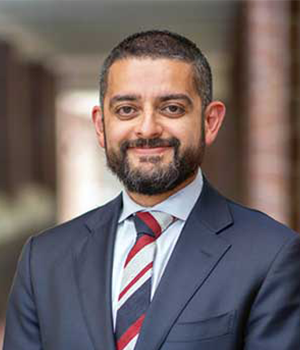
When Katherine Hodge enrolled at Lone Star College (LSC), she was returning to school after more than a decade away. The nurse and mother of three—whose family had once been refugees—wanted to finish her emergency management degree as quickly and affordably as possible. She wasn’t thinking about international education. Within a year, she was studying Arabic, preparing for a U.S. State Department program in Tunisia, and working with refugee and immigrant communities in Houston. “International education has expanded my plans far beyond what I originally imagined,” she says.
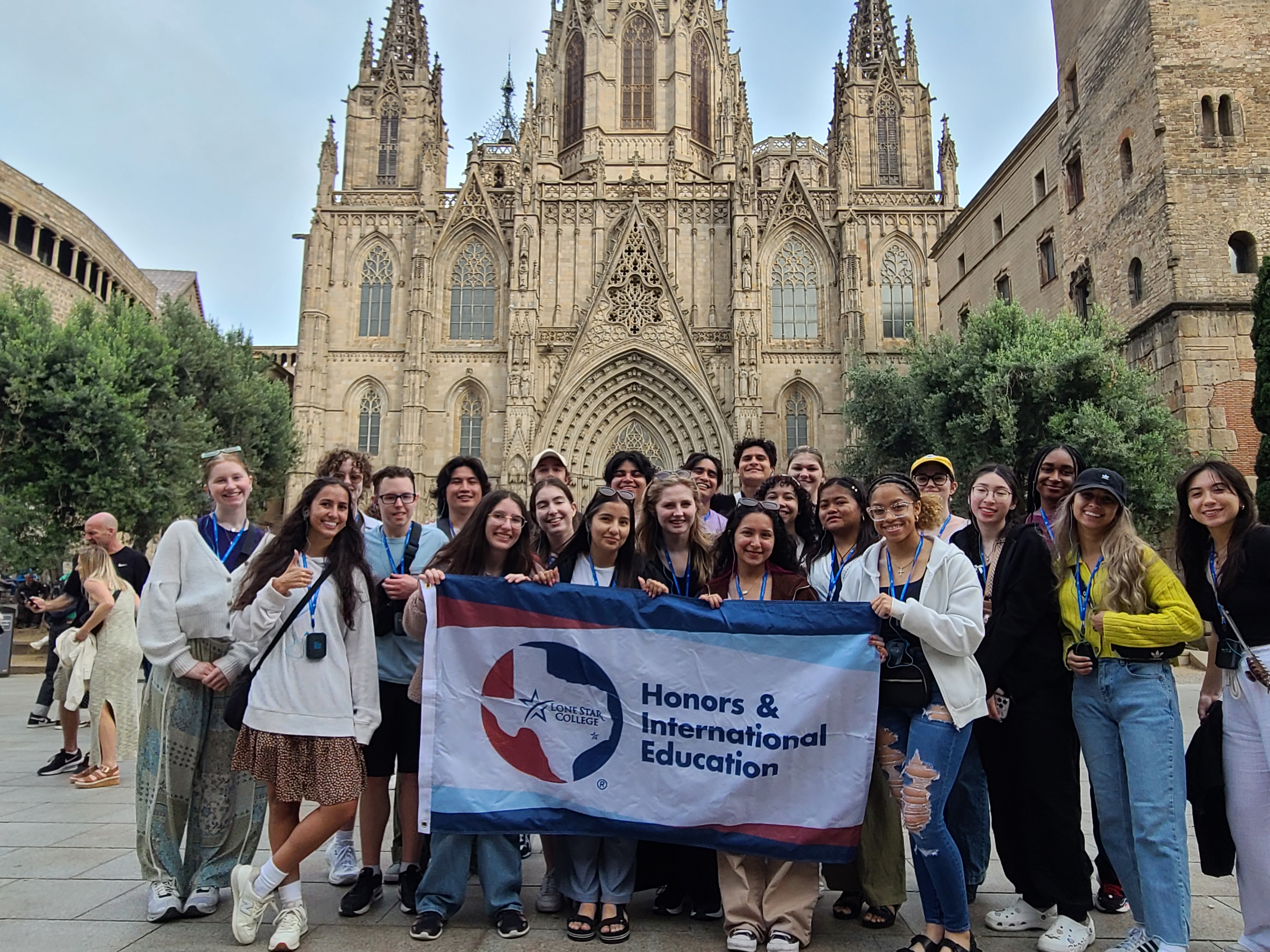
For a community college student, Hodge’s path is unusual. Community college students make up nearly 40 percent of the U.S. undergraduate population but account for less than 2 percent of study abroad participants. LSC has spent nearly a decade building an internationalization strategy designed to change that calculus, increasing opportunities for domestic students like Hodge and recruiting a robust international student population from around the world.
A Structural Foundation for Internationalization
LSC first received the Simon Award for Comprehensive Internationalization in 2013. The recognition reflected years of work, but it also set a new bar. In 2017, under then-Chancellor Stephen C. Head, LSC created a new position—associate vice chancellor of honors and international educati on—and appointed Katharine Caruso, who was executive director of the Honors College, to lead it. This deliberate move united a four-person international programs team under a single division and signaled that global learning was central to LSC’s mission. This move also solved a resource problem at the time, with that team of four supporting nearly 90,000 students across seven campuses and dozens of study centers.
A task force mapped existing resources across the system and brought previously siloed functions—international student services, study abroad, internationalized curriculum, and cocurricular programming—into a single cohesive framework. Rather than duplicating effort, the division expanded capacity through collaboration, growing from four to 32 staff members that now support eight campuses and 23 centers.
Central to the model is the International Faculty Fellows (IFF) program—seven faculty supporting all eight campuses who chair campus-level internationalization committees and serve as a bridge between the division and individual colleges. Each committee draws on representatives from academic affairs, student life, and outreach, which gives the model both reach and local ownership. Faculty serving in this capacity receive stipends and partial course reduction. The priority has institutional backing. Chancellor Mario K. Castillo, who has led LSC since 2023, has framed global education as part of what the system owes all of its students, domestic and international alike.
International students are integrated into this ecosystem from the start—participating in Global Scholars, Model UN, and internationally designated courses alongside domestic students, and serving as cultural ambassadors and peer mentors across campuses. For Niklesh Pathak, a pre-nursing student from India, this integration made a tangible difference. Over two years at LSC-Montgomery, he joined Psi Beta and Phi Theta Kappa, worked as a nursing lab assistant, and was selected for the inaugural cohort of LSC in Washington, D.C. “As international students, we often leave behind our families and begin a new life in an unfamiliar place,” he says. “Throughout my journey at Lone Star College, I truly felt supported—seen, valued, and believed in.”
Internationalizing the Curriculum
At the heart of LSC’s academic internationalization effort is the International Studies (IS) course designation system —a process that allows any faculty member, regardless of discipline, to apply to have a course designated as internationally focused by embedding a set of global learning outcomes into its curriculum and assessments. The three domains—Global Systems, Global Perspectives, and Global Action—are drawn from the Association of American Colleges and Universities’ Global Learning VALUE Rubric and are designed to move students from understanding global issues to applying that knowledge to their own academic and career goals.
When Janice Hartgrove-Freile, a psychology professor at North Harris, began teaching one of the system’s first IS- designated courses more than 20 years ago, just four or five such courses existed across LSC’s campuses. With the International Faculty Fellows now in place on every campus, that number has expanded dramatically—the fellows serve as on-campus mentors, reviewing IS course applications, running workshops, and working one-on-one with colleagues across disciplines. As of fall 2024, more than 8,300 students were enrolled in IS-designated courses across 843 sections—more than double the number from 2021— spanning disciplines from English composition and psychology to electrical technology and welding.
Faculty are expected to weave global content throughout a course rather than treating it as a standalone unit. Kimberlee Ball, a history professor and International Faculty Fellow for LSC Online, describes assigning students a semester-long journal in which they tracked different aspects of a single country each week education systems, economic conditions, cultural practices— culminating in a final presentation. “They had a vested interest because they got to select their own country,” she says.
Students who accumulate 15 credit hours of IS-designated courses can earn an Area of Concentration in International Studies credential which appears on their transcript. Some departments have gone further: North Harris’s Electrical Technology program is internationalizing its entire curriculum so that students will automatically graduate with the credential.
Global Scholars and Student Pathways
The Global Scholars program—a language and culture pathway housed within the Honors College—represents LSC’s most structured route to global competency. Launched initially at North Harris campus, it has since expanded to all eight campuses. Students take IS-designated courses each semester, complete a study abroad or virtual exchange experience, and engage in cocurricular programming ranging from Model UN to the Global
Sustainability Solutions Challenge. Those who pursue the Distinguished Global Scholar pathway receive scholarship support for language courses and international travel, as well as individualized guidance on competitive applications including Fulbright, Critical Language scholarships, and State Department programs.
Admission requirements are intentionally accessible— a 3.0 GPA, with conditional admission at 2.7—and the program is open to workforce students alongside those pursuing transfer degrees. Dana Van De Walker, director of honors and international education at the North Harris and Houston North campuses, notes that students in programs like emergency medical services, paralegal studies, and even welding have completed the Global Scholars pathway—fields where intercultural competency matters and travel may be challenging.
For many students, the program opens doors they didn’t know existed. “Students come to us and they don’t even know what the State Department is— there are whole career fields they don’t know exist,” says Stephanie Kim, director of the Honors College and Global Scholars at the University Park campus. “That’s the exciting part—we’re here to tell them this does exist, and here’s what that might look like along your path.”
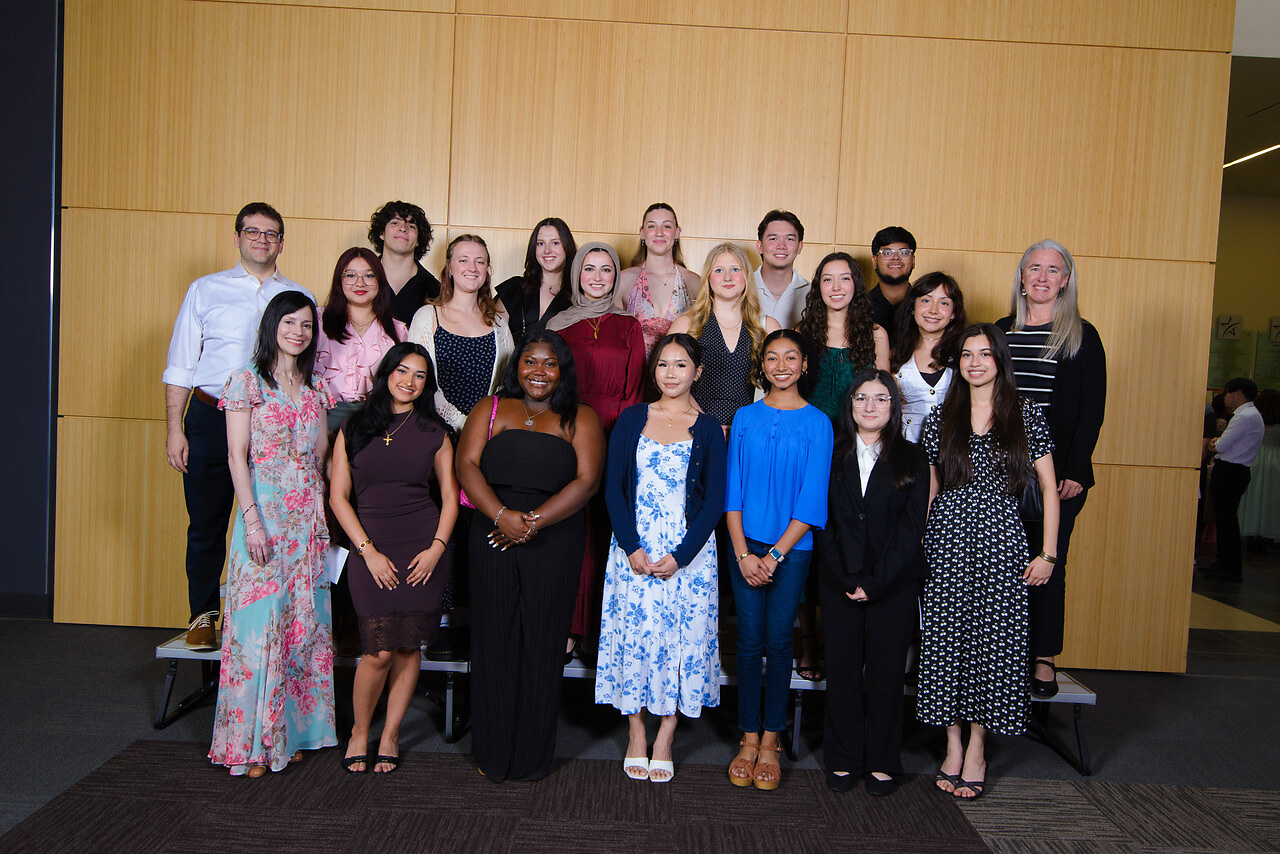
The outcomes have been striking. In 2025, LSC had 19 students named Jack Kent Cooke Transfer Scholarship semifinalists—second nationally among all colleges— with four ultimately receiving the award, which provides up to $55,000 annually for up to three years of undergraduate study. Every one of the semifinalists had international experience on their record. “When we stood back and looked at what these students had in common, every one of them had something internationalized—honors, Model UN, study abroad,” says Caruso, associate vice chancellor for honors and international education. “We’re really seeing these high-impact practices make a difference.”
LSC was also named a 2023 Fulbright Top Community College Sender and a 2024 Fulbright Hispanic Serving Institution Leader.
“Students come to us and they don’t even know what the State Department is— there are whole career fields they don’t know exist. That’s the exciting part—we’re here to tell them this does exist, and here’s what that might look like along your path.”
— Stephanie Kim, director of the Honors College and Global Scholars at the University Park campus.
Building Strategic Partnerships
LSC maintains relationships with international partners across several continents, differentiating between anchor partnerships that support multiple program areas simultaneously and lighter-touch collaborations that serve a specific purpose. Anchor partners include Rabat Business School in Morocco, Kansai Gaidai University in Japan, the Institute of Study Abroad Ireland, and Rennes Business School in France. Lighter-touch partnerships tend to be more discipline-specific: a nursing virtual exchange focused on global health equity with partners in the Philippines, or a collaboration with Egyptian and Jordanian universities on intercultural communication. Virtual exchange programs collectively serve around 60 students annually, offering international collaboration for students unable to travel.
LSC has also hosted the annual conference of the Community College Consortium for International Development, providing faculty and staff with opportunities to network with international education leaders worldwide. The college’s International Education Biennial—a regional conference that brings together community partners, businesses, and students—further positions LSC as a convener for global issues in the Houston area.
Looking Ahead
LSC is focused on expanding international articulation agreements and building out its assessment infrastructure. The college is currently conducting a multiyear internal research study comparing the academic outcomes and transfer rates of students who participate in IS-designated courses against those who do not—work that Caruso says will help demonstrate the systemic impact of international education beyond individual program metrics. For articulation agreements, LSC is developing formal transfer pathways with international partners including Rabat Business School in Morocco and Rennes Business School in France, part of a broader push to position community college students as competitive candidates for four-year institutions on both sides of the border.
Ten years ago, Caruso says, students who came to LSC’s honors and international programs typically said they were there because they couldn’t get into the four-year school they wanted or couldn’t afford it. That answer has changed. “Over time it’s become: my counselor said if I want a rigorous program with these pathways, this is the place,” she says. Caruso sees this shift as part of a broader recognition of what community colleges do well—deep expertise in teaching and learning, and a community focus that often puts resources behind innovative programs. Students choose them for what they offer in addition to what they cost.
Lessons Learned
Use Faculty Travel Grants to Build a Sustainable Pipeline for Internationalization
LSC’s International Faculty Exploration grant provides financial support for faculty to travel abroad with a specific purpose: to develop an internationalized course, explore a study abroad partnership, or establish a virtual exchange. Crucially, recipients are required to return with a dissemination plan—sharing what they learned with colleagues across the system—and are expected to parlay the experience into a concrete proposal for the following year. The result is a self-reinforcing pipeline that turns individual faculty curiosity into institutional infrastructure. The Electrical Technology program at North Harris, for instance, is now developing a virtual exchange with Australian partners after a faculty member used a grant to travel there and establish the initial relationship.
Differentiate International Partnerships by What They Can Deliver Across Multiple Program Areas
“We’re looking for more than a study abroad partner,” says Perzen Akolawala, executive director of international programs. “It’s faculty exchange, virtual exchange—a truly holistic partnership.” Partnerships that meet that bar receive sustained institutional investment and multiyear commitment; those that serve a single, specific purpose—a discipline-specific virtual exchange, for instance, or an event-based collaboration—are managed more lightly. The framework gives staff a clear basis for deciding where to direct time and resources.
More 2026 Comprehensive Award Winners
Luther College
Saint Louis University
Washington University in St. Louis