Teaching, Learning, and Facilitation

2018 Comprehensive University of Florida

As one of the country’s largest comprehensive research institutions, the University of Florida (UF) not only attracts talented international students and scholars, but it also leverages its research strengths in areas such as agriculture and public health to collaborate with partners around the world.

“By our very nature as a land-grant and comprehensive research university, we’ve always had a lot of international activity,” says Leonardo A. Villalón, dean of the UF International Center (UFIC). “But our international efforts were [historically] quite siloed and decentralized. What we’ve done over the last 15 years is to make a concentrated effort to find ways to share information and coordinate all of that international activity.” 

Founded in 1991, UFIC has played a pivotal role in promoting comprehensive internationalization to the more than 50,000 students, some 5,000 faculty, and 16 colleges that make up the large, highly decentralized institution. UFIC oversees core international services including study abroad, support for international students and scholars, and cooperative agreements and exchanges. UFIC also maintains a travel registry for faculty and has recently established a global research office to provide information to investigators interested in international studies.

Under UFIC’s leadership, the university has engaged in comprehensive internationalization for nearly 15 years. In 2004, the institution received a NAFSA Senator Paul Simon Spotlight Award for its early efforts in assessing international engagement as well as improving in key areas such as international student enrollment and study abroad participation. 

Since winning the Spotlight Award, UF has reenvisioned its approach to internationalization, culminating in a quality enhancement plan (QEP) titled “Learning Without Borders: Internationalizing the Gator Nation,” which has served as the cornerstone of the university’s 2014 reaccreditation through the Southern Association of Colleges and Schools (SACS). 

Pursuing Excellence Through Internationalization

UF’s pursuit of comprehensive internationalization has gone hand in hand with its quest to become the flagship institution in Florida and one of the top 10 public universities in the United States. 

“For the University of Florida to maintain its strong reputation, it’s important that we be perceived as a national and international university with international impact,” says Joseph Glover, provost and senior vice president of academic affairs. “We are trying to educate and bring the impact of our research to the rest of the world to contribute to the University of Florida’s global stature.” 

Provost Glover and President W. Kent Fuchs want to boost UF’s global reputation by attracting top international graduate students and scholars through the institution’s research profile. Such efforts to entice students and scholars include the introduction of in-state tuition for incoming Fulbright fellows and the offer of competitive stipends and benefits packages for talented international graduate students. 

Between 2006 and 2016, UF increased the number of enrolled international students by more than 50 percent, with the student body representing approximately 130 countries of origin. Taking into account the students on optional practical training, UF hosted more than 7,000 international students in fall 2016. The majority of the growth was among international graduate students, who make up approximately 87 percent of UF’s international students. The university has recently begun focusing more attention on growing its undergraduate enrollment, creating a dedicated undergraduate recruitment position in 2015.

Image
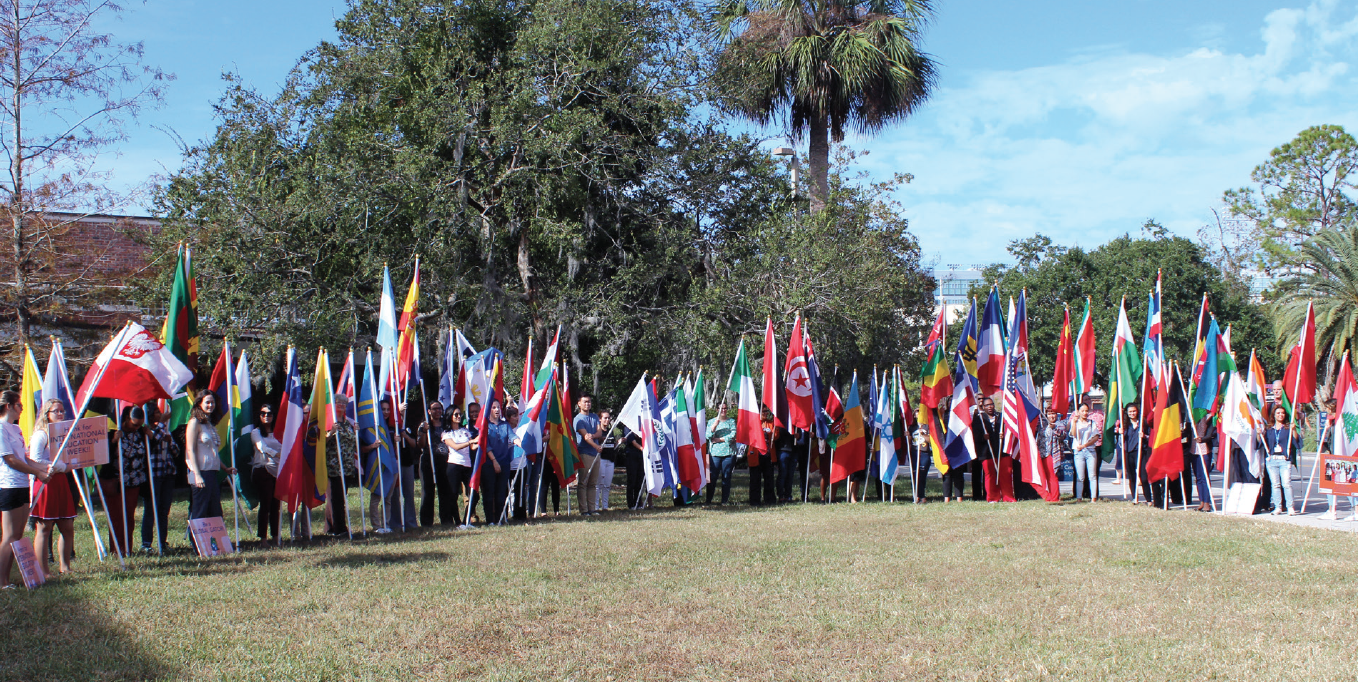
ITC 2018 Florida Flag Parade
Preparing for the Flags Parade during International Education Week. Photo credit: University of Florida.

Fuchs says that the benefit of increasing UF’s international student population, both undergraduate and graduate, is twofold. “The education of students from the state of Florida is enriched by having other students from around the world,” he says. “If we’re going to raise the stature of the institution, we need to be even more known worldwide and having students from abroad is one way of doing that.” 

Partnering to Promote Interdisciplinary Research

According to Provost Glover, the university is increasingly engaged in large, interdisciplinary research projects that involve academic units across campus, ranging from the College of Medicine to the College of Agricultural and Life Sciences. “To find all of these capabilities on one campus is a very rare thing in the United States,” Glover says. “We are probably one of the very few universities that is set up to really address large issues [like public health in Africa] that you find in various hotspots around the world.” 

Fuchs adds that international research efforts are further supported by the Division of Global Compliance and Research Support in the UF Office of Research. “The research office has really redoubled its support for certain parts of the world that faculty are engaged in that don’t have the infrastructure that we would rely on when we’re there. The best example is Haiti,” Fuchs says.  
Several UF colleges and academic units have had longterm engagement in Haiti. For instance, the UF Center for Latin American Studies (LAS) has significant ties to Haiti and is one of the few institutions in the United States where students can study Haitian Creole. 

UF’s interdisciplinary Emerging Pathogens Institute (EPI) also has a major global research portfolio, with collaborations in more than 75 countries, reflecting the critical nature of international work in understanding how pathogens (such as Zika or Ebola) are transmitted and controlled. Given Haiti’s close proximity to Florida, EPI has placed a major focus on research in that country, with grant support from the National Institutes of Health, the U.S. Department of Defense, the National Science Foundation, the European Union, and the Bill & Melinda Gates Foundation. Researchers have taken advantage of the permanent UF/EPI laboratories located in Haiti and have performed work with a wide range of pathogens. 

Health studies in Haiti have been conducted in close collaboration with the School of Medicine at the Université d’État d’Haïti (UEH) (State University of Haiti). EPI and UF provided consultation to UEH on rebuilding the School of Medicine after it was destroyed during the 2010 earthquake. “We assisted with the design for the laboratories in the School of Medicine and have worked with them to set up functioning laboratories within the new building,” says Glenn Morris, EPI director and professor of medicine.

The University of Florida’s EPI and College of Medicine have been instrumental in the development of student and faculty exchange and educational programs linking the two universities. Water, which is a cornerstone of global health, has emerged as a major common interest. 

Image
ITC 2018 Florida Scholars
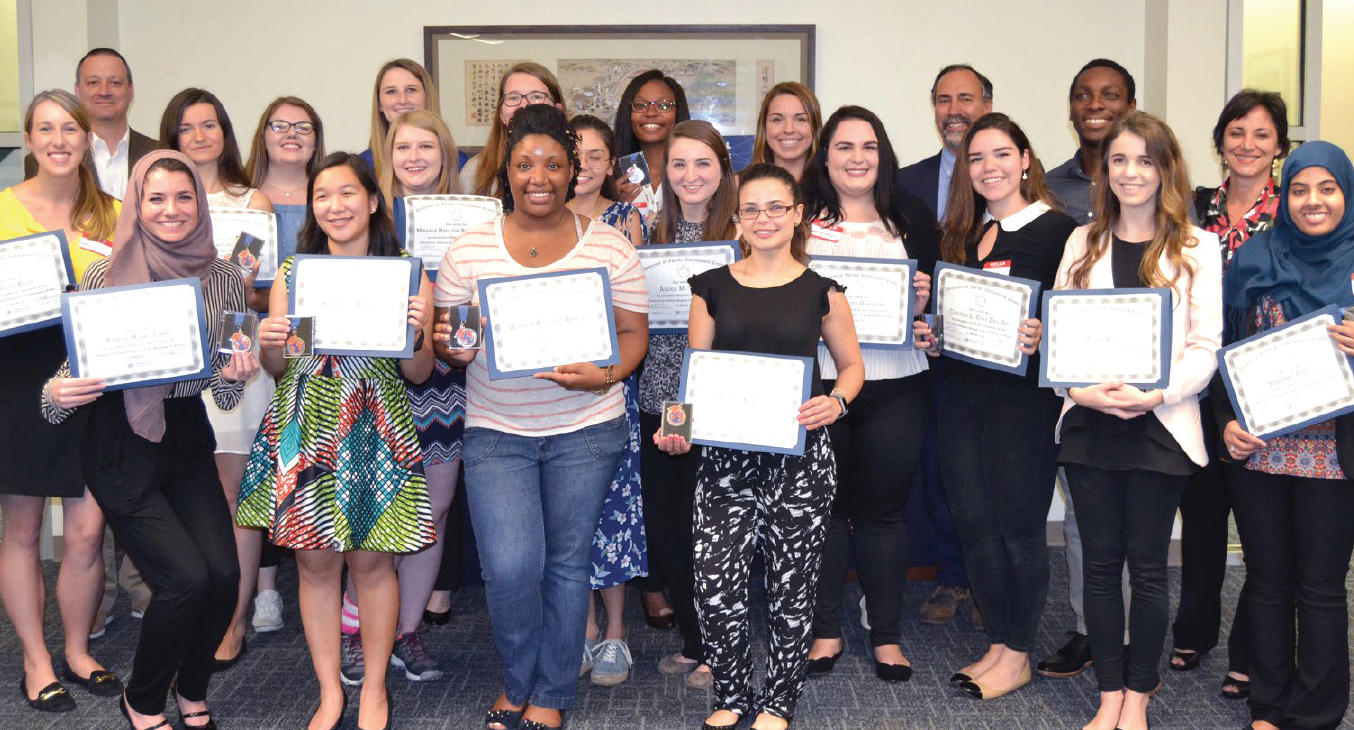
International Scholars program spring 2018 graduates. Photo credit: University of Florida.

Under the leadership of EPI and the UF Water Institute, UF cosponsored a two-day Water Summit with UEH in fall 2017. The summit brought together more than 200 experts from five different Haitian government ministries; academia, including UF graduate and undergraduate students; international agencies, including the U.S. Centers for Disease Control and Prevention and the United Nations Children’s Fund; nongovernmental organizations; and the commercial sector.    

The University of Florida’s Institute of Food and Agricultural Sciences (UF/IFAS) has also been conducting research and community outreach in Haiti for more than 50 years. UF/IFAS is currently the lead institution on a new five-year project funded with a $13.7 million grant by the United States Agency for International Development (USAID) as part of the Feed the Future global hunger and food security initiative.   

Leveraging Accreditation to Promote Internationalization

The creation of the Learning Without Borders QEP provided an opportunity for UF to think creatively about how it approached internationalization. According to President Fuchs, the accreditation process and QEP allowed the university to focus programmatic efforts on creating international opportunities for undergraduates. This was achieved by establishing the Office of Undergraduate Academic Programs (UAP), housed within UFIC, to oversee the International Scholars program and an international studies major, among other initiatives. The UF administration committed more than $500,000 in additional funding per year for 5 years to support the implementation of the QEP.

Leading the implementation of the QEP are Matthew Jacobs, UAP director and history professor, and Paloma Rodríguez, UAP associate director. While some of the QEP funding is dedicated to diversifying study abroad offerings and supporting student scholarships, the majority of the investment is focused on internationalizing students’ experience on campus.

Rodríguez says that student learning is the focal point of the QEP. “This is a student-centered initiative, with internationalization at home at its very core,” she adds. “We have built internationalization around the students, not the programs or the faculty or the content. The QEP is called ‘Learning Without Borders.’ It’s the learning process that we curate every day.”

Jacobs says that internationalizing the undergraduate experience is often very narrowly conceived as education abroad. Over the past 7 years, nearly 22,000 UF students have studied abroad, representing an average of 4.5 percent of total full-time equivalent enrollment.

“We certainly want to do everything in our power to get more students going abroad. But the numbers tell us that even if we double our participation, that’s still only 10 percent of UF students abroad,” Jacobs says. “So when we think about internationalizing their experience, we’ve got to think about what we can do between Archer Road and University Avenue, between 13th Street and 34th Street—those are the boundaries of campus.”

The QEP’s signature program is the International Scholars program, a cocurricular program open to undergraduates from all majors. Around 500 students are currently enrolled in the program, and approximately 100 students have graduated with an international scholar distinction since the program launched in fall 2015.

Students are required to take 12 credits of approved courses with international content, participate in an international experience or take two semesters of a foreign language, and attend four international events on campus. The capstone requirement is the creation of an e-portfolio that features photography, reflections, research papers, and other content that show the ways in which students have been globally engaged. Students who enroll in the International Scholars program can simultaneously enroll in the UF Peace Corps Prep program.

Rodríguez has collaborated with career services staff to help guide students on how they can use their e-portfolios to demonstrate the skills they have learned to prospective employers. She works with the students to help them articulate the ways in which global engagement contributes to their employability.

Elle Gough is an international studies, anthropology, and French triple major who graduated in May 2018. Following a semester abroad in Lyon, France, she joined the International Scholars program as a way to structure her international experiences moving forward. She then became a peer adviser to encourage other students to consider study abroad and participated in a UF-sponsored summer program to India.

Gough says the e-portfolio allows her to bring everything together in a central location. “[The e-portfolio] gives me a running record of everything I’ve done,” she says. “It helps me retrace my own history, my own timeline of making my own experiences more international.”

Rodríguez says that the e-portfolios also allow staff to get a snapshot of the international work that students are doing. “It provides us a glimpse at what global engagement looks like for students at UF, so that now we can see how to take this to the next level,” she says. 

Promoting Internationalization Through Area Studies Centers

Building on UF’s strength as a comprehensive research university, the three Title VI National Resource Centers have been key players in the university’s comprehensive internationalization efforts. The UF Center for Latin American Studies (LAS), founded in 1930, is the oldest center in the United States that is focused on that region. The university created the Center for African Studies (CAS) in 1964, followed by the Center for European Studies (CES) in 2001. 

According to Philip Williams, director of Latin American studies, the centers have played a unique role in centralizing international activities on campus because they cut across disciplinary boundaries and engage faculty from all 16 colleges. For example, the Tropical Conservation & Development program, a graduate certificate program that focuses on the integration of conservation and poverty alleviation in the tropics, is the result of collaboration between LAS and CAS. 

The area studies centers use Title VI grants to develop new course offerings, provide start-up funding for study abroad, create research opportunities for students, and organize cultural events on campus. “We have close collaboration with UFIC in terms of developing the programs, seeding and promoting programs, and finding scholarship opportunities for students,” Williams says. “A lot of the academic and cultural programming related to these three regions, including training in critical languages or less commonly taught languages, comes through Title VI funding.”
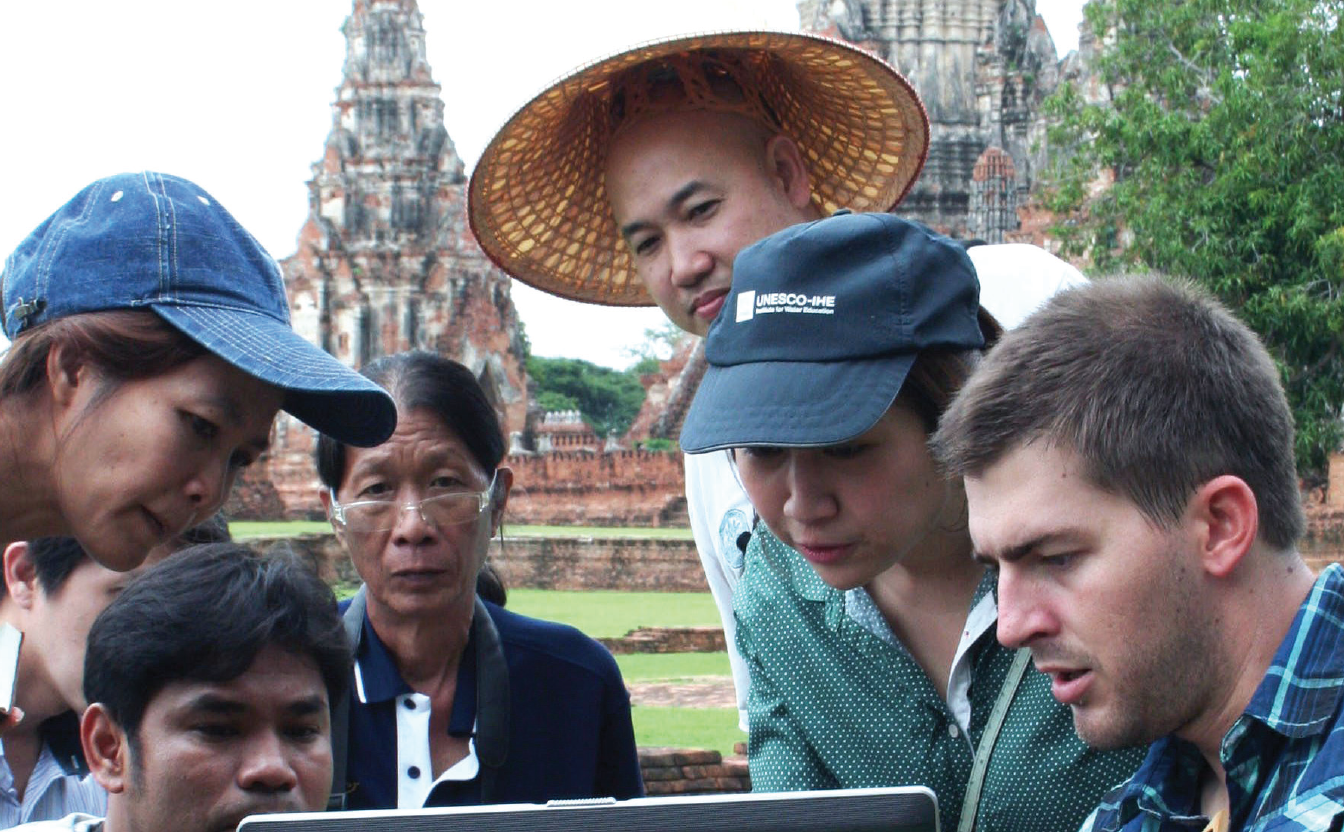
Through all three centers, undergraduate and graduate students can receive Foreign Language and Area Studies fellowships funded by the U.S. Department of State to study lesser and least commonly taught languages from Africa, Europe, and Latin America. The centers offer both summer language institutes for high school and university students and language immersion programs abroad. 

In addition to traditional study abroad programs, the area studies centers provide travel and research grants for faculty and students engaged in their respective regions. The Center for African Studies, for example, provides funding for undergraduates to accompany a faculty member abroad to conduct field research through the Research Tutorial Abroad program, a model that the Center for Latin American Studies is considering replicating. 

Image
ITC 2018 Florida Design
Scholars gathering during the UF Fulbright Annual Reception. Photo credit: University of Florida/ Lyon Duong.

In 2017, CAS sent four students to Ghana with a faculty member to document an endangered language. The center has also supported UF dance students who traveled to Guinea, where they studied with two national dance companies. 

Fostering Global Research Engagement for Faculty and Graduate Students

To help promote global research, UF established the Office for Global Research Engagement (OGRE) in 2015. The office serves as a centralized resource for faculty who want to conduct international research, and it offers a series of workshops on topics such as international partnership compliance and collaborating with an international team. In addition, OGRE staff provide feedback on grant proposals, help faculty develop budgets, and facilitate interdisciplinary knowledge networks based on shared geographic interests or topics such as global health. 

OGRE’s signature program is the Global Fellows program, which offers professional development workshops and travel grants for faculty. Every year, the office selects a cohort of 10 to 12 faculty members who are interested in doing research abroad. 

Biology professor and botanist Emily Sessa was part of the first cohort of Global Fellows in fall 2015. As a plant systematist, she focuses on the relationships between plants. Her international trips involve collecting plant samples from all over the world, which she then processes at her lab in Gainesville, Florida. 

As a Global Fellow, Sessa found the faculty workshops extremely helpful, partly because of the network she established across campus. “As a younger faculty member, it was a nice way to get to know faculty in other departments and colleges,” she says. 
Sessa also received a $4,000 travel grant, which she used to travel to Finland to visit with colleagues at the Finnish Museum of Natural History. As a result of her trip to Finland, she has published a paper and applied for a grant from the Finnish Academy of Sciences and Letters. Her travels also strengthened her application for the National Science Foundation (NSF)’s Faculty Early Career Development program, which prioritizes international collaboration. 

“A lot has come from that funding. It’s been really good for me professionally to have that face time with my collaborators there. It’s nice to be at an institution that has so much support for internationalization,” Sessa says. 

In addition to providing support for faculty, OGRE coordinates funding for graduate students through the Research Abroad for Doctoral (RAD) students program. Advanced PhD candidates in the science, technology, engineering, and mathematics (STEM) disciplines can receive up to $10,000 to conduct research at an international laboratory or field site. Since the program’s inception in the 2015–16 academic year, RAD has bestowed 22 awards, totaling more than $120,000.

Zachary Emberts, a PhD candidate who focuses on entomology, used his funding to travel to Australia and Singapore to work with leading scientists in his field. He says this kind of support was essential when he was finishing his dissertation, considering the recent cuts to federal funding for doctoral students.  

“The funding environment right now is hard, especially for someone who has passed their candidacy. I would not have had the opportunity to go without this funding,” Emberts says. “It has already paid off in terms of my professional growth and development, but it will hopefully continue to pay off in terms of the research that has yet to come to fruition.”

Support for faculty and graduate student research abroad speaks to UF’s ongoing quest for excellence. “The findings are that when faculty collaborate on joint international publications, those articles are cited more often and they are submitted to higher impact journals,” says Julie Fesenmaier, OGRE associate director. “That benefits the university. It feeds into our mission of being a top research institution.” 

Read More

2018 Comprehensive Stony Brook University

Stony Brook University’s reach extends far beyond its campus on Long Island, New York. As part of the State University of New York (SUNY) system, Stony Brook has leveraged its position as a public research university to develop strategic partnerships around the world and attract a robust international student population. The university has established research field sites in Madagascar and Kenya and a global campus in Korea, in addition to considerable engagement in China. 

In the last few years, Stony Brook’s administration has invested significant resources in enhancing its comprehensive internationalization agenda. President Samuel L. Stanley Jr. and Provost Michael A. Bernstein have dedicated more than $1 million to support five new staff members in the Office of Global Affairs (OGA) and the development of a new China Center, which aims to boost recruitment and build alumni relations in China. 

Leading the charge for internationalization is Jun Liu, who joined Stony Brook as vice provost of global affairs, dean of international academic programs and services (IAPS), and professor of linguistics in January 2016. As the senior international officer (SIO), Liu oversees the OGA, which encompasses study abroad, visa and immigration services, global partnerships, intensive English programs, and the Institute for Global Studies. 

One of the first things Liu did as SIO was to visit the institution’s main study abroad and international research facilities, as well as spend time getting to know the campus community. “I spent a lot of time understanding what the current global operations were, ...what challenges we were facing, and what... concerns administrators, faculty, and students had in terms of globalizing the campus,” he says. 

Liu created an international advisory board to provide input on the development of a global strategic plan, which helped build a vision for internationalization and streamline Stony Brook’s existing international activities. Some of the recommendations that came out of the strategic planning process included increased campus outreach through a global forum on various international topics and a newsletter promoting international activities on campus. The OGA revamped the website for study abroad programs and created a database of Stony Brook’s international research, partnerships, and initiatives around the world to better track the university’s global engagement.  

“We now have a purposeful strategy to have planned campus internationalization through concrete projects, innovative programs, and engagement of faculty, staff, and students. Meanwhile, we are constantly assessing what we do and adjusting the process,” Liu says.

Fostering an Environment for International Student Success

In response to its growing international student population, Stony Brook has expanded the support services it offers to its international students, which currently make up 23 percent of the total student body, including students on optional practical training. With a 61 percent increase of international students over the past 6 years—from 3,726 in 2011–12 to 5,998 in 2017–18—the university has adopted strategies that focus not only on growing the number of international students, but also on attracting academically talented incoming students through innovative recruitment strategies, such as working directly with high schools and developing alternative admissions criteria, like adding oral interviews and accepting Chinese Gaokao scores. 

In addition to providing a comprehensive orientation staffed by international student ambassadors, Stony Brook offers workshops to help new international students succeed. Trista Yang Lu, coordinator for international student orientation and services, runs iCafe, a coffee house and international student success workshop series. International students are invited to come and discuss topics such as class participation, reading and study skills, networking, and time management. 

To encourage international students to attend, Lu has partnered with the professors who teach first-year seminars. All freshman students are required to attend a first-year seminar within their respective colleges, with the goal of helping them acclimate to the campus community. “As part of the curriculum, students participating in the first-year seminar are required to attend [a certain number of] themed events,” Lu says. “They can attend iCafe to satisfy these requirements.”

iCafe is just one example of the university’s broader focus on international student success. With support from Provost Michael A. Bernstein, and in collaboration with the Division of Undergraduate Education, the OGA launched an international student success task force made up of faculty and staff across all major academic and administrative units intended to identify common challenges to international student success. 

A new initiative aimed at promoting international student success is the Global Summer Institute, a short-term summer program launched in 2017 that allows students planning to enroll at Stony Brook an extended period of adjustment prior to the start of classes in the fall. In the first year, 235 students enrolled, and Stony Brook is hoping to attract similar numbers in summer 2018.

Image
ITC 2018 Stony Brook Students
Students gathering outside the César Chávez Residence Hall, one of Stony Brook’s newest student facilities honoring diversity and emphasizing technology and comfort. Photo credit: Juliana Thomas.

The Global Summer Institute has three different tracks. Students can (1) participate in an intensive English program; (2) enroll in a three-week certificate program that focuses to getting to know the U.S. culture and educational system; or (3) take academic classes that are part of Stony Brook’s regular summer offerings. 

The Global Summer Institute also serves as a recruitment incentive for students at partner universities who want to experience college life in the United States. The program has helped to deepen relationships in regions of the world where Stony Brook is actively engaged. In 2017, the university partnered with the Malagasy Ministry of Education to sponsor a Malagasy student to attend the Global Summer Institute.

Facilitating Study Abroad Through Faculty-Led Programs

In addition to fostering its international student programs, Stony Brook’s global strategic plan aims to create new and unique educational opportunities abroad. As part of the SUNY system, Stony Brook has become a leader in education abroad among the 64 campuses in New York state. With more than 700 students studying abroad in the 2016–17 academic year, Stony Brook sends more students abroad than any of its SUNY peers. 

Along with the 18 study abroad programs led by Stony Brook faculty, Stony Brook students have access to more than 500 education abroad programs offered through the other SUNY campuses. For programs not directly taught by Stony Brook faculty, the university’s new course articulation database provides a list of preapproved courses at partner institutions. The database eases the process of transferring study abroad credits back to Stony Brook.  

Stony Brook’s first faculty-led study abroad program was launched in the early 1980s by Italian professor Mario Mignone, who has continued to take students to Italy for more than 30 years. In that time, in addition to using its field sites in Kenya and Madagascar to offer specialized education abroad experiences, Stony Brook’s faculty-led programs have expanded to include Russia and Tanzania. One of Stony Brook’s strategies to building a robust education abroad portfolio has been to leverage its international relationships and expand existing programs to other disciplines.

Linguistics professor John Bailyn, who is also the director of the SUNY Russia Programs Network, oversees two summer programs in Russia. “Explore St. Petersburg!” features an extensive cultural program that gives students the chance to become familiar with the city through excursions, films, lectures, and other events. Participants attend courses in cultural and media studies at an international summer school where they interact with students from throughout Russia and Europe, and they also complete an internship. Bailyn also directs the Advanced Critical Language Institute for Russian Immersion, which provides an intensive summer language program.

Research Abroad for Engineers at the Turkana Basin Institute

As the academic affiliate for the Turkana Basin Institute (TBI), Stony Brook has been able to expand its study abroad portfolio due to its physical presence in Kenya. Located in a remote part of northwestern Kenya, the TBI is one of the world’s premier paleoanthropology research field stations. The Turkana Basin has been the site of unprecedented fossil and archaeological discoveries that trace back to the origins of human civilization.  

The TBI was the brainchild of Stony Brook professor Richard Leakey, a world-renowned paleoanthropologist who approached the university in 2005 with the idea of creating a permanent infrastructure for yearround research. Stony Brook committed funding to the project, and construction of the two field camps located at Lake Turkana was completed in 2016. 

In addition to serving as a base for researchers from around the world, the TBI hosts a variety of study abroad programs, including a summer and semesterlong Origins Field School where students can earn 15 credits of 300-level coursework in archaeology, paleontology, physical anthropology, and geology.

Image
ITC 2018 Stony Brook Engineering Students
In 2017, engineering students participated in the Turkana Basin Institute’s Global Innovation Field School in Kenya, helping local leaders restore the surrounding communities after a major flood. Photo credit: Stony Brook University.

Other academic departments have also been able to take advantage of Stony Brook’s presence in Kenya. When Fotis Sotiropoulos, dean of the College of Engineering and Applied Sciences (CEAS), joined Stony Brook, he knew he wanted to implement programs that would give engineering students a global perspective. 

Sotiropoulos visited the TBI in March 2017, and by May, he had sent nine students to Kenya as part of the new six-week Global Innovation Field School. Not only was the off-grid construction of the physical infrastructure at the TBI interesting from an engineering perspective, it also gave the CEAS students a chance to visit a truly unique place, Sotiropoulos says. 

During the 2017 and 2018 programs, students worked on projects such as designing a septic system for a rural clinic and cataloging and repairing instruments donated by nongovernmental organizations. Faculty encouraged students to identify more challenging problems that they could bring back to Stony Brook to work on for their senior design course. 

Julian Kingston, who studied engineering at Stony Brook as an undergraduate student, participated in the 2017 Global Innovation Field School as a teaching assistant. He says that the students had to rethink their problem-solving approaches during the experience. “When we first arrived at the TBI facility and connected with the nearby community, the students had a plethora of solutions to everyday ‘problems’ they saw the community having,” he says. “After taking the time to connect with and communicate with the community, the students were surprised to find that the problems they identified—such as moving large loads over long distances—was not an issue for the community. A huge challenge for the students coming in was to put...what they saw as problems to the side in order to listen for what the community actually needed.”

One of the biggest challenges that students discovered was a lack of access to clean water. Available water sources in the Turkana Basin often have high levels of fluoride, which is toxic in large amounts. Two students from the 2017 Global Innovation Field School, Cheng-Wen Hsu and Jacob Marlin, discovered another use for the excess goat bones that they found in this community of goat herders. Hsu and Marlin charred the goat bones using firewood and a tin can to create a charcoal water filter that decreased fluoride levels. 

Hsu and Marlin have since been working with a Stony Brook faculty member to refine the filter as part of their senior capstone project. “[It was] a first step to creating a sustainable filter using minimal materials that could make a difference for the local community long term,” Kingston says. 

Community Outreach in Madagascar Through Centre ValBio

One of Stony Brook’s strategic internationalization priorities is engagement in Madagascar through the Centre ValBio (CVB), a modern research campus located in the rainforest in the southeastern part of the country. Although the island of Madagascar is one of the poorest countries in the world, it is rich in biodiversity, encompassing a wide range of ecosystems. 

Patricia Wright, a distinguished professor of anthropology and primatologist at Stony Brook, founded the CVB campus in 2003. Wright is known for, among other things, the discovery of a new species of lemurs in the late 1980s. She was also the driving force behind the creation of Ranomafana National Park, the 106,000acre World Heritage site where CVB is located. CVB currently employs 70 Malagasy in the facility’s day-today operations. 

Wright took the first group of Stony Brook students to Madagascar in 1993 as one of the university’s earliest faculty-led programs. She wanted to create a study abroad program for science majors that not only gave them an immersive opportunity to do field work, but also a chance to interact with the local community. Wright continues to take students to Centre ValBio every summer, winter, and fall semester. 

Image
ITC 2018 Stony Brook Research Technology
Assistant professor Sotirios Mamalis (center) and students examining a motor used in research on an emerging combustion technology. Photo credit: Stony Brook University.

Ezzeldin Enan, a senior who is double majoring in biology and anthropology, says the program helped him decide that he wants to focus on global health in his future career. “What specifically drew me to the study abroad program was the independent research opportunity in biological anthropology, overseen by... Patricia Wright, as well as full access to an advanced lab facility,” he says. 

CVB is also home to the Global Health Institute (GHI), which promotes health research in the region, in conjunction with a nongovernmental organization dedicated to establishing an evidence-based model health system for Madagascar. The GHI addresses health care issues ranging from trauma and injury prevention to oral health treatments. Since 2005, Stony Brook dental students and faculty have traveled to Madagascar to support efforts to improve the oral health of underserved communities. 

In 2016, CVB launched the world’s first medical delivery drones to transport blood, stool, and tissue samples from remote Malagasy communities to the Centre ValBio research station for quick diagnoses. The drone, designed by Stony Brook alumni Daniel Pepper, is also able to deliver medications to the same communities, which are often cut off from proper health care services due to poor or nonexistent roads. 

Stony Brook’s engagement in Madagascar has allowed the institution to build deeper collaboration with other international partners such as Southern University of Science and Technology (SUSTC) in China. In 2017, for example, two students from SUSTC joined the winter study abroad program at CVB. 

“We encourage and advocate for multilateral partnerships....We share our resources with many international partner universities [by inviting] their students and faculty to participate in the signature programs we have around the world,” says Liu. 

Offering a Stony Brook Degree at SUNY Korea

In 2008, Myung Oh, an alumni who earned a PhD in electrical engineering and served as former deputy prime minister of South Korea, approached Stony Brook about the possibility of opening a global campus in Korea. Following approval by the Korean Ministry of Education, Science and Technology (MEST), SUNY Korea launched its first four graduate degree programs in 2012 on the Incheon Global Campus, a global education hub established in the high-tech city of Songdo, South Korea. The next year, students enrolled in SUNY Korea’s first undergraduate degree program in technological systems management. The first class graduated in January 2017.

SUNY Korea currently offers four undergraduate and graduate degree programs to more than 500 students; degree offerings and student numbers are steadily growing. Students are awarded a Stony Brook degree, and all programs require students to spend 1 year on the main campus in New York. The Fashion Institute of Technology (FIT), which is also part of the SUNY system, joined Stony Brook on the SUNY Korea campus in 2017 to offer its programs in fashion design and fashion business management. Huojeong Son, a mathematics major who is planning to graduate in December 2018, says she always wanted to study in the United States. She chose SUNY Korea because it was more affordable than spending 4 years in the United States, but still gave her an opportunity to study abroad. 

Stony Brook hopes to use its physical presence in Korea as a way to establish itself as a global hub in Asia. The institution has worked with the Chinese Ministry of Education and Chinese Embassy in Korea to accredit the campus and boost the enrollment of students from China.  

“Having a global campus enhances our brand and reputation overseas,” says Imin Kao, executive director of SUNY Korea and professor of mechanical engineering. 

Leveraging its physical footprint around the world— from SUNY Korea to the field sites in Africa—and developing more than 160 strategic international partnerships has allowed Stony Brook to raise its profile as a top research institution. Stony Brook’s overall approach to internationalization has been built on developing symbiotic relationships with international partners. “A lot of these programs are enabled by the fact that we are a trusted partner,” says President Stanley. “The more resources you invest in an area, the more people know you are going to deliver. You are not just there to take advantage, you really are making a long-term commitment.”

Image
ITC 2018 Stony Brook Study Abroad
Students in the higher education administration master’s program participating in a two-week study abroad program to learn about China’s higher education system. Photo credit: Stony Brook University.
Read More

2019 Comprehensive West Virginia University

As one of the nation’s premier public research institutions, West Virginia University (WVU) serves as an economic driver and knowledge base in a region of the United States where industry and population are declining. WVU has leveraged its strengths in areas such as public health, natural gas, and petroleum engineering to develop partnerships that aim to solve both local and global problems.

When the state of West Virginia was hit by a major flash flood in June 2016, WVU students, staff, and faculty came together to offer support to the devastated communities. “Within a few hours of knowing the flooding was occurring, our entire campus joined together and we turned one of our big empty spaces into a warehouse where we could [put] supplies,” says former provost Joyce McConnell. 

The largest group in the warehouse lending support were Engineers Without Borders students from India, she says. The students quickly jumped in to help organize supplies and coordinate relief efforts, drawing on their own experience with flooding in their native country. “It was this incredible moment to see what it means to have international students bring their expertise to a crisis in a place like West Virginia,” McConnell explains. 

Each year, WVU welcomes around 2,200 international students who contribute to the student body of nearly 30,000 across the three campuses. Most international students study at WVU’s main campus in Morgantown, a city of rolling hills situated along the banks of the Monongahela River. 

In a state with a dwindling college-aged population, WVU has looked to international and domestic nonresident students to bolster its student body. According to Stephen Lee, associate vice president for enrollment management, more than half of the freshman class come from abroad or out of state. “Everything we do relies on this unique enrollment profile in terms of who we recruit and how we recruit,” he says. “International is a key component of that.”

The presence of international and out-of-state students helps bring diverse backgrounds and perspectives to a state that is largely homogeneous demographically. According to President E. Gordon Gee, West Virginians who enroll at WVU can essentially “study abroad by staying here” because of the cross-cultural exchanges they can have with international students arriving from 150 different countries. “Because many of our students come from very small towns in Appalachia, the notion of going to the university, let alone overseas, is a big step,” he says. “The international component of this institution is about what we do on campus, as well as what we do internationally.”

Centralizing International Engagement Efforts

WVU has a long history of international engagement— particularly in the Middle East due to the institution’s expertise in the petroleum industry—but many of its activities were decentralized until relatively recently. That was a trend that McConnell wanted to reverse when she became provost in 2014. “When I first came here in 1995, there was just this loose organization of people doing their own thing,” she says. “You could go to any college on campus and you would find all of these very interesting international collaborations going on, but the only thing that was centralized at all was the processing of visas.”

Support from Gordon Gee and McConnell fueled the push to consolidate WVU’s international activities under the Office of Global Affairs (OGA) in 2016. William Brustein, who had previously worked with Gordon Gee at The Ohio State University, was brought on as vice president for global strategies and international affairs to lead the newly minted OGA. The office now oversees education abroad, international student and scholar services, intensive English programs, sponsored student services, and the Health Sciences Center Global Engagement Office. 

Under the direction of the OGA, WVU has prioritized two key approaches to internationalization: leveraging the institution’s strengths and building strong international partnerships. “We need to constantly remind ourselves of who we are and why we’re doing what we’re doing,” Gordon Gee says.

Brustein adds that drawing on WVU’s expertise in areas such as energy and medicine abroad is crucial to its land-grant mission. “Our faculty are developing research collaborations all around the world. We believe the international aspects of this research, whether it’s in health, energy, or forensics, can not only help people overseas, but will also help the people of the state of West Virginia and the future prosperity of the state,” Brustein says.

Strengthening Ties with Bahrain

One of WVU’s most successful international partnerships is with the Royal University for Women (RUW) in Bahrain. Founded in 2005 by four brothers who graduated from West Virginia University, RUW is the kingdom’s first private university for women. WVU has collaborated with RUW since 2009 to create student exchanges and faculty research opportunities. Faculty members from both universities have engaged in research collaborations in the fields of energy, water resources, health care, and women and gender studies. 

Image
ITC 2019 West Virginia Mosque
WVU students visiting the Al-Fateh Mosque in Bahrain as part of a spring break experience abroad with the Royal University for Women. Photo credit: West Virginia University.

In 2019, business and economics professor Susan Jennings Lantz took a group of 10 female students for a one-credit study abroad and cultural exchange trip to RUW over spring break. “Our students are able to get behind the scenes because they are staying in the residence hall,” Jennings Lantz says. “It’s a heavily gendered experience, but it’s unlike anything that our students have experienced.”

While she was in Bahrain, pre-med major Garima Agarwal says she realized just how different the economic and social landscape is between the Gulf Coast and Appalachia. “Here in West Virginia, we’re not used to that kind of glamor,” she says. “It was also my first time attending a mosque and learning about Islam.” Agarwal had the chance to participate in a debate about feminism with RUW students as well. “They have a very different approach to feminism than we do in the Western world,” she says. 

Agarwal, who graduated in May 2019, says that the experience will help inform her practice as a future doctor. “I understand their culture more closely now,” she explains. “As I see patients from that side of the world, I can take a more holistic approach to their care.”

The WVU-RUW partnership features other areas of the science, technology, engineering, and mathematics (STEM) domain. RUW hosts a WVU civil and environmental engineering program, which launched in 2017. The program is WVU’s first full degree program offered abroad and has served as a model for the development of dual-degree programs in other countries such as China. RUW students take the same courses that are offered in Morgantown and have the option to study abroad in West Virginia for a semester or more, allowing for additional global learning and connections. The creation of such dual-degree programs involves continued support and input from stakeholders throughout the institutions.

The partnership extends to the highest levels of university leadership. President Gordon Gee serves on the Royal University for Women’s Board of Trustees, and other WVU administrators have offered their insights and support as RUW continues to grow. In 2018, David Stewart took a leave of absence from his position as associate vice president for global strategy and international affairs at WVU to serve as president of the Royal University for Women.

“I’m ‘on loan’ here for 2 years,” Stewart explains. “We did that to really cement the relationship between the two universities and to speed up the development of WVU offering other kinds of programs in the Middle East.”

Image
ITC 2019 West Virginia Dental Brigades Program
WVU student Morgan Goff in Nicaragua as part the WVU Global Medical and Dental Brigades program. Photo credit: West Virginia University.

Investing in a Presence Abroad Through Global Portals

WVU’s partnership with the Royal University for Women has been the foundation of its engagement in the Middle East and has been a prototype for the development of its global portals strategy in other parts of the world. Brustein describes the global portals as “academic embassies” where WVU maintains a physical presence in the region. The portals facilitate student exchange and education abroad, faculty exchange and research collaboration, alumni engagement, and industry and state partnerships. Additionally, the portals allow WVU to offer development and training opportunities in areas such as energy and medicine. 

In November 2016, Bahrain became the site of WVU's first global portal. The WVU Health Sciences Center uses the portal to provide on-site training and certification for medical health professionals from the Middle East. Because it can be very expensive to send faculty and students to the United States and increasingly difficult to obtain visas, WVU has made training and services more accessible by offering them at RUW. An example is an advanced certificate in occupational medicine that is certified by the American Medical Association. The second global portal was launched in Shanghai, China, in July 2018 and is directed by a WVU alumnus from China. WVU is currently working with partners in South America to develop another portal representing Latin America and also plans to eventually establish a presence in Southeast Asia. 

Addressing the Barriers to Study Abroad

Approximately 750 domestic students study abroad every year through credit-bearing programs. Because nearly one-quarter of all WVU students are Pell-eligible, the institution has focused on making its education abroad programs as affordable as possible. Several years ago, the WVU Board of Governors approved a tuition waiver for faculty-led programs. “Instead of charging the standard university and college tuition fees, we only charge $50 per credit hour,” says Vanessa Yerkovich, director of education abroad.

She adds that for out-of-state students, participating in a faculty-led program can often be more affordable than taking a summer course on campus. The ASPIRE Office, which helps WVU students apply for fellowships and graduate school, also works with Pell-eligible students to apply for Gilman Scholarships. Since 2004 when the Gilman program launched, 63 WVU students have been awarded Gilman Scholarships. 

Another way in which WVU has strived to make education abroad a reality for students is by providing its own scholarships. The John Chambers College of Business and Economics offers dedicated scholarships from a donor to support students who study in Brazil, China, India, or the United Arab Emirates. According to professor Li Wang, those scholarships are specifically targeted at non-European destinations. “We want to make sure students really expand their vision and get to know these emerging markets,” she says. 

Wang designed a faculty-led program to China that includes visits to both Chinese businesses and U.S. companies operating in China. Kristin Moro, who graduated in 2018 with a degree in business administration and information systems management, caught the study abroad bug after traveling with Wang to China. Her second study abroad program to India helped solidify her desire to work in the technology industry. “The first city we went to was Bangalore, …also known as the Silicon Valley of India,” Moro says. “India is a technology hub, and it was so interesting to me as someone interested in tech to see how other parts of the world conduct the same types of business.”

Beyond the financial factor, WVU’s study abroad team and faculty members work to help dispel some of the assumptions and cultural barriers discouraging students from going abroad. Professor Lisa Di Bartolomeo says that for many Appalachian students, it can be a huge leap just to attend WVU. “People throughout the state of West Virginia see Morgantown as the big city,” she says. “If you come from a place where your high school graduated 200 people, just coming here is a huge, scary step.”

To help mitigate students’ apprehension over the unknown, WVU’s orientation places focus on the transition of place and emphasizes the importance of diverse environments. Additionally, the Global Living-Learning Community (LLC) provides the setting for domestic and international students to interact and connect over lived experiences. Open to all students who are interested in learning about other cultures, the Global LLC can often spark a desire to go abroad. 

Elevating Intercultural Knowledge with Global Mountaineers

WVU also recently established Global Mountaineers, a curricular certificate that encourages students to take advantage of global opportunities on campus and abroad. Di Bartolomeo, who coordinates the certificate, began by garnering the support of deans and other stakeholders across campus. Students complete an introductory and capstone global competence course, take approved core courses, meet a language requirement, and study abroad or do an international internship.

The goal of the certificate program is to add value without increasing time to degree. “I was really careful to include courses that either count for the general education or that will count toward majors where students are likely to find an interest,” Di Bartolomeo says. The certificate was launched in fall 2018, and graduate Courtney Watson was the first WVU student to earn it. “It feels very rewarding to be the first person to graduate with a Global Mountaineer Certificate because WVU is such a big school with a rich history and a lot of students, and because in today’s world, global awareness is a critical skill to have,” she says. 

Di Bartolomeo approached Watson about earning the certificate because she had already met most of the requirements as a Russian minor and three-time study abroad student. “We both agreed that it would strengthen [my] global education because it would combine my education abroad experiences, my Russian language skills, and my research skills into a nice certification, which helped when I was applying to jobs,” Watson says. 

Providing a Productive Environment for International Students

Along with expanding and promoting its internationalization portfolio, WVU has recharged its international student recruitment strategy over the last decade to offset declining enrollment from in-state students, diversify its student body, and promote cross-cultural understanding. In particular, the institution has been able to leverage its expertise in areas such as petroleum and natural gas engineering to attract students from around the world. West Virginia University offers one of only four ABET-accredited programs encompassing both petroleum and natural gas engineering in the country. 

Image
ITC 2019 West Virginia Adventure Patagonia Program
WVU student Francesca Basil proudly displaying the Flying WV in Chile during her Adventure Patagonia program, a faculty-led education abroad experience focused on outdoor education and recreation. Photo credit: West Virginia University.

WVU’s international student recruitment efforts have seen an increase in enrollment from around 1,200 students in 2007–08 to approximately 2,300 in 2017–18. The top sending countries are Kuwait, Saudi Arabia, China, India, and Oman. 

Located within the Office of Global Affairs, International Students & Scholars Services (ISSS) offers support to all international students on campus. In January 2017, WVU created its Office of Sponsored Students to provide extra support to its population of sponsored students, who make up more than 70 percent of all international undergraduates and almost half of all graduate students. “We started it because we realized that sponsors and their students have unique needs that other international students don’t have,” says Cindy Teets, director of sponsored student services. 

Farhan Ahmed, an Indian student who graduated in 2019 with a degree in sport and exercise psychology, appreciates the level of service he received from ISSS and OGA during his time at WVU. “My friends at bigger universities talk about how many international students there are, but there’s not really events going on,” he says. “But here, the environment is so inclusive and so open.”

Extending and Internationalizing Health Sciences

Another draw for international students applying to WVU has been its extensive health sciences programming and specialized training. The university Health Sciences Center runs the state’s largest health system, providing increased access to health care in a largely rural region of the country. The Health Sciences Center runs five schools: dentistry, medicine, nursing, pharmacy, and public health. 

Operating within the Health Sciences Center, the Global Engagement Office (GEO) coordinates all international engagement related to health sciences. “We live in one very small world today in respect to health issues,” says professor Chris Martin, who directs the GEO. “Our students these days have a far more contextual understanding of global health than their predecessors did.”

WVU’s health sciences programs provide training to medical and dental students from abroad. Building on the institution’s broader engagement in the Middle East, the Health Sciences Center hosts up to eight Kuwaiti students per year who complete their undergraduate degrees at WVU and then apply to WVU’s medical or dental schools. “They can be here for up to a decade. It’s a nice model because it gives them a lot of time to adjust to different educational systems. By the time they hit medical or dental school, they’re prepared,” Martin says. 

Zeinab Atiah is a third-year student at the School of Dentistry who started at WVU as an undergraduate after receiving a scholarship from the Kuwaiti Ministry of Higher Education (MOHE). “West Virginia University was one of the accredited universities that the MOHE accepts…[and] the best clinical experience that I would possibly get was in the USA,” she says. “Faculty members are always available for us and taught us how to be professional with our patients and build up the skills necessary to become a dentist.”

WVU also trains 19 Saudi Arabian residents and fellows in various graduate medical programs. The residents graduate from medical school in Saudi Arabia and then do specialized training in fields such as internal medicine, pathology, psychiatry, and robotic cardiovascular surgery. According to Martin, WVU’s Health Sciences Center has designed its programs for international professionals to fill unused training capacity. “We’re not displacing our usual pool of applicants. For example, psychiatry has accreditation to take seven residents per year. But we only have funding for six, so that the seventh slot is available to those sponsored students,” Martin says. 

As is the case for the larger institution, taking part in international networks and leveraging partnerships has been central to the Health Science Center’s internationalization strategy. “We’re a small university in terms of financial resources. We don’t have endowments, we don’t have Fogarty [global health] grants that a lot of other large universities do. So we’ve tried to work with national networks to get that coordination,” Martin says.

The institution participates in the Association of American Medical Colleges Visiting Student Learning Opportunities program at global and domestic sites, which allows medical students to take electives while trying to get into residency programs. In addition to sending students abroad through the program, WVU is the second most active site in the United States for hosting international students. 

Through that network, WVU sent a group of neurologists to Guatemala to provide training to health care workers including nurses, social workers, and case managers in the early diagnosis of disorders such as depression, Alzheimer’s, and Parkinson’s. Those frontline health care workers can then find additional support from WVU physicians through telemedicine, which uses technology to diagnose and treat patients remotely.

Allie Karshenas, associate vice president of clinical operations and institutional advancement, says that the engagement of health sciences abroad is beneficial not only to the partners abroad, but also the home state. “By working with these small countries that are impoverished and under-resourced, we are able to internalize those values for our learning,” he says. “Most of what we learn can come back in the form of improving our own processes, access to health care, and access to technology in our own state.”
 

Image
ITC 2019 West Virginia Commencement
Rana Radwan posing with family for photographs after the School of Public Health Commencement at the College of Creative Arts in May 2019. Photo credit: WVU Photo/Brian Persinger.
Read More

2019 Comprehensive Miami University

As one of the oldest public universities in the United States, Miami University welcomed its first students in 1824. Today, the institution brings a global outlook to its three campuses in southwestern Ohio through its curricular requirements, robust faculty-led programs, study abroad center in Luxembourg, and comprehensive support for international students and scholars.

In October 2018, more than 900 alumni, faculty, staff, and friends of Miami University gathered in the Château de Differdange, a fifteenth-century castle located in a village just 20 minutes from Luxembourg City. The event commemorated the 50th anniversary of the Miami University John E. Dolibois European Center (MUDEC), which has served as a study abroad site for Miami students since 1968. 

The center was founded by alumnus John E. Dolibois, who was born in Luxembourg, immigrated to the United States, and enrolled as a student at Miami University in 1938. Shortly after graduation, Dolibois was drafted to serve in the U.S. Army during World War II. He interrogated Nazi war criminals during the Nuremberg trials and later served as a U.S. ambassador to Luxembourg. In 1947, he became Miami University’s first full-time alumni secretary. Dolibois took on several more roles at Miami before he was named vice president for university relations in 1981. Throughout his life, Dolibois continued to work to strengthen ties between Miami University and countries such as Luxembourg.

At the 50th Jubilee Celebration, Miami University President Gregory P. Crawford bestowed an honorary degree upon the Hereditary Grand Duke of Luxembourg Prince Guillaume, whose father and grandfather had also received the same honor. 
“We have had tremendous support from Differdange and Luxembourg,” says Phyllis Callahan, who retired in July 2019 after serving almost 5 years as provost. “We also have a broad base of extraordinarily devoted alumni who spent time there over the years. It gives us a foothold in a part of the world where there are opportunities for our students to learn.”

The establishment of MUDEC, along with more than 140 faculty-led programs to countries all over the world, has helped Miami University make its mark in the field of international education. Miami’s undergraduate study abroad programs rank among the top five in the nation among public doctoral universities. 

It is a distinction that the institution has held for several years, according to the Institute of International Education’s 2018 Open Doors report. The university also hosts more than 3,000 international students every year, and it offers a myriad of curricular and cocurricular opportunities for faculty, students, and staff to engage with the world. 

“The international efforts here are not a single domain of one college or one unit or one department,” says Crawford. “It’s all throughout our culture here at Miami, which is very exciting.”

Nurturing a Culture of Internationalization

At the helm of Miami’s study abroad and international education programs is the Global Initiatives division, directed by Cheryl Young, who serves as assistant provost and senior international officer. While Miami University has a long tradition of international engagement, Global Initiatives is relatively new. The division, housed at Miami’s main campus in Oxford, Ohio, was created in 2013 as part of a strategic reorganization of globally focused academic support units. Then-provost Conrado “Bobby” Gempesaw wanted to centralize the university’s international activities, bringing them together under the Global Initiatives umbrella. The division now oversees study abroad, international student and scholar services, continuing education, the Confucius Institute, and the Center for American and World Cultures (CAWC). 

“Provost Gempesaw asked me to develop a plan for comprehensive internationalization at Miami University,” Young says. “We brought all of these units together with the plan to make sure that we infuse intercultural and global dimensions throughout the university.”

An essential component of Miami’s internationalization efforts is the Global Miami Plan (GMP) for Liberal Education, which outlines a six-credit global perspectives requirement and a three-credit intercultural perspectives requirement that serve as part of the university’s general education courses. Students can take one of more than 80 approved globally focused courses on campus or participate in education abroad. 

Image
ITC 2019 Miami Dialogue Course
A group of students from diverse backgrounds sharing their unique perspectives through the intergroup dialogue course “Voices of Discovery.” Photo credit: Miami University.

Many students also use study abroad to fulfill their capstone or thematic sequence requirements in the GMP. 

“It is designed to help students understand and creatively transform human culture and society by giving the students the tools to ask questions, examine assumptions, exchange views with others, and become better global citizens,” according to the university website. 

Building on the GMP, Miami recently launched a Global Readiness Certificate that has both academic and cocurricular requirements. Coordinated by the CAWC, the first cohort will be piloted in fall 2019 in the College of Education, Health and Society. Approximately 12 to 15 students will go through the orientation, attend globally focused or multicultural on-campus activities, participate in a community engagement or servicelearning project, complete six credits of off-campus study, and take specific approved courses.

Image
ITC 2019 Miami Winter Olympics
Students from the Farmer School of Business attending the 2018 Winter Olympic Games in South Korea while participating in a study abroad program led by professor Sooun Lee. Photo credit: Miami University.

“A big piece of it is that we don’t want students to just check the boxes. They actually have to reflect on what they’re doing and engage with global opportunities in multiple ways,” says program coordinator Alicia Castillo Shrestha. 

Advancing a Global Vision Through Study Abroad

More than half of all Miami students spend time off campus through study abroad or study away in the United States by the time they graduate. In both the 2016–17 and 2017–18 academic years, over 2,000 students went abroad. The institution aims to have at least 60 percent of its students study off campus by 2020. The vast majority of students who study abroad participate in one of Miami’s short-term faculty-led programs, which have grown exponentially since the introduction of a winter term in 2014. Most of the university’s faculty-led programs count toward the Global Miami Plan’s global perspectives requirements. 

Image
ITC 2019 Miami Study Abroad
Miami students studying abroad at the Miami University John E. Dolibois European Center in Luxembourg traveled to Paris, France, one weekend and visited Versailles. Photo credit: Miami University.

Interactive media studies major Brian Velasquez completed a faculty-led program at the University of Calabria in Italy. In addition to a class taught by a Miami faculty member, he took a coding class focused on knowledge representation that was taught by a faculty member from the local university. “I thought that was pretty cool to get a professor with a different teaching style,” Velasquez says. “The coursework was a lot different. Rather than having class two or three times per week, we had class every day,” he adds. “It was an eye-opener to see a different way that people live.”

Velasquez studied abroad immediately after his freshman year, which he says had a huge impact on his personal growth and understanding of different backgrounds. “I definitely look back and appreciate the people that I met because of how far I’ve come socially and professionally in the classroom,” Velasquez says. 

Bolstering Miami University’s Profile in Europe

Approximately 10 percent of all Miami study abroad students travel to MUDEC, which can host up to 120 students per semester and another 40 in the summer. Students stay with host families in the local community and participate in a study tour that takes them to other parts of Europe. 

The majority of courses taught at MUDEC meet the Global Miami Plan’s general education requirements and have a European focus. Each year, two Miami faculty members travel to MUDEC for one semester, and four others teach an eight-week “sprint course,” which entails an accelerated class format and a brief study tour. All other courses are taught by local European adjunct faculty.

While most Miami students studying in Luxembourg take general education courses, some schools and departments have used the opportunity to develop specialized programs for their majors. Miami’s Farmer School of Business, for instance, offers the FSB LUX Plus, a summer business program based at the Luxembourg center that also takes students to the Czech Republic, Hungary, and Italy. Additionally, cohorts of Miami architecture students get the chance to travel to MUDEC where they can take the general education classes offered to all students and then major-specific architecture classes. 

Deepening Community Relations

Miami University’s long-standing engagement in Luxembourg has allowed the institution to develop deep ties with Differdange that go beyond MUDEC. In 2017, Oxford and Differdange signed a sister cities agreement, which has contributed to internationalization on campus and in the surrounding communities. For example, local grocery stores in Oxford stock Bofferding, the leading beer in Luxembourg. The brewery’s chief executive officer Georges Lentz is a Miami University alumnus. 

Over in Luxembourg, École Internationale de Differdange et Esch-Sur-Alzette (EIDE), a local public school that offers curriculum in English, has served as a student teaching site for Miami University teacher candidates for the last 4 years. The majority of students enrolled at EIDE are English language learners (ELLs). “This creates a perfect site for placement of Miami’s teacher education candidates who can improve their ELL teaching skills while also getting an authentic international study abroad experience,” says education professor James Shiveley, who also oversees the MUDEC Curriculum Committee. 

Under Shiveley’s supervision, nine teacher education and special education undergraduates from Miami University planned and ran two weeklong day camps for ELL elementary and middle school students on site in Luxembourg in July 2019. The Miami students, who enrolled in a three-credit course, received free housing from MUDEC. Financial aid for the Miami students was provided by the College of Education Partnership fund and MUDEC, with additional financial support coming from the Luxembourg Ministry of Education and the city of Differdange. 

Image
ITC 2019 Miami European Center
The Miami University John E. Dolibois European Center in Luxembourg. Photo credit: Miami University.

Private donations from alumni who studied at MUDEC have also provided scholarships for students from Luxembourg to study in Oxford. Claudia Zaunz, a journalism and English literature double major from Luxembourg, is one of the current recipients. She says she didn’t realize how important Luxembourg’s close connection with Miami University would be until she was on campus. “When I arrived at Miami during orientation, the campus was nearly empty,” she says. “I walked into the Armstrong Student Center and saw the sign: Lux Café. I couldn’t believe my eyes! The windows feature the text of ‘Ons Hémecht,’ the national anthem, and there are pictures on the wall of Luxembourg City…. It made it so much easier to make Miami [my] home away from home! Lux Café is my favorite spot to study for exams.”

Welcoming Students From Around the World

Zaunz is one of approximately 3,000 international students who are currently pursuing their undergraduate education at Miami University. For the last several years, the institution’s investment of time and resources in international undergraduate student recruitment has paid off, growing enrollment numbers from fewer than 500 students in 2009 to over 3,000 in 2018, an increase of more than 500 percent. 

Undergraduate international recruitment is housed in the Office of Admissions, which has four dedicated international recruiters. There were fewer than 100 international undergraduates on campus when Aaron Bixler, senior associate director for international enrollment, started at Miami in 2003. Today, 85 percent of Miami’s 3,000 international students are Chinese. A significant number of students also come from India, Vietnam, South Korea, Bangladesh, Nepal, and Sri Lanka. 

Image
ITC 2019 Miami International Education Week
An international graduate student reading a story from her country during International Education Week to students at Mini University, an on-campus daycare and preschool. Photo credit: Miami University.

Bixler says that part of Miami’s early success with recruitment in China was because the school quickly expanded to secondary markets outside of Beijing and Shanghai and hired a full-time recruiter based in China. “Having someone there on the ground freed us up a bit to try to explore new markets,” Bixler says. 

Combining Academic and Linguistic Support

To further expand the recruitment pipeline, Miami University established a bridge program in 2011 for international students who are academically qualified but need some extra language support. The American Culture & English (ACE) program, housed at Miami’s main campus in Oxford, offers students with a Test of English as a Foreign Language (TOEFL) score between 65 and 79 conditional admission. Students in the bridge program take courses in speaking and listening, reading and writing, and social science, as well as an elective that counts toward one of their general education requirements. 

According to director Carol Olausen, the program is built around an intensive advising model that helps students to develop skills for academic success. Xiaoyi Huang, an early childhood education major, shares her experience: “I love the ACE program because it’s not only a smooth transition from China, but it [also] kind of blew my mind because of how English textbooks and daily life conversations are so different.”

Students are also required to participate in a minimum of eight extracurricular events during the semester. “It helps them become comfortable with campus resources,” Olausen explains. Zhuoran Bao, a Chinese student who started in the ACE program, notes, “I had more time to get involved on campus, like volunteering or joining organizations like dance club.” She adds that she met U.S. students through the program, which was important to her as a media and culture major. 

Students who first complete the ACE program have been found to achieve better outcomes than their international peers who did not start in the program. They have a retention rate of 73 percent compared with 68 percent for international students as a whole, according to Olausen. 

The success of the ACE model led to the development of tailored programming for all international students, many of whom struggle with speaking English and listening despite potentially having high TOEFL scores. “Because TOEFL scores often show you more of passive skills rather than productive skills, we identify students through a speaking test administered to all incoming international students,” Olausen says. Students who struggle with speaking and comprehension are automatically placed in a transition course to further develop those skills.

In addition to the ACE program, Miami University has an English Language Center at its Middletown campus, located about 20 miles from Oxford. The center serves approximately 300 students per year, including during the summer. Many students who complete the intensive English program later enroll at Miami as degree-seeking students. The English Language Center also offers a summer program for around 75 English language learners enrolled at local high schools. 

Rewriting the Rules of Language Learning

In 2018, Miami launched the English Language Learner Writing Center, which is coordinated by Larysa Bobrova. She hired 10 consultants who collaborate with multilingual writers and are trained in second language acquisition theories. The idea is not to offer proofreading or editing services, but to help non-native English speakers become more aware of their own writing process. “We discuss strategies that our consultants can use to help students to correct their own errors,” Bobrova says. 

Bobrova also offers training for faculty members in how to design and give feedback on assignments for English language learners. Moreover, education students taking courses in ELL instruction have been able to observe writing consultations at the center to gain skills and insights they can apply to their future careers as educators. 

Like Miami’s overall approach to internationalization, the mission of the multilingual writing center is to be inclusive and welcoming to all students. “Writing persuasively in a language does not imply being a native speaker,” Bobrova says. “This is something that both our students and our faculty need to know in order to make their pedagogy inclusive and to celebrate the diversity of language and cultures.”

Read More

Knowledge Diplomacy: An Approach to Addressing Global Issues

Examining the role of international higher education and research in building relations between countries is not new. Traditionally, it has been done through a cultural, scientific, or public diplomacy lens and more recently a soft power approach. This article presents a new perspective by using a
Read More

NAFSA Research Symposium - November 2019

Join NAFSA in recognizing international education research at the seventh Research Symposium - A Critical Discussion of Theories, Methodologies, and Practices in International Education - November 22, 2019.
Read More

Shape of Global Higher Education Report

May 29, 2019 A new report for the Shape of Global Higher Education series was released at the NAFSA 2019 Conference & Expo in Washington, DC on Wednesday, May 29, 2019. NAFSA has been pleased to collaborate with the British Council on this important research evaluating national policy impacts on
Read More

Internationalization in a Time of Global Disruption

This issue of Trends & Insights showcases the work of the 2018–19 NAFSA Senior Fellows, respected international education scholars whose deliberative reflections are informing internationalization efforts and strengthening higher education’s global bonds.
Read More