
2013 Spotlight Northwestern University
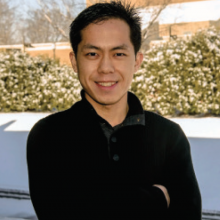
Brent Swails, a cub news producer at CNN’s headquarters in Atlanta, happened to be in the back of the room one day when executives were discussing the launch of a new program by Dr. Sanjay Gupta, the neurosurgeon and the TV network’s chief medical correspondent. CNN would be dispatching crews from Atlanta to cover global health stories for Gupta’s weekly series. Swails spoke up and mentioned that he had minored in global health studies at Northwestern University. He got the assignment and soon flew to Brazil for his first “Vital Signs” story.
When a news producer’s job in CNN’s Johannesburg bureau opened up, he landed that, too. The four months he’d spent as a Northwestern sophomore studying and researching HIV/AIDS in South Africa helped with that advancement, too. Now at age 28, he’s a CNN veteran who has spent four of the six years since college posted overseas including a stint in Hong Kong and a second tour in South Africa, covering much of the sub-Saharan continent. He had dreamed of such a career, “but thought it would take a long time to go the international route. I was lucky.”
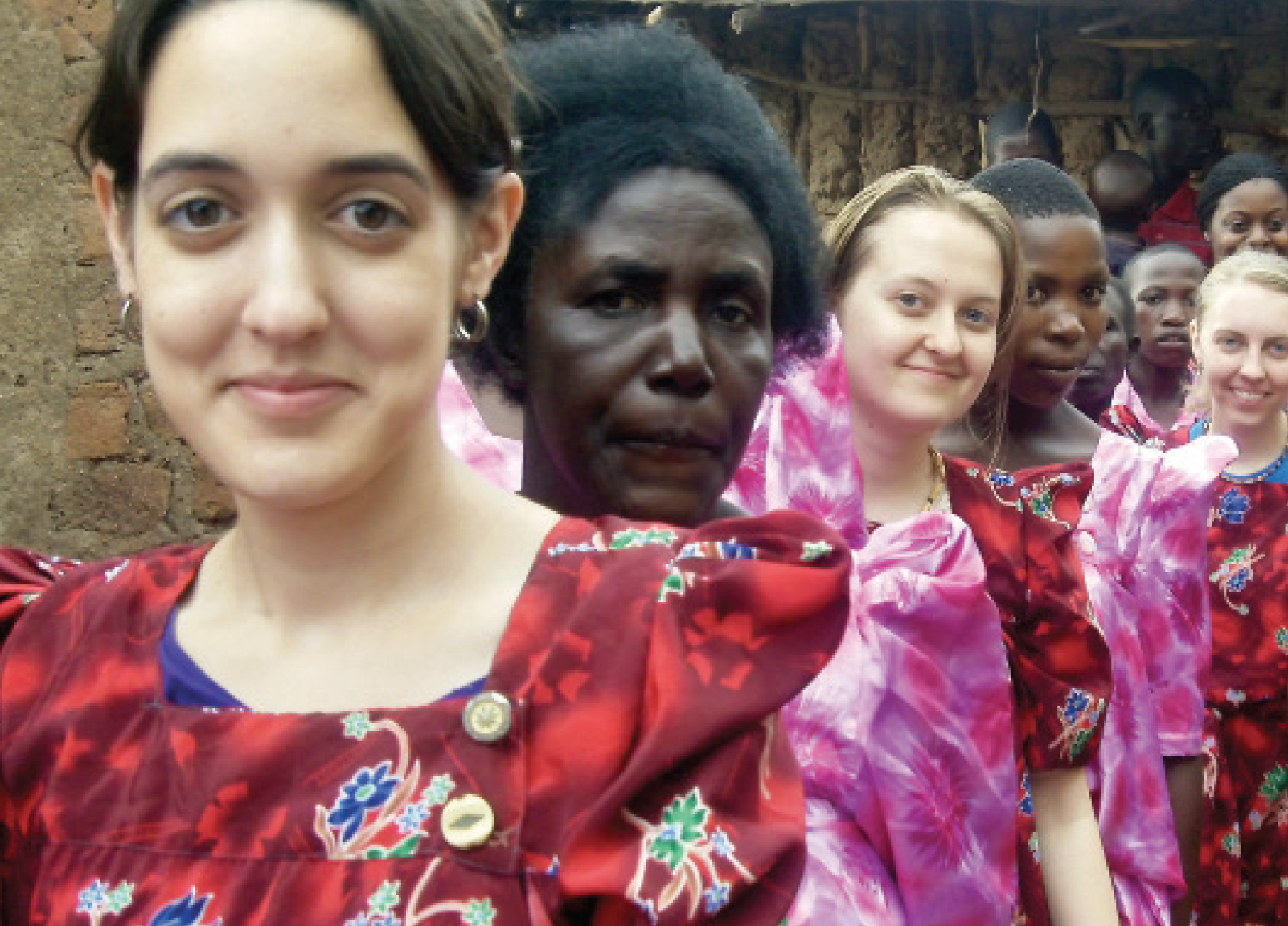
However, as Louis Pasteur said, chance favors the prepared mind. Not many journalism students concentrate on global health studies. Swails, in fact, was the only one in his class at the prestigious Medill School of Journalism. But the private university on the banks of Lake Michigan in the Chicago suburb of Evanston sends scores of other students around the world each year to study public health problems in China, Chile, Cuba, France, and South Africa and, where possible, to do something about them.
Sparking Interdisciplinary Collaborations
Half the global health minors are pre-med students, but the program attracts students from across disciplines, including engineering, education, journalism, and even music. Faculty collaborate across disciplines to teach the core courses and offer electives on infectious diseases, disabilities, mental health, refugees, and other global health issues. President Morton Schapiro said the program “embodies the interdisciplinary spirit of the most successful programs at Northwestern” and stands as a model for other efforts “on campus and around the world.” The university has declared global health one of its “areas of greatest strength” alongside nanoscience, energy, and sustainability, all the foci of a major fundraising campaign.
Fast Start with Federal Help
Global health studies was launched in 2000 with help from a $500,000 National Security Education Program grant won by the fledgling Office of International Program Development (IPD). “In a very short time we were able to do a lot of things: develop curriculum, create programs abroad, organize conferences, (and) provide support for students’ going abroad and for faculty,” said IPD Director Dévora Grynspan. “Very quickly we had a critical mass of courses and programs abroad.”
Global health studies became a minor in 2004, with students required to take three core courses and four electives and to participate in a “substantial” public health experience abroad. That means “they cannot just go volunteer in some hospital,” said Grynspan. “They have to formally learn about public health conditions abroad.” The minor attracts close to 300 students at the 16,000-student university and graduates five dozen or more each year.
Delivering Care in Rural Liberia
Most get that experience primarily by enrolling in classes at partner schools in Paris; Beijing; Santiago, Chile; Cape Town and Stellenbosch, South Africa; Havana, Cuba, and starting in 2014, Tel Aviv, Israel. But some choose to work independently, as did anthropology major Peter Luckow ‘10.
Luckow came to college with an interest in biology and public service, and more than one high school teacher urged him to consider a career in international medicine. He spent two summers interning for Partners in Health, the Boston nonprofit that works in some of the poorest places in the world. At the suggestion of its celebrated cofounder, Dr. Paul Farmer, Luckow went to Liberia in summer 2009 to help a small charity trying to build a community health network in a country still struggling to recover from civil war. The World Health Organization estimated there were only 30 physicians left in the country of 3 million people when the conflict ended in 2003.
Luckow had taken a year off at Northwestern to expand a student-run charity that he helped found called GlobeMed, which raises funds and medical supplies and does hands-on humanitarian work in poor countries. GlobeMed now has chapters on more than 50 campuses. Dr. Rajesh Panjabi, a Harvard Medical School physician who had founded a non-profit called Last Mile Health to provide care in rural Liberia, asked Luckow to return after graduation to help grow the organization, which is known in Liberia as Tiyatien Health. It had a budget of $50,000 and a dozen community health workers then. Today it is a $1.7 million operation with a staff of 120, and Luckow was featured in Forbes magazine recently as one of “30 Under 30 Social Entrepreneurs.”
“Save the World” Types Eager to Help
William Leonard, chair of anthropology and co-director of global health studies, said Northwestern students were hungry for something like this. When he offered his Introduction to International Public Health course in 2001 for the first time, “the student response was amazing. The course with 45 slots was overenrolled after the first 30 minutes of preregistration.”
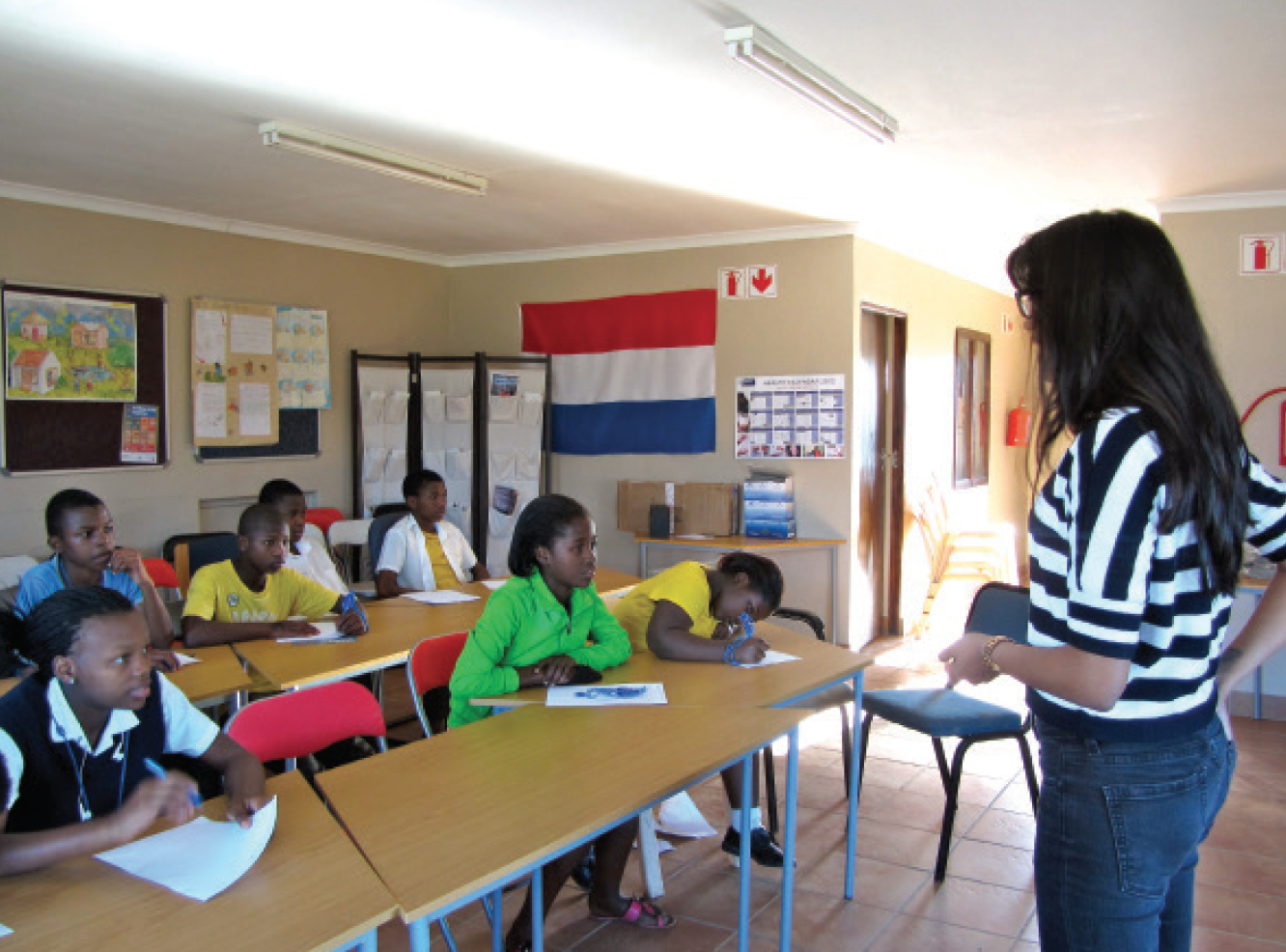
The program has had the ancillary benefit of strengthening a bond between the main campus in Evanston and the medical school in downtown Chicago. Medical students were already doing volunteer work or study overseas, “but the medical school was looking for a way in which experiences abroad could be more structured,” said Grynspan. Now there are regular pathways to conduct research at partner institutions, including Stellenbosch University in South Africa, Makerere University in Uganda, Peking University in China, and Pontificia Universidad Católica de Chile in Santiago.
Northwestern won a grant from the National Institutes of Health in 2008 to strengthen global health programs campus-wide and establish a Center for Global Health within the School of Medicine, which now has its own adviser helping students find places and people in need of support.
Grynspan, working with a staff of six, sends close to 200 undergraduates each year on the global health and on some other education abroad programs, or about a quarter of all Northwestern students who study overseas. The IPD office also handles international agreements, hosts visitors, and arranges student exchanges. It shifted the Mexico program to Chile on short notice in 2009 due to the swine flu scare.
Undergraduates who choose global health “are all save-the-world-type people. They just love the idea of going to poor countries, helping out, and doing research,” said Grynspan, a political scientist by training. “This is an organized way to do it.” Not incidentally for the pre-meds, “it looks very good on their transcript and c.v. They are going straight into the best medical schools and public health programs in the country.”
Turning Passion Into Action
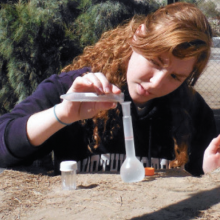
Students are learning something not taught in labs or found in most textbooks.
“What we try to teach them is more a way of looking at the world: What are the right questions to ask? How is (health care) different in different countries? We just want them to have that type of sensitivity because there’s no time to learn it when they go to grad school. It’s just too intense,” said Grynspan, who was born in Israel and raised in Costa Rica.
Luckow is applying to medical schools now, but intends to stay connected with both Last Mile Health and GlobeMed (he is on the board). He remains grateful for the opportunities the global health studies program gave him to turn what had been “a very extracurricular passion for global health” into real action. “I know it changed my life and, given the success of the program, it’s changing hundreds of other students’ lives,” he said.