

2014 Comprehensive Rutgers The University of New Jersey
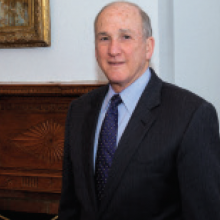
The recent move by Rutgers, The State University of New Jersey, to the Big Ten Athletic Conference might seem far afield from its ambitions to expand its international connections and stature. But even before playing Penn State and Michigan on the gridiron, Rutgers became a full-fledged member of the Committee on Institutional Cooperation (CIC), the vehicle that brings presidents from the Big Ten and the University of Chicago together on academic pursuits. As President Robert Barchi told a Star-Ledger reporter after his 2012 installation, “We’re playing with the big boys now.” Two years in advance of the 250th anniversary of its founding as the eighth college in colonial America, Rutgers is undergoing a metamorphosis with the purpose of living up to the slogan emblazoned on its ubiquitous red bus fleet, “Jersey Roots, Global Reach.”
Rutgers looms large in what Executive Vice President of Academic Affairs Richard Edwards called “the thoroughly globalized landscape that is New Jersey,” with 65,000 students on three major campuses in New Brunswick and Piscataway, Newark, and Camden. With the 2013 merger of New Jersey’s two medical colleges and six other health schools, its budget skyrocketed in a single year from $2.2 billion to $3.6 billion and the university is undergoing a building boom. Rutgers University-Newark, with more than 12,000 students, bears the distinction of being the nation’s most ethnically diverse university, according to U.S. News and World Report, and the main campus along the Raritan River is not far behind. Rutgers serves a densely populated state with the dubious distinction of having less capacity at public universities and exporting more students than any other. Only 8 percent of Rutgers undergraduates come from out of state, and until recently the university actually was faced with the loss of state aid if it enrolled more outsiders.
New Jersey Governor Chris Christie and the state legislature scrapped that penalty. Rutgers today enrolls nearly 5,900 international students; their ranks swelled by 1,000 with the medical and health school merger. A big push to attract undergraduates from China and elsewhere boosted their numbers by 60 percent in two years. Now, like other campuses that have gone this route, Rutgers is figuring out how best to ensure their success at this widely dispersed, decentralized institution.
“We’re constantly thinking about how to bring different groups together and think in different ways. That’s where the most exciting moments happen. That’s where the knowledge is. That’s what internationalization is all about.”
Internationalization Not a Stand-Alone Goal
Barchi, a neuroscientist, moved swiftly after his 2012 installation as Rutgers’ twentieth president to produce a new strategic plan, the university’s first in nearly two decades. Adopted in February 2014 after 18 months of brainstorming and soul-searching, the strategic plan offered a blunt assessment of Rutgers’ weaknesses in comparison with the nation’s top public research universities and laid out four priorities for “achieving greatness”: envisioning the university of tomorrow, including wider use of technology in teaching; building a world-class faculty; transforming the student experience; and enhancing Rutgers’ public prominence. While there are international ramifications to all these themes and priorities, internationalization was not singled out and that was intentional, Barchi said.
“The way we’re looking at it going forward is that globalization is something we’re doing in all of our programs. It’s not a mission or a goal in and of itself that we are going to emphasize at the expense of other academic priorities,” said Barchi, former president of Thomas Jefferson University and provost of the University of Pennsylvania. One of his first moves was to scuttle his predecessor’s plans to open a 5,000-student satellite campus in Hainan, China, with South China University of Technology.
Nonetheless, the trajectory of international programs is upward, especially since the 2011 creation of the Centers for Global Advancement and International Affairs (GAIA), which unified activities across Rutgers’ schools and campuses. The vision came from Joanna Regulska, vice president for international and global affairs and a professor of women’s and gender studies and geography who has been honored by her native Poland for contributions to democracy and civil society there. She started with a staff of 20. Three years later more than twice that many are at work in GAIA’s three frame buildings on the College Avenue campus and outposts in Newark and Camden. Fueling the growth was GAIA’s 2 percentage point share of a new, 4.5 percent first-year tuition fee.
Regulska previously had directed international programs for the School of Arts and Sciences alone. “I pushed for GAIA for a very long time. Things were moving even before I had an official portfolio,” she recalled. GAIA selects a biennial theme and sponsors scores of international events each year, including nearly 100 on global health in 2013–2014 alone. “I’m the bridge builder,” said Regulska. “We’re constantly thinking about how to bring different groups together and think in different ways. That’s where the most exciting moments happen. That’s where the knowledge is. That’s what internationalization is all about.”
Seeding Public Health Degrees and Service Learning in Brazil
GAIA also had more than $240,000 at its disposal in 2012–2013 for seed grants to faculty to spur international collaborations and internationalize curricula. In an institution that expends more than $700 million in research, a few thousand dollars from GAIA isn’t much, but faculty are using the grants to reel in larger support.
Stephan Schwander, a professor in the School of Public Health who studies how pollution weakens resistance to tuberculosis, secured $10,000 from GAIA and $5,000 from his department to launch a global health concentration within the public health master’s program. “It’s a start and a recognition from Rutgers that this educational activity is needed,” said Schwander, who leads an interdisciplinary global health working group. Studying TB in the lab “has shown me very clearly that biomedical work alone is not the solution,” said Schwander. “Tuberculosis is a disease of poverty” and working across disciplines will “come closest to understanding what’s going on.” Rutgers recently got its first Fulbright Visiting Scholar in Global Health. Susan Norris, a professor of nursing who conducts research in favelas and twice has taken students to Brazil for service learning, also got help from GAIA. “An $8,000 grant can get me to Brazil several times,” said a grateful Norris.
Instilling a Study Abroad Culture
Fewer than 1,000 students a year study abroad, including 275 from Camden and Newark. “Given the size of the university, we still have a long way to go,” said Giorgio DiMauro, director of the Center for Global Education. “Cost is a big factor. We’re addressing that by offering programs of different lengths and types, and exploring ways to lower the cost of study abroad.” Changing the academic culture also “is an important piece. Study abroad has not been as well integrated as it could be into the academic majors,” he added.
Eugene Murphy, GAIA’s assistant vice president, concurred. “We need to rationalize the way international education opportunities are structured here. Right now, they cost too much,” said Murphy, an anthropologist and former NYU administrator who took GAIA’s number two job in 2013. “It’s a stretch for a lot of students.”
Jorge Schement, vice president for institutional diversity and inclusion, called Regulska a pioneer who “stepped forward with a vision and promoted that vision at a time when nobody cared, and then people began to see the wisdom of what she was doing. She began opening doors that brought the diversity identity together with the international identity.” The diversity identity is strong in a melting pot state where one person in five is foreign born. “Diversity is us,” said Schement.
The Care, Feeding, and Recruiting of International Students
New Brunswick is 30 miles from New York City and 50 miles from Philadelphia, which helps draw international students. But there were no formal international recruiters until three years ago when Vice President of Enrollment Management Courtney McAnuff conceived the 4.5 percent first-year tuition fee. It allowed him not only to hire a recruiter but also to add a counselor or other support person for every 150 additional international students.
An e-mail from two incoming Kenyan students asking McAnuff how they would recognize him upon their late night arrival at Kennedy International Airport made McAnuff (who drove in to get them) realize Rutgers needed to arrange vans as an alternative to $200 cab rides. Rutgers opened a 24-hour diner to give international students a place to eat over holiday breaks when the main dining halls were closed.
The Center for Global Services’ share of the fee allowed Urmi Otiv, the director, to hire new staff. That still leaves each staff member responsible for more than 800 students, but “we’re in a much better place than we were and looking to get better,” said Otiv. She counsels students, “‘Yes, Rutgers is huge and overwhelming, but the trick is to create your own small Rutgers’” by making friends and networking.
Lobbying Congress as Part of an American Education
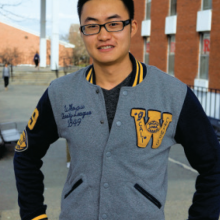
Making friends was not a problem for Jianyu Yeyang, 21, a sophomore from Kunming, China. “I’m quite Americanized,” said the political science and finance major, who goes by the nickname Cobra and attended U.S. high schools for two years. He took part in a Rutgers study abroad program in Beijing, studying with international students as well as locals who mistook him for an American and were surprised he spoke Mandarin.
As a volunteer Global Ambassador for the Center for Global Education, he was part of a Rutgers contingent who traveled to Washington, D.C., on NAFSA’s Advocacy Day to lobby Congress for the Dream Act and other immigration changes. (Yeyang made a pitch to staff of New Jersey’s senators for making it less difficult for international students to obtain visas). Yeyang, wearing a varsity letter jacket, worries countrymen stick too much to themselves at Rutgers. “They’re still living a lifestyle like they’re in China,” he said.
Michael Marcondes de Freitas, 29, of Brasília, Brazil, had to make new friends when he began PhD studies in a rarefied mathematics field because there were few students with whom he could converse in Portuguese. “Math is so lonely, it drove me to pursue getting involved on campus,” he said.
He volunteered at international student orientations, once held in a modest-sized ballroom in the Student Center but now big enough to fill a gym, and was a leader of the Rutgers chapter of a charity, Giving What We Can, that raised funds to fight malaria. “These have been the best six years of my life,” said Marcondes de Freitas, who is off to Denmark on a postdoctoral fellowship.
Finding and Cultivating Fulbright Talent
Rutgers has dramatically increased its production of Fulbright Scholars and it’s not by happenstance. Arthur Casciato, director of the Office of Distinguished Fellowships, doesn’t wait for students to wander into his warren in historic, nineteenthcentury Bishop House; he goes out and finds them. In 2007 when the office was created, there were eight applicants and no awardees. By 2012, nearly a hundred students applied and 19 won, including Lillyan Ling and Michelle Tong.
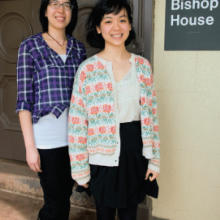
Ling, 23, a Phi Beta Kappa English major now working for Oxford University Press, taught high school in Dobrich, Bulgaria, on the Black Sea coast. She applied at the last minute at a professor’s urging, and Casciato waived an internal Rutgers deadline that had passed. “I never say no to anyone,” he said.
Why Bulgaria? “I wasn’t interested in picking a glamorous place. At this age, I need to expose myself to as much as possible,” said Ling, the daughter of Chinese immigrants. Her choice meshed with Casciato’s advice to apply to countries with favorable selection odds. “Winning Fulbrights has a lot to do with strategy,” he said.
Tong, also Chinese-American, got an e-mail out of the blue from Casciato. “I had no idea that this sort of office really existed,” said Tong, a K-pop fan who taught in Cheongju, South Korea, and worked as a United Nations intern. “He heard about me from my French professor who was a Fulbrighter in her day.”
Building Upon Old Ties and Fostering New Connections
Rutgers is focusing on five countries to build or expand partnerships, joint research, and exchanges: China, India, Indonesia, Brazil, and Liberia. After former President Richard McCormick visited China in 2011, Rutgers established dual-degree programs with South China University of Technology, Tianjin University, and others. It also created a Rutgers China Office on the New Brunswick campus to expand ties and exchanges.
The office generates revenues for its activities by running professional development and training programs for Chinese university leaders, administrators, and others. Political scientist Jeff Wang, the director, sees a bigger purpose. “The China-U.S. relationship will be the most important in this century. There are a lot of misunderstandings between the two, so this people-to-people exchange is really the best tool to educate both sides,” said the Xian native.
A partnership with the Indian Council for Cultural Relations gained Rutgers a visiting professorship in Indian Studies. An Obama-Singh 21st Century Knowledge Initiative grant allowed it to stage a higher education leadership academy in Mumbai. U.S. Agency for International Development grants underwrite large projects in Indonesia and Liberia. Rutgers’ ties with the Universidade de São Paulo in Brazil date back 40 years.
Owing Students an Internationalized Education
Rutgers revised its tenure and promotion process in 2012 to explicitly recognize faculty members’ international activities, which Regulska said made it one of only a handful of institutions in the country to do so. She borrowed the idea from universities in Florida and Michigan. Faculty can present their accomplishments in the areas of international research, teaching, curriculum development, advising international students, grant writing, and service. Regulska said this was not only an institutional recognition of the value of international engagement, but also a recognition that it takes more time and effort to sustain such a commitment.
The tenure form now asks junior faculty to list the international courses they taught on campus or abroad and to specify the number of international students they advise. “We know it takes more time and energy to be a good adviser for international students because the student has a second language and it’s a different culture for them,” Regulska said.
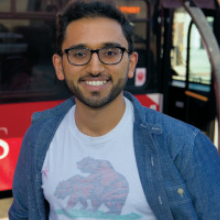
Increasingly Garden State students such as Kunal Papaiya understand their own stake in Rutgers’ internationalization. The political science major believes Rutgers needs to “increase its global presence” and recruit more international students like Yeyang. “We’re not just competing with domestic students. We’re competing with international students like Cobra. We need to get more students like him in here,” said Papaiya, a senior who is eyeing a career in law and politics.
Jean-Marc Coicaud, professor of law and global affairs at Rutgers-Newark and a former United Nations official, said Rutgers must keep up not just with the Big Ten schools and other top public institutions, but elite private ones as well.
“Private universities have been in this (internationalization) business in a very, very aggressive fashion for years, giving an additional edge to students who are already very privileged,” said Coicaud. “If Rutgers misses the train, we’re allowing private universities to even deepen their advantage.”