
At the Crossroads of Continuity and Change

International education has always lived at the intersection of continuity and change. At its best, our work is grounded in enduring values—curiosity, exchange, access, and human connection—while continuously adapting to a world in motion. As we enter a new year, that duality feels especially present. So much is changing in international education, and that is not something to fear. In many ways, it is a sign of vitality, relevance, and possibility.
The past few years have reminded us—again—that change is inevitable. Shifting government policies, evolving labor markets, geopolitical tensions, demographic shifts, and rapid technological advances are reshaping how students move, how institutions engage globally, and how nations think about talent, innovation, and competitiveness. Some countries are opening doors and actively inviting global learners and researchers. Others are narrowing pathways, often in response to domestic pressures and political currents.
So much is changing in international education, and that is not something to fear. In many ways, it is a sign of vitality, relevance, and possibility.
What is notable in this moment is that much of today’s leadership and momentum is being driven by those who have personally benefited from international education—former international students, globally educated policymakers, and institutions shaped by decades of cross-border exchange. These leaders understand its value not as an abstract concept, but as a lived experience that fuels innovation, strengthens societies, and builds bridges in fractured times.
The Value of Continuity—and Change
In moments of uncertainty, continuity matters. Our core purpose has not changed. International education is, at its heart, about people: belonging, access, opportunity, and our shared humanity. It is not solely about mobility, but about outcomes that endure well beyond a student’s time on campus: student success, workforce readiness, research collaboration, civic engagement, and more equitable and connected communities.
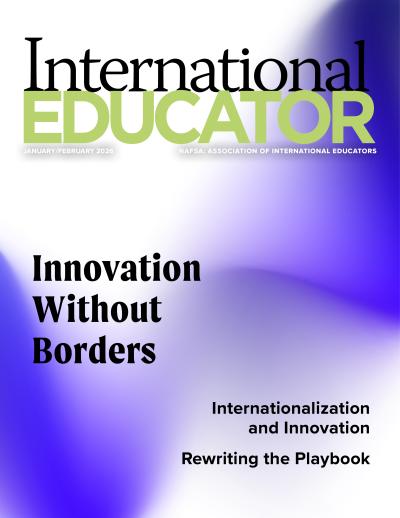
This issue of International Educator reflects that steady center while also challenging us to evolve. Across these pages, we see a field actively rewriting the playbook—rethinking internationalization, expanding beyond traditional models and destinations, navigating complex employment landscapes for international students, supporting teams through uncertainty, and developing more sophisticated ways to assess impact. We also see thoughtful perspectives on where international education may be headed in the foreseeable future, and what it will take to move forward with intention.
What gives me hope is not only what we are addressing, but how we are doing so.
What gives me hope is not only what we are addressing, but how we are doing so. Over the past several years, international educators showed up—for students navigating ambiguity, for institutions under pressure, and for one another. You demonstrate agility when old models no longer serve, creativity when resources are constrained, and courage when the path forward is unclear. We are all reminded that this work is sustained through collaboration, generosity, and a deep commitment to people-to-people connections.
As we look ahead, the question is not whether change will continue—it will. The question is whether we will meet it anchored in purpose and rooted in bold imagination. This moment calls on us to focus relentlessly on outcomes, to remain clear about what matters most, and to dare to envision new approaches that better reflect today’s realities.
Four Frameworks to Guide Us Forward
As we navigate this next chapter, I offer four interconnected frameworks to help guide our collective work—across institutions, sectors, and borders.
Confront and Help Solve Global Challenges
International education must play a central role in addressing the most pressing global challenges of our time—from climate change and public health to democratic resilience, migration, and technological disruption. Our institutions are uniquely positioned to convene knowledge, foster dialogue, and prepare graduates who can work across cultures and disciplines to tackle complex problems. This work is no longer peripheral; it is essential.
Ensure Equitable Access to Quality and Affordable Education
Access remains one of our most urgent responsibilities. Expanding opportunities means reducing financial, structural, and policy barriers that prevent talented learners from participating. Equity must be intentional—embedded in program design, partnerships, and student support systems—and focused on ensuring quality and affordability for learners from all backgrounds.
Strengthen Reciprocal and Multilateral Partnerships
The future of international education depends on partnerships that are truly reciprocal—where all sides benefit, contribute, and learn. Moving beyond transactional models toward long-term, multilateral collaborations grounded in mutual respect and cocreation will be critical in a multipolar world. These partnerships help sustain trust, innovation, and shared progress. We must engage institutions in various parts of the world.
Deploy the Tools, Knowledge, and Habits of Mind That Serve Society Well
We must intentionally cultivate the tools and ways of thinking that will carry us forward. This includes using data and evidence to inform decisions, leveraging technology responsibly, and nurturing habits of mind such as adaptability, ethical reasoning, intercultural competence, and empathy—capacities essential not only for international educators, but for the graduates and leaders we help prepare.
A Collective Path Forward
In this moment of transition, NAFSA is poised to support the field as both a steady anchor and a catalyst for innovation. Our role is to convene, listen, share knowledge broadly, and equip practitioners and leaders with the insights, tools, and connections needed to navigate complexity and lead with confidence. No single institution or organization can address these challenges alone. But together, through shared learning and collaboration, we can shape a more resilient and inclusive future.
International education has never been static; that is its strength. The new year offers us an opportunity to honor the continuity that grounds us while embracing the new beginnings that propel us forward. Together, we have the capacity not only to respond to change, but to shape it with intention, courage, and care.
The future of international education is being written now, and it is being written by each one of you. •




About International Educator
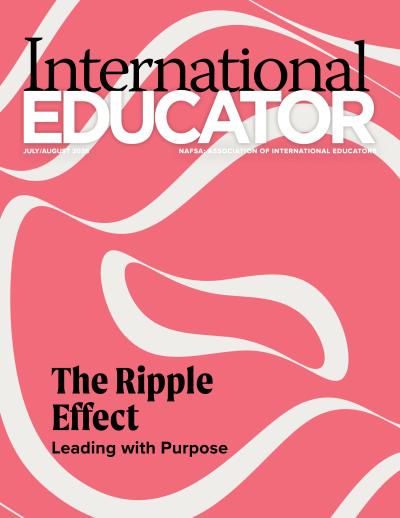
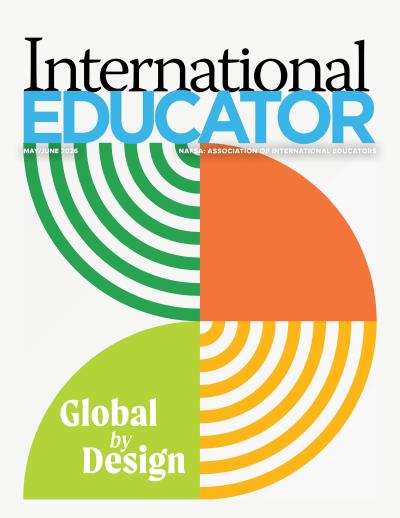
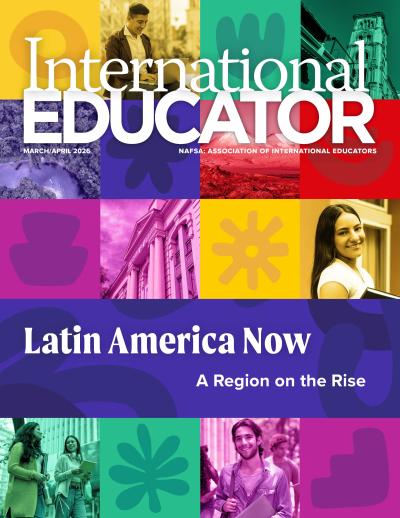
International Educator is NAFSA’s flagship publication and has been published continually since 1990. As a record of the association and the field of international education, IE includes articles on a variety of topics, trends, and issues facing NAFSA members and their work.
From in-depth features to interviews with thought leaders and columns tailored to NAFSA’s knowledge communities, IE provides must-read context and analysis to those working around the globe to advance international education and exchange.
About NAFSA
NAFSA: Association of International Educators is the world's largest nonprofit association dedicated to international education and exchange. NAFSA serves the needs of more than 10,000 members and international educators worldwide at more than 3,500 institutions, in over 150 countries.
NAFSA membership provides you with unmatched access to best-in-class programs, critical updates, and resources to professionalize your practice. Members gain unrivaled opportunities to partner with experienced international education leaders.