
Supporting Students from Latin America and the Caribbean: Context, Culture and Connection

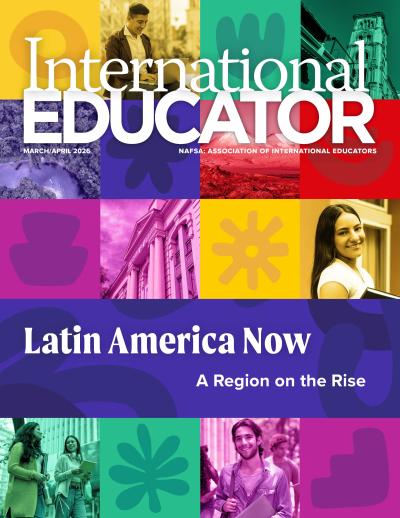
Over the past two decades, Latin America and the Caribbean has become an increasingly important region in global higher education. Yet even as the number of globally mobile Latin American and Caribbean students grows, the experiences of students from the region—and how institutions support them—are relatively underdiscussed topics in the field.
For international student and scholar services (ISSS) professionals, supporting Latin American and Caribbean students often involves helping them manage cultural differences, family expectations, financial pressures, and shifting immigration policies. Experts agree that understanding these dynamics—and listening closely to students' experiences—is key to building effective support systems.
A Diverse Region, Often Oversimplified
Students from Latin America and the Caribbean bring significant cultural and intellectual contributions to U.S. campuses.
"The students who are studying at Baylor [University] from Latin American and Caribbean countries enrich our campus community with their talents and skills," says Eduardo Contreras Jr., vice provost for global engagement at Baylor University (Baylor). "They also contribute to campus life by sharing their own cultural traditions, cuisines, and distinctive identities."
By simply being part of the campus community, they contribute by challenging simplified perceptions of the region. Contreras explains that many people in the United States don't fully appreciate the region's diversity. "Since there is great diversity in culture and context [among] Latin American and Caribbean nations, this adds to the richness of the Baylor experience," he says.
For institutions located in areas with large Latin American communities, there can be a tendency to treat the region as culturally familiar. But Contreras says Latin American international students often help broaden Americans' understanding of the region.
"When we have students from Spanish-speaking [countries] in Latin America, this affords us the opportunity to introduce Americans to the wide array of countries and national contexts for Latin America beyond Mexico," he explains. "Interaction with students from . . . Latin America and programming by our office help to diminish 'single story' narratives about the region."
Language diversity is another factor ISSS professionals should consider, as students from the region may speak Spanish, Portuguese, English, Dutch, Creole, and Indigenous languages depending on their country and background.
"It is very important to note that the linguistic diversity of Latin America is a strength and benefit to the institution," Contreras says. Not all students from the region speak Spanish as their first language, he adds, which means staff must be attentive to the variety of linguistic backgrounds students bring with them.
Navigating Policy Shifts
Similar to other international students, those from this region are facing significant challenges and stress as they navigate changing immigration policies and broader debates around immigration in the United States. When policy changes create uncertainty, ISSS professionals say consistent communication is one of the most important ways institutions can support students.
"In some ways, the concerns of our [Latin American and Caribbean] students are no different than concerns for students of countries outside the region when it comes to changes in policy by the federal government," Contreras says.
To address those concerns, Baylor's global engagement center focuses on transparency and accessibility. "The Center for Global Engagement keeps all of our international students and scholars informed when there are new changes to the regulations, and we have an open-door policy to hear student concerns," he explains. "We also maintain a web page that has a running list of frequently asked questions about changes in procedures related to international student and scholar visas."
Family as a Central Influence
For many students from the region, family plays a significant role in decisions about education. "Supporting [Latin American and Caribbean] students usually requires engaging closely with families, as parents are heavily involved in decision-making, and [parents] value direct, trustworthy communication from institutions," says Tanya Schaad, associate director of ISSS at Florida State University.
In many cases, studying abroad is a decision the whole family is a part of. "For many [Latin American and Caribbean] students, particularly first-generation students, academic success is often viewed as a shared accomplishment that reflects collective family investment and sacrifice," Schaad emphasizes.
Acknowledging that dynamic can help ISSS professionals build stronger advising relationships. "Recognizing family involvement as an asset rather than a complication can strengthen advising practice," she explains. "By validating family investment while reinforcing student autonomy, advisers can strengthen both student confidence and continuity of support across borders."
Institutions can also involve families by including them in orientation or providing guidance about how they can remain engaged. "Some families will want to participate in orientation to understand the university's expectations and avenues for support," Schaad says. "We always try to find space for them."
Financial Pressures and Economic Uncertainty
Money is another major concern for many of these students. Changes in the economy and currency values can make it difficult to study in the United States.
"Financial concerns are one of the most significant challenges for [Latin American and Caribbean] students studying in the United States," Schaad notes. "For example, the [Brazilian] real has fluctuated by more than 30 percent against the U.S. dollar over the past decade," she says. "That affects families' ability to [pay for] tuition and living expenses."
ISSS professionals can help students by providing financial resources and connecting them with support networks. "Advisers should work with students directly to explore options like the Leo S. Rowe Pan American Fund, [which] provides no-interest loans, university payment plans, and part-time, on-campus employment," Schaad shares.
Financial insecurity can also take an emotional toll on students, Schaad continues. "ISSS advisers should also connect students with university counseling services and academic mentors to help them build resilience and coping skills when trying to balance financial concerns with academic demands," she advises.
Building Community and Belonging
Creating opportunities for cultural exchange and community is another important way to support students from the region.
At Baylor, programs like the International Snack Hour allow students to share their cultures in an informal setting. Contreras says the events are popular, giving students a chance to introduce others to foods from their home countries and share more about their cultures.
Student organizations and cultural programming also play a key role. "There are student groups designed specifically for students from certain countries in the region," Contreras says. "During International Education Week, we have also hosted performances specific to countries in the region."
At Florida State University, the institution's Panama campus offers another way to support students as they prepare to study in the United States. "Most [Latin American and Caribbean] students at Florida State University start their academic career at our regional branch campus in the Republic of Panama," Schaad shares. "This provides them with a familiar regional and cultural context before transferring to Tallahassee."
Even with preparation, adjusting to a large U.S. campus can present challenges. "The most significant adjustment for this population is becoming accustomed to a significantly larger campus where they become more anonymous," she explains. "We need to ensure that they know how to reach out for help when they need it and [understand] what resources are available to them."
Schaad adds that helping students build connections on campus is equally important. "Advisers should also address students' need for local support and connections through student groups, volunteering, intramural sports, and other group activities," she says.
Context Matters
Overall, experts agree that understanding students' cultures and building strong relationships is crucial in supporting students from Latin America and the Caribbean.
"Understanding where your students come from in the region and educating yourself and your team about the cultures of those countries is a first important step in supporting . . . students," Contreras advises.
Ultimately, supporting students from Latin America and the Caribbean means understanding the broader context shaping their educational journeys—context that includes family involvement, financial challenges, and cultural expectations. Understanding that motivation—and the pressures that come with it—can help ISSS professionals create environments where students from the region can thrive. •
NAFSA Resources
- Campus and Community Programming Network
- Examples from the Field: Using Social Media to Build Community and Connect with Incoming Students
- International Education's Duty of Care: Supporting and Retaining International Students in Times of Uncertainty
- Latin America and Caribbean Special Interest Group
- "The Power of Parents"
- Successful International Student Peer Mentoring: Demonstrating #YouAreWelcomeHere in Onboarding and Orientation Programming





About International Educator
International Educator is NAFSA’s flagship publication and has been published continually since 1990. As a record of the association and the field of international education, IE includes articles on a variety of topics, trends, and issues facing NAFSA members and their work.
From in-depth features to interviews with thought leaders and columns tailored to NAFSA’s knowledge communities, IE provides must-read context and analysis to those working around the globe to advance international education and exchange.
About NAFSA
NAFSA: Association of International Educators is the world's largest nonprofit association dedicated to international education and exchange. NAFSA serves the needs of more than 10,000 members and international educators worldwide at more than 3,500 institutions, in over 150 countries.
NAFSA membership provides you with unmatched access to best-in-class programs, critical updates, and resources to professionalize your practice. Members gain unrivaled opportunities to partner with experienced international education leaders.