
It Takes a Village: Building Communities Where International Students Thrive

It takes a whole community to help international students succeed and feel welcome. Housing, transportation, friendships, language learning, and a supportive community all play a role in helping students thrive. When these important pieces come together through intentional partnership between professionals on campus and in the community, the positive impact on students and community members alike can be felt long after graduation.
International Educator spoke with five past recipients of NAFSA’s Hugh M. Jenkins Award for Excellence in Community Programming about campus-community partnerships: why they matter now, what makes them work, and how to get started.
Wes Blood, Global Opportunities, Toledo, Ohio
A little background… My wife Marjie and I officially began working in partnership with the University of Toledo in January of 2005. We started by leading a simple conversation class, called “English Corner,” helping students practice their speaking and listening skills. Over time, as we got to know an increasing number of students, each of them having a unique set of needs, we noticed that there were multiple opportunities to serve them, meet these needs, and make them feel welcome in our city.
We were also working with a larger team of people interested in serving immigrants and refugees in our city, as well as international students. There were many families involved in this effort, which began in 2001, while I was still serving as a pastor of a local church.
The partnerships began to grow. Many of the people serving with us began to involve their churches to draw volunteers to help with English support for international people. Out of these volunteer efforts, an entire English as a Second Language (ESL) school was born.
In 2008, a chance meeting between our family and a man who had just become the executive director of a Christian organization called “Cherry Street Mission” sparked our furniture project. I had just been invited over to a student’s apartment to have tea together, and I noticed that he had no furniture. At the same moment, a company in our city was donating an old furniture warehouse to Cherry Street Mission. When I was able to share the vision of serving students from all over the world who had come to our city with the director, he offered us warehouse space for free! We started the furniture project on zero dollars, because of that partnership.
Our partnership with the university, churches, and other community organizations has been crucial to the growth and sustaining of many of our programs.
Why do community partnerships matter at this moment and in this environment?
Due to an immigration process that has been badly broken for many years and the current administration’s constantly changing policies, many international students are wondering if they are welcome in the United States. When we serve them as a community, it shows that they are indeed welcome. In fact, the more partners that are involved in serving them, the more welcome the students feel. Many of our partners are faith-based churches and organizations from the Christian community; when people from these organizations serve students, they do so out of an unconditional love, which speaks powerfully in this particular moment.
What makes these partnerships successful?
The key to expanding successful partnerships is constant communication, expressed gratitude, and vision-casting. I have found that when people “catch” the vision of serving international students and the huge personal impact it has on students who are far from their home country and personal support network, people are eager to partner with us. I try to share frequent stories with our partners that show how thankful we are to them and how thankful the students are for their service. It is very helpful if these stories include pictures. The more that partners see and hear that they are crucial to the overall success of our endeavors to serve students, the more dedicated they will be to continue.
What’s a success story you can tell us about?
Just a couple months ago, we began piloting a new way to serve international students in Ohio: an initiative called “Out for a Spin.” Ohio recently made requirements for obtaining a driver’s license much more difficult, including mandatory driving school and an additional 50 hours of supervised driving. We have trained three “driving coaches” so far to help with the 50-hour requirement and to go through a checklist of skills, so the students are truly ready to pass the driving test. Our first student recently passed his test and gained a new American friend in the process! He was literally beaming! Success includes more than the accomplishment of an objective; it also includes the fostering of supportive relationships.
If someone wants to start a new partnership like this, what’s the first step?
Honestly, I would say that in our case, many of the partnerships have come as a result of prayer. I could tell you many stories (like the warehouse story above) that happened as a result of prayer, just the right people responding at just the right time. Also, starting new partnerships always requires clear vision-casting and talking with prospective partners about the potential contributions (cultural and societal) that the international student could make to our country. Once people catch the vision, the partnerships often naturally unfold.
What are some common challenges or obstacles you face with these partnerships?
One significant challenge is partners drifting from or losing the original vision. This usually happens over time, simply because I have failed to continue to communicate the impact of the partnership or our gratitude to the partner. That communication is key and must be regularly fostered.
Adria Buncal, Oregon State University
Why do community partnerships matter at this moment and in this environment?
Partnerships between international offices and community organizations are especially important in today’s environment. Many community members want to demonstrate that international students and scholars are welcomed and valued, especially when immigration policy debates and media narratives can create uncertainty or feelings of isolation. These partnerships provide meaningful opportunities for cultural exchange, friendship, and local engagement that help individuals feel connected to the community outside of their campus lives.
At the same time, institutions of higher education are facing budget constraints and staffing challenges. Community partnerships allow staff to leverage existing local resources, volunteer networks, and expertise in order to expand support for international students and scholars. By working together, universities and community organizations can create a stronger sense of belonging while accomplishing more with limited resources.
What makes these partnerships successful?
I believe that successful partnerships are built on consistent communication, mutual support, and a shared commitment to serving the international community. At the beginning of each academic year, and throughout the year, I regularly connect with community partners to update program information, identify key contacts, and learn about upcoming events and opportunities. Maintaining these relationships ensures that information remains current and that both sides understand one another’s goals and needs.
Equally important is showing up for our partners. By attending their events and meeting their members, I gain firsthand knowledge of the experiences available to international students and scholars while demonstrating my investment in their mission. This ongoing exchange strengthens trust and creates opportunities for new collaborations. In turn, this helps me confidently connect students and scholars with programs that match their interests and needs. I also enjoy being a connector within the network by finding out what people’s needs are and referring them to others within the network.
What’s a success story you can tell us about?
One partnership that has been especially meaningful is our collaboration with the Oregon chapter of the Fulbright Association. Through this relationship, Fulbright alumni, visiting Fulbrighters, and members of our community have had opportunities to engage in cultural exchange, professional networking, mentorship, and community-building activities through grant-funded events and programs. This has allowed our community to access Fulbright’s wide network and to partner in promoting international understanding while strengthening connections between local and global communities.
Another successful partnership is with the Mid-Willamette Valley chapter of Friendship Force International. Through regular communication and shared programming, international students and scholars have been invited to present at meetings, participate in community and American cultural events, and connect with local residents through conversations. Friendship Force members volunteer at our monthly Scholar Social event, participate as conversation partners in our International Friendship Program, and engage in experiences that often lead to lasting friendships and meaningful cultural exchange.
What’s something that’s surprised you in working on these partnerships?
One of the most pleasant surprises has been discovering how many community members are genuinely interested in supporting and engaging with international students and scholars. People from a wide range of backgrounds are eager to share their experiences, learn about other cultures and build meaningful relationships despite cultural differences.
While universities often seek community support for international students and scholars, many organizations are also looking for ways to become more globally engaged and connected.
I have also learned that these partnerships create mutual benefits. While universities often seek community support for international students and scholars, many organizations are also looking for ways to become more globally engaged and connected. In many cases, a simple introduction leads to friendships, mentorships, and support networks that continue long after a program or event has ended. Some of the most meaningful connections happen organically and often in ways that international offices may never fully see.
If someone wants to start a new partnership like this, what’s the first step?
The best first step is to identify and connect with organizations that are already engaged in international, intercultural, or community service work. This may include refugee-serving organizations, English language programs, Rotary clubs, religious organizations with international outreach, sister-city associations, Fulbright Association chapters, or Friendship Force clubs. Many of these groups are actively seeking opportunities to engage with international students and scholars.
One simple and effective way to begin is by organizing a “speed friending” event or conversation-partner matching program. Invite community members and international students to meet in a structured setting that encourages informal conversation and relationship-building. These initial introductions often lead to ongoing involvement in community activities, volunteer opportunities, and lasting personal connections. The key is to continue nurturing these relationships and connections through regular communication and reciprocal promotion of events and programs—I do this by forwarding emails and sharing events on social media.
Dilnoza Khasilova, North Idaho College
What does it take to help students succeed?
Helping students succeed starts with building meaningful partnerships rooted in guidance, mentorship, and trust. I believe students should be active participants in their educational journey—and that their voices, experiences, and goals should be valued throughout the process. Our role is to walk alongside them, help them recognize their strengths and navigate challenges, and to connect them with opportunities and experiences they might not otherwise have access to. When students feel heard, supported, and empowered, they can build confidence, develop essential skills, and discover pathways to success in their education and future careers. Student success means more than helping students reach their immediate goals; it means providing them with the tools, connections, and confidence to thrive long after they leave our programs.
Why do community partnerships matter at this moment and in this environment?
Partnerships with local organizations and community partners are especially important in today’s environment because student success often requires more than what one institution can provide on its own. These partnerships create a stronger support system, connect students with additional resources and services, and expand access to opportunities that help them achieve their educational and career goals. Through collaboration, organizations can identify gaps in services, respond to community needs, and provide more coordinated support. These relationships also help students build connections, gain real-world experience, and explore pathways students may not have known were available to them. Strong community partnerships allow us to reduce barriers, make better use of available resources, and ensure students feel supported throughout their journey. They help us work alongside students and empower them to make informed decisions about their education, careers, and future.
Partnerships with local organizations and community partners are especially important in today’s environment because student success often requires more than what one institution can provide on its own.
What’s a success story you can tell us about?
One success story I’m especially proud of is the World Language and Culture Program, a volunteer program I developed as a former international student myself. Through our community partnership, the program became a hub for students, alumni, community members of Wyoming, and others who wanted to grow, strengthen their résumés, and gain meaningful experiences they might not otherwise have access to.
One of our volunteers recently received a Fulbright award to teach English in Uzbekistan. She worked tirelessly to explore opportunities, apply to different programs, and develop her skills through independent learning and dedication. Today, she is teaching English to students abroad and contributing to global learning and cultural exchange. Her journey shows what can happen when students are given access to opportunities, guidance, and a supportive community. Seeing her succeed reminds me that partnerships can open doors, help students recognize their potential, and empower them to pursue opportunities far beyond what they initially imagined.
If someone wants to start a new partnership like this, what’s the first step?
I believe the first step is to listen to students and map or discuss what they need, what they hope to achieve, and what barriers they may be facing. From there, connect with local organizations and explore how you can work together to create meaningful opportunities. From my experience, strong partnerships grow through genuine relationships, trust, and a willingness to learn from one another. It’s important to recognize that every partner brings something valuable—whether it’s resources, mentorship, knowledge, or opportunities for hands-on experience. You don’t have to start with a big program; sometimes, one conversation or one opportunity can make a real difference. Most importantly, make sure students are part of the process, not just the recipients of support. When students feel heard, valued, and included, partnerships become more meaningful and create opportunities that can truly change their educational and career paths.
You don’t have to start with a big program; sometimes, one conversation or one opportunity can make a real difference.
What are some common challenges or obstacles you face with these partnerships?
Having been on both sides of these partnerships—as a student and as someone who works alongside students—I’ve learned that one of the biggest challenges is finding balance and understanding each other’s expectations. Sometimes, we become so invested in supporting students and creating opportunities that we forget to take care of ourselves. At the same time, partners may have different priorities, communication styles, or ideas about what the partnership should look like. It’s important to have honest conversations early on about what each partner hopes to contribute, what they need, and what is realistically possible. I’ve also learned that understanding people’s personalities and working styles makes a difference in building strong relationships. Partnerships take time, patience, and flexibility. Recognizing each other’s capacity, respecting boundaries, and maintaining open communication can help prevent misunderstandings and build relationships that are both meaningful and sustainable.
Era Schrepfer, Foundation for International Understanding Through Students
Why do community partnerships matter at this moment and in this environment?
International students and scholars arrive with a wide range of needs, and a university can’t always meet these on their own. Community organizations can help to fill the gaps and enrich student experiences. Right now, there are several different trends converging, making the argument for these kinds of partnerships even stronger.
Benefits to the university. Enrollment is down in many cases, and competition for students is global, so student experience matters more than ever. A strong network of local hosts, mentors, and off-campus opportunities shows prospective students that the whole region wants them there. And students who feel supported and connected to their new home are more likely to persist, thrive, and recommend the school to their friends.
A neutral party students can trust. Students and families are worried about so many things. Perceived stigma against “outsiders,” combined with visa delays, travel restrictions, and possible changes to Optional Practical Training (OPT) and Curricular Practical Training (CPT) are all weighing on their decisions. Students may worry that sharing their struggles with the institution that controls their visa status will reflect badly on them. At a community organization, students can ask for help with housing, finances, culture shock, or loneliness without that worry. Staff at community groups can also act as a bridge, helping students understand and use the university resources that exist for them.
Opportunities shows prospective students that the whole region wants them there. And students who feel supported and connected to their new home are more likely to persist, thrive, and recommend the school to their friends.
Stability when the university changes. University priorities shift with new presidents, new provosts, budget cuts, and reorganizations, and international student services are often among the first things affected. A community organization has its own governance, funding, and mission, so its programs continue through those transitions. Students and the university get continuity that school programs can’t promise. Relationships built over many years also give a campus a long institutional memory that no single office can hold.
A pipeline of future community members and supporters. Students who build real ties to a city while they study are more likely to put down roots there, and to give back as neighbors, professionals, and supporters.
What makes these partnerships successful?
Open, regular communication. Clear referral pathways, regular check-ins, and shared information ensure that both sides know who to call when a need arises and what happens next.
Mutual benefit that’s visible to both sides. The university sees retention, student satisfaction, and community goodwill. The organization sees access to students, volunteers, visibility, and sometimes funding. If only one side benefits, the partnership fades.
Some financial or in-kind commitment from the university. Partnerships that run entirely on goodwill are fragile. Even modest financial support, office or event space, or help in promoting events and programs, signals that the university values the partner’s work, and this investment frees the organization’s limited staff time to be spent on students.
Student voices. Students should help shape programs, not just receive them. That active participation keeps offerings relevant and builds leadership. For example, at Foundation for International Understanding Through Students, students hold positions on the governing board, ensuring that they are part of conversations about the future of the organization.
What are some common challenges or obstacles you face with these partnerships?
The most common challenge is that these partnerships, especially the longstanding ones, depend on people and relationships. When a key contact leaves or priorities shift, trust has to be rebuilt, and partnerships can be tested. Partners also work with different budgets, calendars, and decision-making speeds, and they don’t always see their roles the same way. Universities and community organizations can also slip into seeing each other as competitors for student attention, funding, or credit, when each brings something the other can’t. What helps most is building relationships at several levels, communicating early and often, treating each partner as an equal with its own expertise, and keeping students’ needs at the center.
Cynthia Smith, University of Arkansas-Fayetteville
What does it take to help students succeed?
It takes the whole community to help our students succeed. Of course, faculty and staff are integral parts of a student’s success, but so are other factors that support students’ daily life—such as who their apartment manager is, if they have access to a transportation system, how menu selections are coordinated in their dining hall, whether there are university clubs or community friends to support them, etc. All of these factors, plus so many more, will either help a student feel like they belong and are an important part of the community or contribute to their stress or isolation. The feeling of belonging has been proven to be an important part of retention and student success.
What makes these partnerships successful?
Partnerships are successful when there is a true collaboration. In a collaboration, it’s important to remember that all sides contribute and share common goals to achieve desired outcomes. Collaborations are stronger when they have diverse partners and include the campus and local community.
What’s a success story you can tell us about?
We’ve had a great collaboration that has grown for more than 20 years, a program called Plaza de las Americas. Over the years, we’ve identified partners who need to be involved in this program to make it a success. Building relations between these groups helps this program grow and have an impact on students, faculty, and staff, while building a stronger community. The program brings together international students from Spanish-speaking or Latin American countries, students who studied abroad there, students in Latin American and Latino studies, students learning Spanish, and faculty and staff who work with those populations.
Faculty invite their students to attend for extra credit and to volunteer. Other important collaborators are departments who want to support this vision and can bring financial partnership or support in planning and implementation. The two-hour program features country booths from Spanish-speaking and Latin American countries, authentic food, and performances and demonstrations—and the program ends in a dance party. The result of our collaborations has been a totally funded program with more than 450 attendees carried out by about 50 volunteers.
What’s something that’s surprised you in working on these partnerships?
It surprised me that when creating partnerships, we are creating opportunities for soft diplomacy. Bringing people together to talk, interact, ask questions, share information, hear about others’ feelings, and learn together breaks the ice and quickly changes perceptions and stereotypes. People walk away with a different perspective that was impacted by human interaction.
If someone wants to start a new partnership like this, what’s the first step?
The first step is to figure out what outcomes you want and then build a team of diverse stakeholders, one that can successfully help you reach those outcomes.
What are some common challenges or obstacles you face with these partnerships?
An obstacle that we commonly face is finding time to thoroughly invest in our partners. We need time to provide training about the diverse groups of students we work with, the programs we offer, and what international education looks like on our campus. In our training sessions, we also often have to generalize the cultural norms of our students and scholars, since they represent more than 100 countries and many more cultural backgrounds. It’s a challenge to talk about cultural norms when we know that each person is different and unique. Financial barriers are also quite a challenge. •
NAFSA Resources





About International Educator
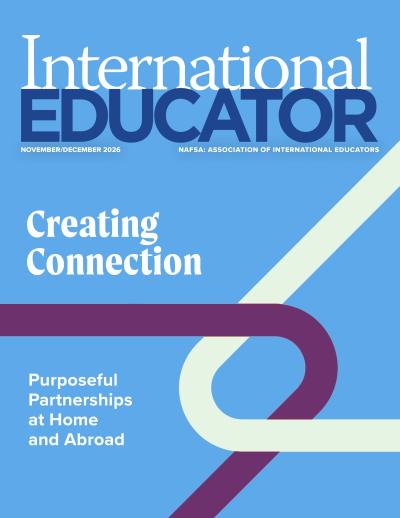
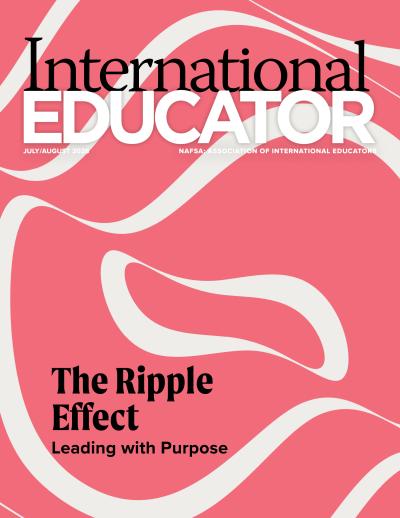
International Educator is NAFSA’s flagship publication and has been published continually since 1990. As a record of the association and the field of international education, IE includes articles on a variety of topics, trends, and issues facing NAFSA members and their work.
From in-depth features to interviews with thought leaders and columns tailored to NAFSA’s knowledge communities, IE provides must-read context and analysis to those working around the globe to advance international education and exchange.
About NAFSA
NAFSA: Association of International Educators is the world's largest nonprofit association dedicated to international education and exchange. NAFSA serves the needs of more than 10,000 members and international educators worldwide at more than 3,500 institutions, in over 150 countries.
NAFSA membership provides you with unmatched access to best-in-class programs, critical updates, and resources to professionalize your practice. Members gain unrivaled opportunities to partner with experienced international education leaders.