
Potential and Promise
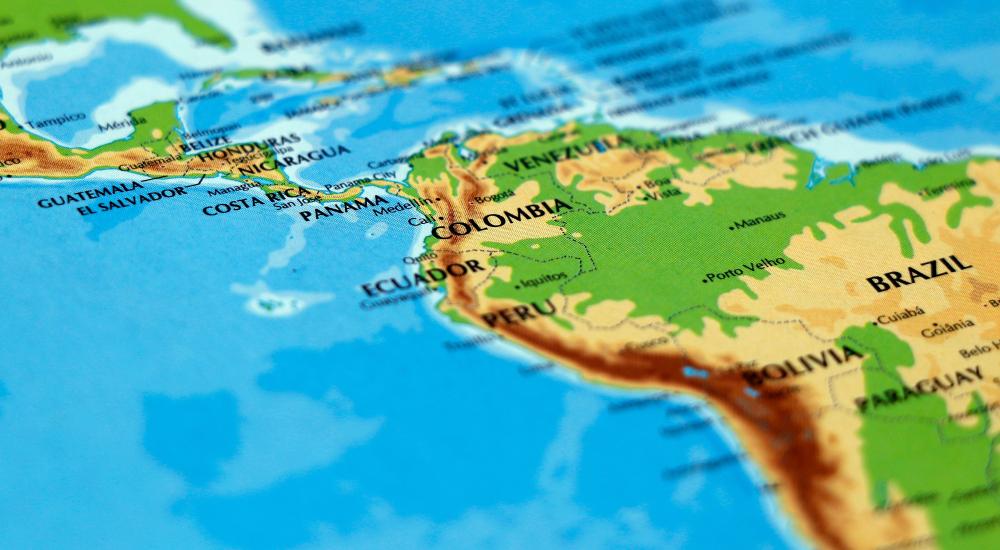
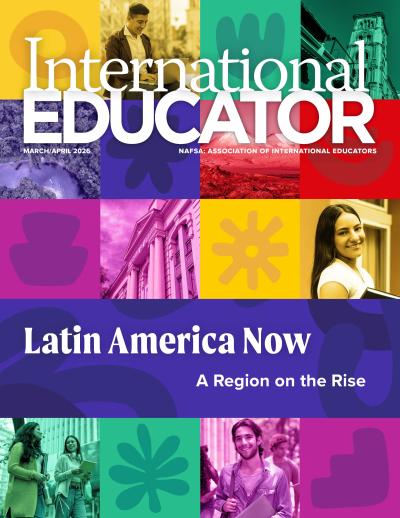
Made up of more than 30 countries and 650 million people, Latin America and the Caribbean are home to some of the oldest universities in the Americas, dating back to the 1500s. More recently, explosive growth in the region's diverse higher education sector has contributed to the expansion of distance-learning models, deeper institutional engagement in community development initiatives, increased open-access scholarship, and scientific and applied research in areas such as biodiversity and public health. And given the region's youthful population, there are still greater opportunities ahead.
"This is a young region that is stabilizing politically and economically," says Soledad Zapiola, executive director of the office of international programs at Universidad de San Andrés in Argentina. "There's huge potential in what these young people can do."
As institutions throughout the region embrace internationalization as a strategic priority, they have the potential to play key roles in some of the world's biggest challenges, adds Jocelyne Gacel-Ávila, UNESCO chair on internationalization of higher education and global citizenship at the University of Guadalajara in Mexico and an emeritus national researcher of the country's National System of Research.
The future of higher education in the region may depend on the ability of universities to align internationalization with their development goals and historic social commitment, ensuring that global engagement contributes not only to academic excellence but also to more inclusive and sustainable societies. —Jocelyne Gacel-Ávila
"If universities are able to strengthen research ecosystems and deepen international collaboration, they can position themselves not only as participants in global knowledge networks, but also as important contributors to the global debate on development, sustainability, and global citizenship," she says.
"In that sense, the future of higher education in the region may depend on the ability of universities to align internationalization with their development goals and historic social commitment, ensuring that global engagement contributes not only to academic excellence but also to more inclusive and sustainable societies."
A Diverse History
While each country in the region has its own unique history and culture that shape its higher education system and institutions, the development of higher education in the region can be charted through periods of colonialization, reform, retrenchment, and exponential growth.
The region's universities were heavily influenced by their European counterparts, largely remaining as institutions for the elite, until reforms and other changes throughout the twentieth century transformed higher education in the region.
Gacel-Ávila cites Argentina's University Reform of Córdoba in 1918 as a "key turning point," establishing institutional autonomy, student and faculty participation in governance, academic freedom, and secular education in the region. Higher education became free at public institutions in many countries, though institutional growth didn't begin accelerating until the second half of the century, spiking in the 1970s. "However, this expansion often occurred without the necessary increase in funding or infrastructure," Gacel-Ávila says, creating gaps that remain to this day.
The rise of revolution and military dictatorships during the Cold War period "interrupted academic life in many countries," Gacel-Ávila recounts, forcing intellectuals into exile and weakening research systems.
Neoliberal reforms in the 1990s led to an explosion in the number of private higher education institutions, which had existed in some countries since the 1950s. According to Zapiola, private institutions have increased the diversity, complexity, and depth of the region's higher education system by introducing a wide variety of institution types—religious, professional, technical, and boutique. She adds, "Private universities [contributed to] a lot of innovation. It was the best thing that could happen to a system that was becoming a little bit stiff."
However, rapid growth has led to wide variances in quality that some countries are still working to address. "In many countries, centers of academic excellence coexist with institutions that have very limited academic capacity and weak quality assurance mechanisms," Gacel-Ávila says, noting that regulatory frameworks have lagged behind the diversification and proliferation of institutions in many countries in the region.
In response, some countries, including Chile, have created national accreditation systems, in some cases supported by state funding, says Jorge Burgos Muñoz, transformation office leader in the rector's office of Universidad Técnica Federico Santa María in Chile. In Chile, this work "is moving faster and better than expected," he says.
Strengths and Challenges
Today, 33 million students attend more than 1,800 higher education institutions across the region—a dramatic increase from roughly 700,000 in the 1950s. However, the region's young population, with a median age of 31, is driving the need for improved access and equity.
Many countries have recently made dramatic strides in both areas. For example, five years ago, 30 percent of students in Chile were first-generation students, according to Muñoz. Today, that number is closer to 50 percent.
However, challenges continue to persist. In some countries, student dropout rates are between 40 and 50 percent, Gacel-Ávila says—driven by both financial pressures and inadequate preparation. And the region's overall income disparity levels continue to be among the world's highest, Gacel-Ávila explains, despite decades of significant improvement. "Access to high-quality institutions still correlates strongly with socioeconomic background," she says.
"The elephant in the room is still poverty," Zapiola adds, noting the large numbers of students who can't afford to stay in school long enough to graduate.
Brain drain is another key issue. According to Gacel-Ávila, the region is second to only Africa in the proportion of residents with a tertiary education who emigrate.
We have been exporting talent since the 1950s. The best minds are going overseas for PhDs and staying [there]. This is where you still see a lot of space for growth. —Soledad Zapiola
While some governments are developing policies to create stronger research ecosystems, overall investment in research and development remains low. According to Gacel-Ávila, research and development accounts for less than one half of a percent of gross domestic product, compared to 2–3 percent in many nations with advanced economies, and research-focused institutions make up only a small number of the region's colleges and universities.
"We have been exporting talent since the 1950s," Zapiola says. "The best minds are going overseas for PhDs and staying [there]. This is where you still see a lot of space for growth."
Innovation and Transformation
Despite these constraints, the region's higher education sector has made significant contributions to both global research and community development.
Open-access scientific platforms including SciELO, Redalyc, and LA Referencia "have played a major role in democratizing access to scientific knowledge worldwide," Gacel-Ávila shares. Applied research conducted by scholars at Latin American institutions in fields including tropical agriculture, biodiversity, and public health are also internationally recognized, she adds.
"You're starting to see more institutions associated with research, but I think there's still a gap in the relationship between universities and the private sector," Muñoz says. Gacel-Ávila points to "a persistent mismatch between the programs universities offer and the evolving needs of labor markets and knowledge economies."
In response, the sector is moving away from its roots in the Napoleonic philosophy of centralized, professionally oriented, rigidly hierarchical higher education—to experiment with new models. "Students need to think critically, but they also need so many other skills to be competitive," Zapiola says.
A growing recognition of the region's Indigenous peoples has also driven change in intercultural higher education models in many countries, including programs that support the revitalization of Indigenous languages. Some countries have also implemented policies to improve Indigenous access to higher education.
However, the population remains underrepresented, making up only 2–5 percent of university enrollment, according to Gacel-Ávila. While key challenges remain—including poverty and the lack of institutions located in areas with large Indigenous populations—"the recognition of Indigenous epistemologies represents an important step toward building more inclusive higher education systems," Gacel-Ávila says.
Demographic and cultural pressures haven't been the only drivers of change. In a dynamic that has played out in other parts of the world, the pandemic accelerated distance learning efforts in Latin America. In Chile, for example, institutions representing half of the country's higher education enrollment are now involved in a collaborative online international learning (COIL) consortium, according to Muñoz. Gacel-Ávila points to the National Distance Education University of Costa Rica as another example of a large-scale virtual education initiative.
Elsewhere, new hybrid models, says Zapiola, are helping address "the classical challenges of access we tend to have in the region," although, she adds, "the digital divide is also here."
"The consolidation of hybrid models could solve some of the access issues, but the availability of stable internet and good equipment is still a huge [obstacle]," she says, noting the issue is particularly pronounced in rural and Indigenous areas.
Mirroring what educators have observed in other global regions, there is also "increasing awareness [in Latin America] that students are more fragile after the pandemic," Zapiola explains. In response, institutions in Argentina and across the region are having the same discussions about student supports as their global counterparts are.
The emergence of artificial intelligence (AI) is also driving similar discussions. "AI just bumped into the room like a clumsy elephant, and no one knows exactly what it will do to us or for us," Zapiola says. "It might help others understand we [also face] the [same] challenges our colleagues have across the world."
And across the region, colleges and universities are focusing on developing more entrepreneurial partnerships with the private sector and other institutions. There's growing recognition that "we cannot depend only on state funding," Muñoz says, pointing to efforts to increase collaboration with partners in private industry. "In this case, we have a lot to learn from U.S. institutions."
The Internationalization Imperative
As in most of the world, the region's international education activities focus on academic mobility, research collaboration, and participation in international networks, according to Gacel-Ávila. She points to strong regional research and academic cooperation initiatives such as the Unión de Universidades de América Latina y el Caribe (UDUAL), Asociación de Universidades Grupo Montevideo, RedCLARA, and Red de Macro Universidades de América Latina y el Caribe, as well as regional student mobility efforts such as UDUAL's Programa Académico de Movilidad Educativa and the Plataforma de Movilidad Estudiantil y Académica organized by the Alianza del Pacífico. Some institutions also partner with European counterparts through Erasmus+ and research programs like Horizon Europe.
Institutions across the region are embracing internationalization as a priority. For example, the Argentinian Forum for International Education was founded 20 years ago and now counts 37 public and private institutions as members. "Few universities in Argentina are not considering internationalization as a vector, goal, or layer of institutional development," Zapiola says. "There's [significant disparity] in terms of what institutions are achieving and capacity across the sector. But everybody has built it into their strategic plans."
Even so, fewer than 2 percent of the region's students participate in international mobility, according to Gacel-Ávila. And of those who do study abroad, roughly 60 percent study within Latin America and the Caribbean. Public universities tend to focus more on traditional academic cooperation and collaborative research, while private institutions focus more on "flexible and market-oriented strategies," including international partnerships, dual- and joint-degree programs, international campuses, or franchised programs, Gacel-Ávila explains.
As greater numbers of students with lower socioeconomic status enter higher education, there's a larger need for "nontraditional means of mobility" such as virtual exchange, Muñoz says. "It's a way to ensure more students are involved in global learning contexts," he says.
Expanding internationalization means addressing many barriers, including financial constraints, administrative challenges, degree recognition, competition for inbound international students within the region, and vast differences in capacity and approaches among institutions.
In Argentina, for example, a small number of institutions account for a disproportionate share of regional mobility: While some send close to 30 percent of students abroad, the regional 2 percent average suggests many others send virtually none. While some institutions are still working to build capacity for internationalization, "everyone's aware that it's the way to go," Zapiola says.
Compared to other regions, Latin America still underperforms when it comes to the number of collaborative degrees and internationalization strategies and programs, as well as in the integration of international, intercultural, or global dimensions in learning outcomes, Gacel-Ávila says, with wide variances across countries.
No one speaks Spanish if you go to Asia or Africa. You need to start language [programs] to build an internationalization strategy. —Soledad Zapiola
Mexico, for example, has the fewest national and institutional policies to support internationalization and foreign language proficiency, compared to other Latin American countries, according to Gacel-Ávila. Low levels of English proficiency are also a region-wide challenge.
"No one speaks Spanish if you go to Asia or Africa," Zapiola adds. "You need to start language [programs] to build an internationalization strategy."
Until recently, only one country—Cuba—had a national strategy for internationalization, according to Gacel-Ávila. (Although, as backers of such plans would readily note, the region's largest neighbor, the United States, lacks such a plan as well.)
But that is changing across the region. Gacel-Ávila points to examples from her research:
- Columbia has incorporated international criteria into accreditation and quality assurance systems.
- Brazil has adopted language teaching policies and has the largest number of joint- and dual-degree programs. Its institutions tend to prioritize and invest in their international offices.
- Chile has a high proportion of institutions that incorporate international experience into academic hiring, promotion, and retention criteria.
- Argentina has a high proportion of institutions with formal foreign language teaching policies as well as active recruitment of international students.
There is a "growing recognition that internationalization should not be understood only as mobility or competition for global rankings, but rather as a transformative process that can improve quality and relevance of the sector, as well as to strengthen the social mission of universities," Gacel-Ávila says.
Potential and Partnership
With the growing inclusion of internationalization in institutional strategic plans across the region, there's potential for stronger international partnerships with institutions in the United States and elsewhere.
"The key thing is purpose," Zapiola says. "There needs to be a shared sense of purpose to be able to deploy relevant, sincere, and open enough dialogue to understand the needs of each institution."
Gacel-Ávila notes that the United Nations Sustainable Development Goals offer the region's institutions "an important platform" for international collaboration in areas such as sustainability, inequality, and democratic development.
"Latin American universities have historically developed strong traditions of academic solidarity and regional networks. Expanding these forms of cooperation can help institutions build collective research capacity, share resources, and develop solutions that are of utmost relevance to the regional realities," she says.
There is a growing recognition that internationalization should not be understood only as mobility or competition for global rankings, but rather as a transformative process that can improve quality and relevance of the sector, as well as to strengthen the social mission of universities. —Jocelyne Gacel-Ávila
Muñoz believes that wide-ranging collaboration projects are a strong entry point for partnerships. "I think it's important to see mobility as a consequence of these projects," he says. "These are long-term opportunities, but the impact from [developing] capacities, academic links, [and] a long-term vision—and [getting] one rector talking to another—is more relevant in terms of institutional impact."
While opportunities for undergraduate students remain limited, countries like Chile are currently investing in postgraduate programs and scholarships, meaning that U.S. institutions have an opportunity to "think with a medium-term vision [about investing] in strengthening relationships now," Muñoz says. "If we do the work now and build relationships, it is more probable that these students will choose U.S. institutions."
For institutions with limited experience in the region, Zapiola recommends "networking by proxy." "Look for partners of your partners who have [established relationships] in Latin America and [ask] them [to] be an intermediary for you," she recommends.
Effective partnerships are part of a broader story. Latin America and the Caribbean represent a region of enormous diversity, dynamism, and momentum—where higher education is both a pressure point and a vehicle for change.
Ultimately, the goals for institutions across the region are global—and universal: "building opportunities that will be profitable for everybody—international institutions, our countries, and our students," Zapiola says. •


About International Educator
International Educator is NAFSA’s flagship publication and has been published continually since 1990. As a record of the association and the field of international education, IE includes articles on a variety of topics, trends, and issues facing NAFSA members and their work.
From in-depth features to interviews with thought leaders and columns tailored to NAFSA’s knowledge communities, IE provides must-read context and analysis to those working around the globe to advance international education and exchange.
About NAFSA
NAFSA: Association of International Educators is the world's largest nonprofit association dedicated to international education and exchange. NAFSA serves the needs of more than 10,000 members and international educators worldwide at more than 3,500 institutions, in over 150 countries.
NAFSA membership provides you with unmatched access to best-in-class programs, critical updates, and resources to professionalize your practice. Members gain unrivaled opportunities to partner with experienced international education leaders.