
Why Latin America Matters Now
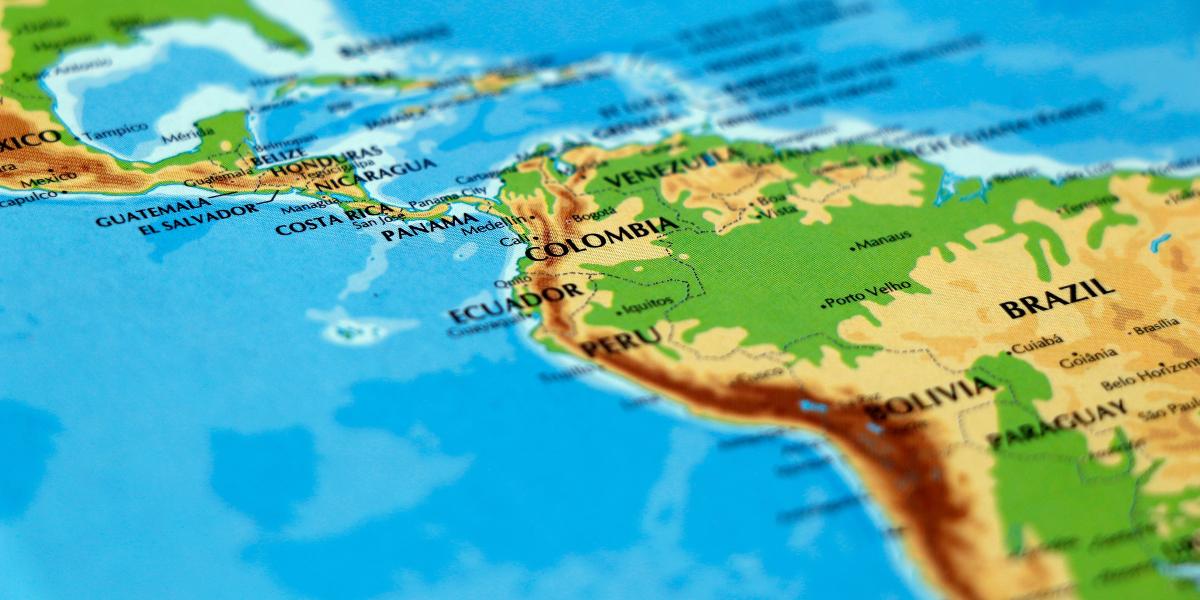
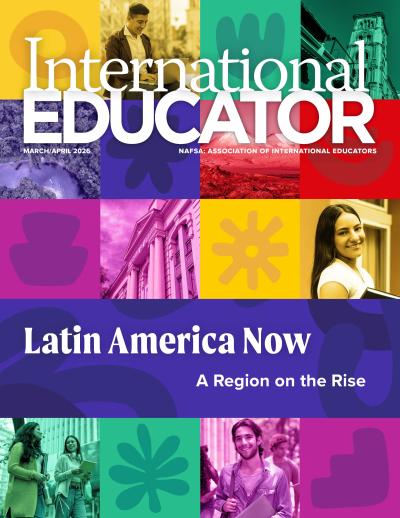
Last year, I had the privilege of spending time in Costa Rica at the Conference of the Americas on International Education (CAIE). What I witnessed there, and in conversations with colleagues from across Latin America, was a region in renaissance.
There was dynamism. There was urgency. I was struck and deeply pleased to engage in discussions related to innovation rooted not in imitation, but in identity.
As this issue of International Educator (IE) magazine explores the landscape of higher education in Latin America, it is clear the region is navigating profound demographic, economic, and political shifts. Yet, what resonated with me most at CAIE was not the scale of the challenges—such as funding constraints, access gaps, and political volatility—but the clarity of purpose with which institutions are responding. Across the region, universities are reframing internationalization as a lever for social mobility, economic resilience, and democratic vitality and not as a prestige exercise.
In many ways, Latin America reflects the broader rebalancing currently underway in international education. For decades, global mobility patterns were defined by a relatively narrow set of destination countries and institutional hierarchies. Today, the terrain is more fluid. Students are diversifying destinations. Governments are rethinking return on investment. Institutions are asking deeper questions about societal impact.
Latin America is not waiting to be defined by these shifts. It is actively shaping them.
Internationalization with a Social Mission
This issue of IE magazine highlights Latin American institutions’ deep commitment to community engagement and social mission. This is not new to the region, but it feels newly central. Universities in Brazil, Chile, Colombia, Ecuador, Mexico, Peru, and beyond are anchoring international partnerships in local realities: public health challenges, climate vulnerability, Indigenous rights, urban inequality, and post-conflict reconstruction.
During my conversations in Costa Rica, I repeatedly heard that internationalization must be reciprocal and rooted in community priorities. Mobility is important, but so are joint research agendas that address water security. Dual degrees matter, but so do faculty collaborations that strengthen teacher training in underserved areas. Rankings may influence global perception, but social trust determines local legitimacy.
Across the region, universities are reframing internationalization as a lever for social mobility, economic resilience, and democratic vitality and not as a prestige exercise.
This ethos has implications far beyond the region. At a time when higher education globally is being scrutinized for its relevance, Latin America reminds us that internationalization divorced from social purpose is unsustainable.
Innovation Under Constraint
It would be naïve to ignore the structural challenges facing many institutions across the region: fiscal pressures, uneven infrastructure, political uncertainty, amongst others. Yet, what I witnessed was a pattern of innovation born from constraint.
Hybrid mobility models are expanding access for students who cannot travel abroad. Regional consortia are pooling resources for research and faculty development. Institutions are experimenting with microcredentials and short-term programs aligned with workforce needs. International offices are being repositioned as strategic units embedded in institutional planning, not peripheral service centers.
Several countries in the region have endured periods of conflict and political upheaval. However, from these histories emerge profound lessons about the role of education in peacemaking and social cohesion.
The International Education Leadership column in this issue, examining how institutions in Latin America navigate times of uncertainty, underscores a powerful truth: resilience is not theoretical. It is practiced daily.
In a world marked by polarization and fragility, these experiences are not regional footnotes—in fact, they are global case studies.
Universities have served as conveners of dialogue, spaces for truth-telling, and incubators for civic leadership. They have contributed research to inform public policy, supported displaced populations, and reimagined curricula to address collective trauma.
In a world marked by polarization and fragility, these experiences are not regional footnotes—in fact, they are global case studies. There are lessons here for the global community. In contexts where institutions have had to operate amid volatility, economic crises, democratic transitions, and public health emergencies, they have developed muscles of adaptability. Those muscles are now assets in a world where disruption is the norm.
Indigenous Ways of Knowing and Being
One of the most compelling threads in my conversations across the region was the integration of Indigenous epistemologies into contemporary academic life. Latin America is home to extraordinary cultural and linguistic diversity, with Indigenous communities whose knowledge systems predate modern nation-states.
Incorporating these ways of knowing is not simply an act of inclusion; it is an intellectual expansion. It challenges Western-centric frameworks of knowledge production. It reframes sustainability through relationality and stewardship. It reminds us that education is not only about accumulation of information, but about identity, belonging, and responsibility.
As global higher education grapples with decolonization, equity, and epistemic justice, Latin America offers living laboratories of how institutions can honor heritage while synchronously engaging globally.
A Young Region, A Global Opportunity
Demographically, Latin America remains relatively young compared to many aging societies in Europe and parts of East Asia. This youth bulge is both opportunity and responsibility. Preparing this generation with globally relevant skills, intercultural competence, digital fluency, and civic awareness is imperative.
It is important for us all to remember that the region is not a single narrative. It is a mosaic of contexts, capacities, and aspirations.
For overseas institutions seeking deeper engagement, the invitation is clear: move beyond transactional recruitment models and toward long-term, trust-based partnerships. Invest in bilingual and bicultural capacity. Recognize that students and scholars from the region not only bring talent, but carry perspective shaped by resilience and social commitment.
From Rhetoric to Relationship
Latin America is not simply a region to engage with; it is a region to learn from.
The renaissance I witnessed while in Costa Rica was not accidental. It was the result of courage, determination, and a refusal to let constraints define ambition. It was animated by a belief that internationalization, when aligned with social mission and cultural integrity, can be transformative.
In this moment of global rebalancing, we would do well to pay close attention.
The future of international education will not be shaped by a single geography or paradigm. It will be cocreated—and Latin America is essential to that story. I invite our readers to engage with intention with our colleagues in Latin America. Due to Florida’s strong ties to the region, the NAFSA 2026 Annual Conference & Expo in Orlando will be the place to gather and learn. I hope to see many of you then. •




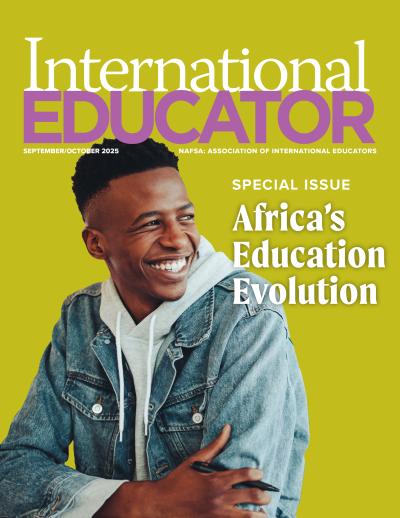
About International Educator
International Educator is NAFSA’s flagship publication and has been published continually since 1990. As a record of the association and the field of international education, IE includes articles on a variety of topics, trends, and issues facing NAFSA members and their work.
From in-depth features to interviews with thought leaders and columns tailored to NAFSA’s knowledge communities, IE provides must-read context and analysis to those working around the globe to advance international education and exchange.
About NAFSA
NAFSA: Association of International Educators is the world's largest nonprofit association dedicated to international education and exchange. NAFSA serves the needs of more than 10,000 members and international educators worldwide at more than 3,500 institutions, in over 150 countries.
NAFSA membership provides you with unmatched access to best-in-class programs, critical updates, and resources to professionalize your practice. Members gain unrivaled opportunities to partner with experienced international education leaders.