
The Spaces Between Classes: Where Global Learning Comes to Life
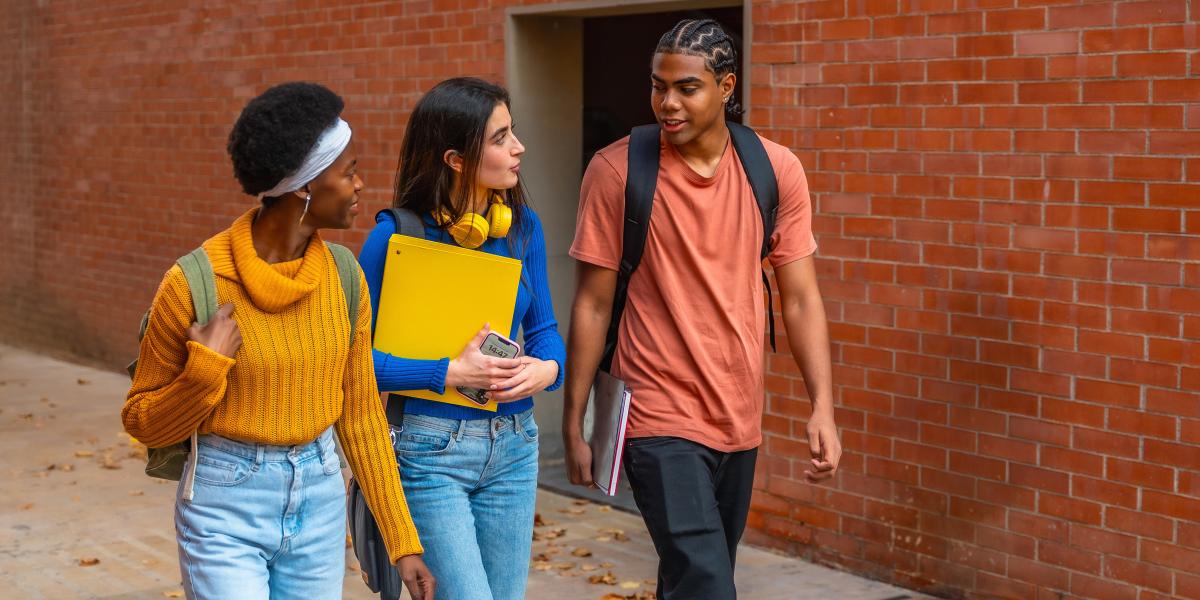
The most memorable lessons in international education often happen outside of lecture halls. Sometimes they emerge during a shared meal, a collaborative project, a campus festival, or the negotiation of a fictional peace agreement with classmates from around the world. Long after they graduate, students often remember those moments—not because these experiences check a box for cultural exposure, but because they build relationships that change how the students see themselves and others.
Across higher education, institutions invest significant time and resources to bring domestic and international students together. But creating opportunities for students to meet is only the first step in fostering meaningful connections and breakthrough moments. The strongest programs intentionally create environments where students collaborate, solve problems, and develop relationships that continue long after an event ends.
“The programs that work best are those that encourage active participation rather than passive attendance,” says Evidence Uche Otunji, former African programs coordinator for the Global Education and Engagement unit at Missouri State University. “When students are given opportunities to collaborate, share their experiences, or work toward a common goal, conversations happen more naturally and relationships are more likely to develop.”
This insight offers an important shift in perspective: Meaningful connection is less about proximity and more about purposeful design.
From Exposure to Engagement
Many campuses offer conversation partner programs, cultural celebrations, international festivals, shared meals, service-learning projects, and peer-mentoring opportunities. These initiatives are good starting points, but some educators emphasize that these opportunities alone don’t guarantee authentic interaction.
“The opportunities that work best are those that give students a shared purpose and require ongoing collaboration,” says Allison Witt, director of the Office of International Programs at the University of Illinois Urbana-Champaign and director of the IGlobal program, which was recognized with NAFSA Simon awards in 2008, 2025, and 2026.
“One of the most rewarding experiences has been watching students from several countries collaborate on sustainability projects and gradually move from polite introductions to genuine friendships and intellectual exchange.” —Allison Witt
Witt’s multilateral virtual collaborations intentionally move students away from simply comparing cultures. Instead, participants from different countries work together on sustainability projects and other global challenges, shifting the conversation from “How are we different?” to “How can we solve this problem together?”
“One of the most rewarding experiences has been watching students from several countries collaborate on sustainability projects and gradually move from polite introductions to genuine friendships and intellectual exchange,” Witt recalls.
The emphasis on collaboration also shapes programming at Northwestern University’s Roberta Buffett Institute for Global Affairs. (Northwestern was recognized with NAFSA Simon awards in 2013, 2022, and 2023.) Senior Director of Global Programs and Strategic Initiatives Samantha Nissen says students often form the most meaningful connections when they engage with substantive issues such as migration, democracy, public health, climate change, and peace-building rather than simply learning about their peers’ national identities.
One example of this approach is a peace negotiation simulation developed and facilitated by Danielle Gilbert, an assistant professor in Northwestern’s Department of Political Science. Students assumed the roles of diplomat negotiators attempting to broker an agreement. “Students described the simulation as ‘thrilling’ in anonymous postevent surveys,” says Nissen. One student commented that the simulation was possibly the most fun they had had in an academic setting. Another student noted that the complexity of the exercise and the multifaceted aspect of the negotiation process were their favorite parts.
Participants later praised not only the intellectual challenge but also the opportunity to meet new classmates and work toward consensus together. The success of the initiative eventually inspired students to help create “The Peace We Make: A Youth-Led Buffett Symposium” in 2025, bringing together activists, politicians, nongovernmental organization leaders, and negotiators from around the world to explore how young people are transforming the future of peace and justice. The daylong program even featured a special conversation with 2018 Nobel Peace Prize Laureate Nadia Murad.
The initiative evolved into the stand-alone Global Affairs Leadership Program. “[The program’s] development demonstrates the value of listening carefully to students—what excites them, what they perceive as missing in the curriculum, and how they want to translate knowledge into action,” shares Nissen. “Doing so not only supports their development as future leaders but also creates opportunities for students to build meaningful relationships around questions and issues that matter deeply to them.”
Listening to students, Nissen suggests, can be just as important as designing programs for them.
Relationships Built Around Shared Experiences
Some of the most powerful examples of intercultural connection happen through immersive experiences that extend well beyond a single afternoon. At Northeastern University (which was recognized with NAFSA Simon awards in 2010 and 2022), Assistant Director and Faculty Global Co-op Coordinator Sally Conant oversees engineering students who participate in six-month global co-op placements, during which students are embedded in workplaces and navigate unfamiliar languages, transportation systems, housing, and professional expectations—all while collaborating with colleagues from different cultures.
“The impact on students is unparalleled,” Conant explains. “If you help one student do a global co-op, it’s worth it. They simply return as different people, always for the better.”
She recalls one mechanical engineering student who accepted a co-op placement at a permaculture farm in Costa Rica. The student worked alongside students from other countries and volunteered as an English teacher in the local community, despite knowing little Spanish. After graduation, he moved to New Zealand, where he launched his engineering career.
“He is one example of many where students interact with others unlike them through [the] global co-op and it [alters] the trajectory of their lives,” Conant says.
“The impact on students is unparalleled...They simply return as different people, always for the better.” —Sally Conant
At Missouri State University, Otunji saw similar transformations through prominent campus events such as the Tour of the Globe and the African Carnival. Featuring food, music, games, and cultural displays, the events drew students, faculty, staff, and community members into spaces designed for interaction rather than observation.
“What stood out most to me was watching conversations and connections develop organically throughout the event,” Otunji recalls. “Students were not only learning about different cultures, but they were also sharing their own experiences, asking questions, and building relationships. It was a powerful reminder that some of the most meaningful intercultural learning happens outside the classroom, when people have the opportunity to connect in a relaxed and enjoyable setting. For me, the success of the event was not just the attendance or the programming itself, but seeing students from different backgrounds genuinely interact, learn from one another, and leave with a greater appreciation for perspectives beyond their own.”
Rethinking Who Gets to Be the Expert
Many educators emphasize that international students should not be viewed simply as guests welcomed into campus culture but as active contributors who enrich and reshape it.
Weijia Li, clinical professor of international higher education leadership and director of the global higher education master’s degree program at the University of Wisconsin-Madison, argues that institutions should recognize the expertise that international students already possess.
“The initiatives that work best are those that resist the impulse to treat international students as recipients of domestic hospitality,” Li says. “The ones I find most meaningful flip that dynamic entirely. I encourage international students to position themselves as cultural hosts, as people who have knowledge, perspectives, and traditions to share and who can invite their domestic peers into those worlds rather than waiting to be included in the American cultural domains.”
Within Li’s cohort-based graduate program, students routinely organize gatherings around their own traditions and educational systems, creating what he describes as a family-like learning community. He credits the structure itself with fostering meaningful relationships, observing that “the structure of connection matters as much as the invitation to connect.”
“The initiatives that work best are those that resist the impulse to treat international students as recipients of domestic hospitality.” —Weijia Li
Witt also employs this approach through IGlobal’s multilateral design, in which participants from multiple countries engage with each other as peers rather than relying on a host-guest dynamic. Because no particular group is clearly in the majority, students participate as collaborators instead of representatives responsible for explaining an entire culture.
The Biggest Barriers
Interestingly, educators say students want these connections but can struggle to make them happen.
“Students often stay within familiar social circles,” Otunji explains. Different schedules, comfort levels, and degrees of language confidence—as well as general uncertainty about initiating conversations—can all stand in the way of forming connections. To overcome those barriers, Otunji’s team intentionally incorporates discussion prompts, team activities, and icebreakers that require interaction instead of hoping conversations emerge on their own.
Witt agrees that “simply putting students together is not enough.” Successful initiatives require thoughtful facilitation and carefully scaffolded interactions that encourage participants to engage deeply over time.
Li says professionals should also examine programs to determine whether they implicitly define success as helping international students adapt to dominant campus culture or as creating reciprocal exchange. Even well-intentioned initiatives, he argues, can unintentionally reinforce “othering” if they expect one group to do most of the adapting.
Meanwhile, Pouneh Eftekhari, project manager and researcher in the Division of Global Engagement at Lund University in Sweden, encourages institutions to think beyond individual events and consider the broader ecosystem supporting intercultural engagement. She emphasizes that program partners—including colleagues in the international office, curriculum developers, deans, department heads, and faculty—should work together to bridge the gap between institutional strategy and curriculum by having intentional conversations.
Five Strategies Campuses Can Implement Now
While every institution has different resources and student populations, educators consistently point to several practical approaches to help nurture these connections:
- Design around a shared purpose. Whether students are solving sustainability challenges, completing internships, mentoring peers, or participating in simulations, collaboration creates more meaningful interaction than passive attendance.
- Involve students as partners. Programs are often stronger when students help shape them. Northwestern’s peace-building initiative evolved because student voices influenced its direction.
- Build sustained engagement. Smaller recurring gatherings, semester-long collaborations, and ongoing cohort experiences frequently produce deeper relationships than one-time events.
- Recognize the assets students bring. Position international students as contributors, collaborators, and experts rather than as guests who need to adapt to campus life.
- Start small and assess often. Conant encourages institutions to identify committed partners and to begin with manageable initiatives. Otunji recommends asking students directly what experiences they value and what barriers they face. Assessment and reflection help programs evolve and improve over time.
Creating the Conditions for Connection
Across these diverse institutions and initiatives, one theme emerges repeatedly: Meaningful relationships cannot be forced, but they can and should be cultivated with intention.
The most successful programs move beyond celebrating differences for a day and instead create repeated opportunities for students to tackle meaningful work together. In doing so, these programs help participants build intercultural competence, challenge assumptions, expand professional networks, and develop friendships that endure long after graduation.
For international educators, the lesson is both practical and inspiring. The next transformative global learning experience may not require a new building or a multimillion-dollar initiative. It may begin with a carefully designed interaction, a shared project, or an invitation to collaborate. Sometimes a conversation after class can have just as much impact as the class itself. •
Additional Resources
- Fostering International Student Success in Higher Education, Second Edition
- Friendship with an International Student
- Internationalizing Your Course: A Guide to Infusing Global Learning into Curricula
- Internships, Service Learning, and Research Abroad
- Making Global Learning Universal: Promoting Inclusion and Success for All Students



About International Educator
International Educator is NAFSA’s flagship publication and has been published continually since 1990. As a record of the association and the field of international education, IE includes articles on a variety of topics, trends, and issues facing NAFSA members and their work.
From in-depth features to interviews with thought leaders and columns tailored to NAFSA’s knowledge communities, IE provides must-read context and analysis to those working around the globe to advance international education and exchange.
About NAFSA
NAFSA: Association of International Educators is the world's largest nonprofit association dedicated to international education and exchange. NAFSA serves the needs of more than 10,000 members and international educators worldwide at more than 3,500 institutions, in over 150 countries.
NAFSA membership provides you with unmatched access to best-in-class programs, critical updates, and resources to professionalize your practice. Members gain unrivaled opportunities to partner with experienced international education leaders.