
From Conversation to Collaboration: Bringing Global Learning into the Classroom
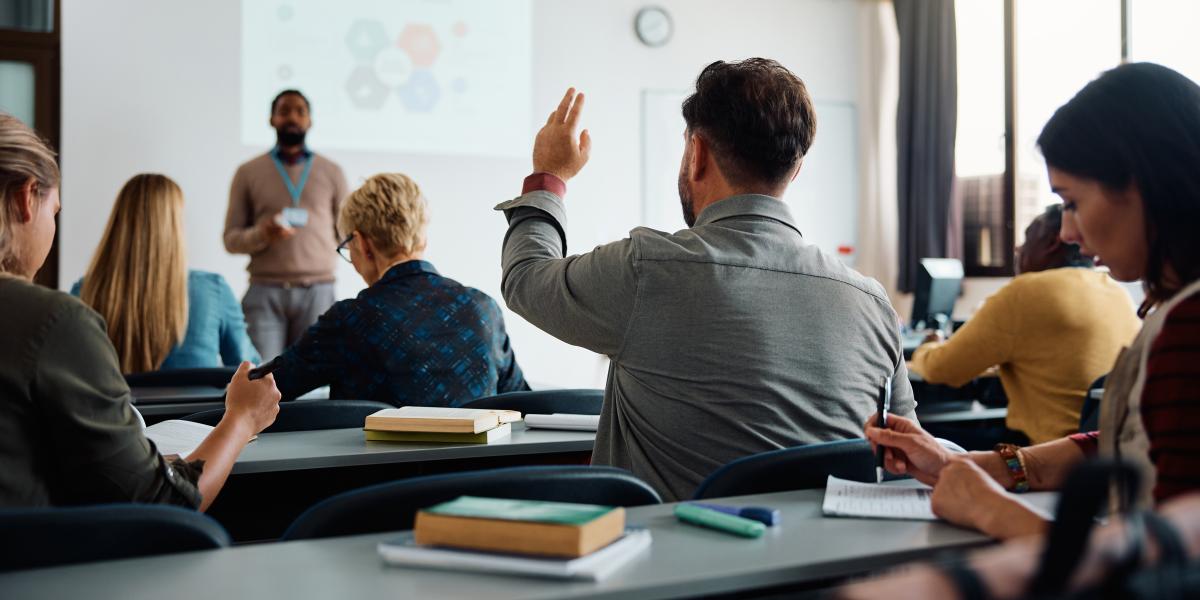
Bringing global learning into the classroom is a key tenant of comprehensive internationalization, and faculty are essential to these efforts. But between teaching, research, advising, and other responsibilities, finding time for new courses or international partnerships can be difficult.
“The challenge is not that faculty don’t see the value of internationalization; it’s helping them understand how it relates to what they teach and what they want their students to learn,” says Luis Canales, associate provost for Illinois International at the University of Illinois Urbana-Champaign (Illinois). “We also have to recognize that faculty have many competing responsibilities. If we want them to bring international perspectives into their courses, we need to provide the support and resources to help them do it.”
That’s where international educators can help. By understanding what faculty need and finding ways to bring global learning into the courses they already teach, international office staff can make collaboration easier.
Start with Relationships, Not Requirements
Before the work of infusing global learning into course curricula can begin, international educators must establish positive working relationships with faculty and help them see the existing and potential connections between their work.
“My advice is to start with relationships, not programs,” says Dilnoza Khasilova, director of North Idaho College’s Adult Education Center and author of the NAFSA publication Internationalizing Your Course. “Take time to learn about faculty members’ teaching, research interests, and current priorities, and look for opportunities to connect those interests with global perspectives and potential international partners.”
At Florida International University (FIU), the approach begins with a simple, similar principle of faculty support. Hilary Landorf, assistant vice president of the Global Learning Initiatives office at FIU, notes that her team starts by listening to faculty, even those who are skeptical about global learning. One question they ask faculty members is, “What do you think your students need to know and be able to do by the time they graduate from your discipline?” The answers often show faculty how global learning already connects to their teaching.
“My advice is to start with relationships, not programs. Take time to learn about faculty members’ teaching, research interests, and current priorities, and look for opportunities to connect those interests with global perspectives and potential international partners.” —Dilnoza Khasilova
“[We tell them,] we are here to support you and you are the subject matter experts,” says Michelle Zaldivar, former assistant director of FIU’s Global Learning Initiatives office and now the study abroad adviser at Georgia State University Perimeter College.
Building relationships with faculty doesn’t always have to start in the classroom, says Ruby Cheng, interim director of the Global Brown Center for International Students at Brown University. “I think one of the challenges is that faculty and staff often work in different spaces, even though we are all contributing to the same student learning journey,” she says.
At Brown, faculty from different departments join incoming international students for informal lunches during orientation. Students connect with professors outside the classroom, while faculty learn about the students’ backgrounds and experiences.
“Internationalization does not always have to start with a large academic initiative or curriculum change,” Cheng says. “Sometimes, it starts with creating intentional spaces where people feel comfortable sharing their experiences, asking questions, and learning from each other.”
Help Faculty See What’s Possible
With solid relationships in place, international educators can help faculty find ways to bring global learning into their courses. Some institutions have infrastructure in place for this, while others may not.
At FIU, faculty can attend a five-hour Global Learning Course Design and Instruction Workshop and get one-on-one help infusing global learning into their courses. Landorf notes one of the most common misconceptions is that many faculty believe they need to be experts in international issues to teach global learning. “Our favorite way to dismantle this is to talk to faculty about how a global issue only becomes global because it affects local communities around the world,” she says.
Landorf points to a coastal hazards course as an example. Originally, the course relied on weekly textbook readings, a midterm exam, and a term paper. “After attending our workshop and meeting one-on-one with the faculty member, his syllabus became completely problem-based, with a question posed every week, readings from multiple sources, and different perspectives that related to the question,” she says. The course also added class debates, group presentations, a field trip to study beach erosion and new assignments. “It was quite the transformation!” Landorf remarks.
“We don’t need to ask faculty to redesign an entire course to incorporate international perspectives," he says. "Sometimes it is as simple as looking at one learning objective or one assignment and asking: Would students learn something different, or gain a better understanding of the subject, if they were exposed to perspectives from another part of the world?”—Luis Canales
At institutions without workshops for faculty, international education staff can focus on what faculty members want students to learn in their course. “Faculty unsure of how [global learning] fits into their class may start with just one goal … and pilot the approach in a course assignment,” she says.
Canales encourages faculty at Illinois to start small. "We don’t need to ask faculty to redesign an entire course to incorporate international perspectives," he says. "Sometimes it is as simple as looking at one learning objective or one assignment and asking: Would students learn something different, or gain a better understanding of the subject, if they were exposed to perspectives from another part of the world?"
Sometimes, faculty partnerships can also bring together people from different fields. At the University of North Carolina-Charlotte (UNC Charlotte), music professor Ginger Wyrick has worked with engineering professors Shen-En Chen and Maria Guimaraes to bring choir singing into their courses. “The engineering students learned to build cross-cultural understanding through singing,” says Yongling Gorke, assistant director in UNC Charlotte’s Office of Global Learning. “The two groups of students (music and engineering) have performed multiple times during the annual International Education Week.” Wyrick has also helped lead a music residency with Tohoku University in Japan for six consecutive years, combining virtual and in-person learning.
For Gorke, these collaborations show the value of mutual empowerment. “Mutual empowerment means supporting each other’s creative ideas, understanding administrative boundaries, operating ethically and efficiently, and most important of all, helping students grow in their own ways,” she says.
Give Partnerships Room to Grow
For partnerships to last—and for course curricula continue supporting overall internationalization efforts—faculty need ongoing support. At Illinois, which won a 2026 Paul Simon Award for Comprehensive Internationalization and a 2025 Spotlight Award for its IGlobal program, Canales points to an eight-week course that brought together faculty and staff from different areas of study to explore coffee, chemistry, and community in Panama. Students also learned directly from local coffee producers.
“Coffee provided a common subject that allowed faculty from different disciplines to work together and develop a course they might not have created on their own,” he says. “But what made the experience particularly valuable was the opportunity for students to learn directly from Panamanian coffee producers. They brought knowledge and perspectives that students would not necessarily get in a classroom.” The course eventually became part of the departmental curriculum.
Khasilova has seen how a small project can grow into a larger partnership. “When both partners see value in the collaboration and have practical ways to continue the work, a single course or exchange can become a lasting relationship that advances teaching, research, and student learning,” she says.
“You may not see results in the same semester, or even the next academic year, but trust yourself that sustained and strong partnerships, while taking time, are very fruitful.” —Yongling Gorke
In a previous role, she helped develop a collaboration with institutions in Uzbekistan that started small. “Beginning with a local seed grant, I worked to expand engagement beyond the initial connection and create opportunities for sustained academic collaboration,” Khasilova says.
The partnership grew to include faculty visits, training, and projects across departments. Khasilova also helped secure outside funding, including support through American Councils for International Education. Over two years, the institution hosted four groups of visiting participants, each spending four months working with local faculty.
But keeping those partnerships going wasn’t always easy, and, Khasilova says, it’s important to plan for a partnership’s future from the start to ensure long-term success. “Some of the relationships I helped develop had the potential to progress further, but not all reached their next stage,” Khasilova notes. “When institutional knowledge remains with a few individuals, valuable connections and opportunities can be lost.”
At UNC Charlotte, faculty who complete the Global Learning and Internationalization Institute can continue meeting to share ideas, successes, and challenges. Gorke says building strong partnerships takes time. “You may not see results in the same semester, or even the next academic year, but trust yourself that sustained and strong partnerships, while taking time, are very fruitful,” she says.
Zaldivar offers a simple piece of advice for international educators looking to build those relationships: “Listen, and, if you haven’t already, teach.” Understanding the challenges faculty face in the classroom can help international educators better support their work.
Finding Common Ground
Bringing global learning into the classroom is an important part of a university’s internationalization efforts. Faculty play a critical role in making this happen by helping students see different perspectives and connect what they’re learning to the wider world.
For international educators, the key is understanding what faculty need and finding ways to support them. That doesn’t always mean developing new courses or launching major initiatives. Sometimes, it starts with a conversation or a small change to an assignment that opens the door to something bigger. •
NAFSA Resources




About International Educator
International Educator is NAFSA’s flagship publication and has been published continually since 1990. As a record of the association and the field of international education, IE includes articles on a variety of topics, trends, and issues facing NAFSA members and their work.
From in-depth features to interviews with thought leaders and columns tailored to NAFSA’s knowledge communities, IE provides must-read context and analysis to those working around the globe to advance international education and exchange.
About NAFSA
NAFSA: Association of International Educators is the world's largest nonprofit association dedicated to international education and exchange. NAFSA serves the needs of more than 10,000 members and international educators worldwide at more than 3,500 institutions, in over 150 countries.
NAFSA membership provides you with unmatched access to best-in-class programs, critical updates, and resources to professionalize your practice. Members gain unrivaled opportunities to partner with experienced international education leaders.