
José Miguel Cruz: Latin America Studies Centers Actualize “An Interdisciplinary Vision”
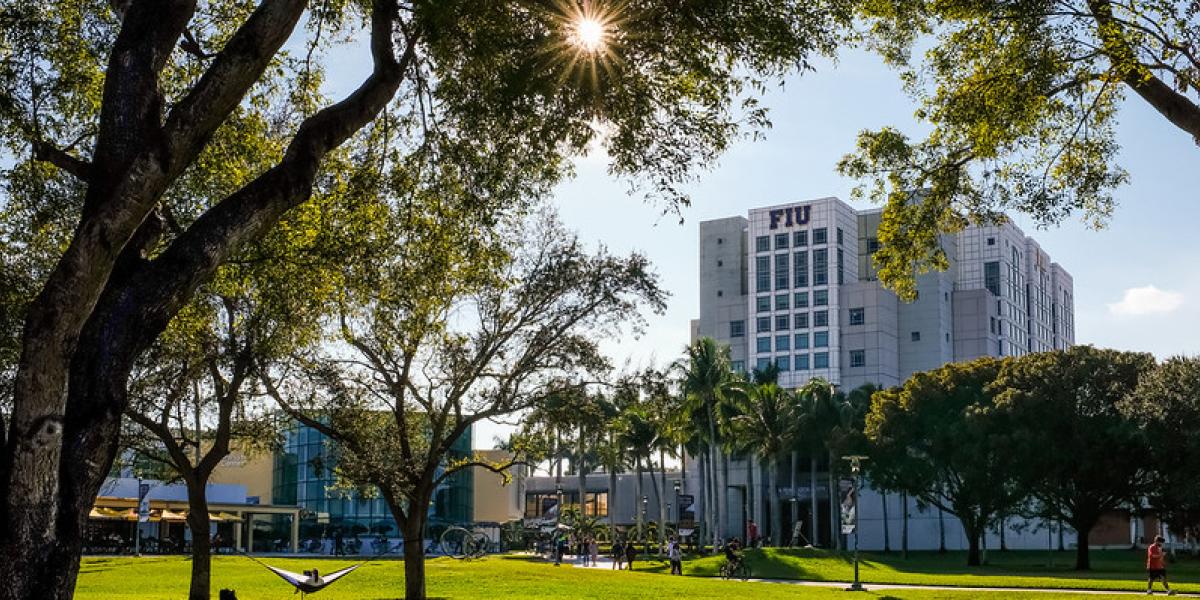
As institutions across the United States look for and increase partnerships and engagement with universities in Latin America and the Caribbean, many can start on their own campus. There are more than 50 college and universities in the United States with centers focused on the region, bringing together experts from across an institution and serving as a rich resource for international education efforts in areas like international enrollment management, exchange agreements, and credential evaluation.
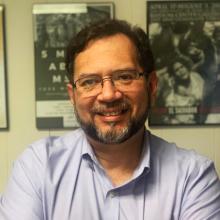
International Educator spoke with José Miguel Cruz, who took the helm as director of Florida International University’s (FIU’s) Kimberly Green Latin American and Caribbean Center (LACC) in 2025. Cruz explains the role of Latin America studies centers on U.S. campuses, their evolution over the last several decades, their commitment to the local community, and how they can demonstrate their value. (Lea este artículo en español.)
“I think that it is important to highlight the role and importance that our centers play in current times,” says Cruz. “We need to understand the region, incorporating different perspectives [and] different disciplines, [as well as] incorporate the region itself. And our centers are designed precisely to do that.”
Editor’s note: This interview has been edited and condensed.
Let’s start with the role of Latin American and Caribbean studies centers in the U.S. university system. For international educators who don’t frequently interact with these centers, how would you explain their principal objective? How do they differ from departments dedicated to regional studies, and how are they positioned within most universities?
I would explain the principal objective of Latin American and Caribbean studies centers like the LACC in two ways. The first purpose is, given that it is a regional studies center, to call attention to and concentrate academic work on a specific region, giving more awareness to the particularities of the region. And, for me, the second objective is to bring about interdisciplinary work clearly focused on the region. I think there is a lot that is advanced, in terms of knowledge and research, when we adopt an interdisciplinary vision, and the centers contribute a lot to that.
That brings me to your second question: How do they differ from academic departments? They differ by the fact that academic departments are interested in one discipline. A Latin American studies center puts emphasis on the region and facilitates the fact that distinct disciplines can enter a dialogue in order to advance understanding. For example, at the LACC, we have an initiative called “faculty affinity groups” in which professors from different disciplines interested in a particular topic or region work together to advance knowledge.
Where are these centers situated within the structure of the university? That’s a more complicated question. I would say the easy answer is that it depends on each university. The ideal is that these centers can be under the leadership of the entire university, because the idea is that they can work with all of the university’s departments. But it doesn’t always happen that way. There are centers that depend more on a particular school or faculty or are under the leadership of the provost. Or they may be under the leadership of international offices, which sometimes isn’t the best situation. I think what facilitates the work of a center like these is that they can work with the entire structure of the university.
How have the efforts of Latin American and Caribbean studies centers evolved over the last decade, and what forces—either internal or external—have driven that evolution?
There was, some decades ago, an effort to bring about these regional centers. That effort fell off; perhaps it’s been falling off over the last 20 years. There has also been a return to focusing academic work on a single discipline rather than on area studies. I think that tendency was the product of the fact that, until recently, a good part of the world’s countries have moved to be considered democracies. So, there wasn’t as much interest in looking at the particularities of or studying in certain countries. Area studies centers came about during the Cold War in an effort to better understand certain regions within the framework of the war. With the advent of democracy in the 1990s and the beginning of the 2000s, and because there was more or less a consensus about the world order and democracy, I think that the tendency to build up regional centers was abandoned a little bit.
However, it seems to me that, given we are currently in a reorganization of the world order, I think that we are very probably at the doors of a new trend of starting to pay attention to regions again.
However, it seems to me that, given we are currently in a reorganization of the world order, I think that we are very probably at the doors of a new trend of starting to pay attention to regions again. For example, think about the new national security policy that places emphasis on the Western Hemisphere; that policy points to the Americas as the important region for the United States. I predict that that is going to return relevance to area studies centers.
The case of LACC, my center, is very particular because we are in a place that has always been an area of overlap between North America and Latin America since we’re located in Miami. In that sense, for us, we have not largely faced the trend of abandoning regional studies that was more visible in the rest of the United States.
Miami is one of many U.S. cities with a large Latin American populations, and it also serves as a gateway between the United States and Latin America and the Caribbean. How has that context influenced the effort of LACC to forge ties between FIU and the Latin and Caribbean community of Miami, as well as between the university and communities and institutions in Latin America and the Caribbean? What can centers in areas of the country with less evident connections with the region learn from the example of LACC?
The involvement of communities of Latin American origin in academic work is important. We are, in a certain way, blessed, because Miami has a large community of Latin American origin comprised of different nationalities. But, I think that universities that are in communities with a smaller population of Latin American origin or ancestry can also take advantage of those ties because it will allow them to form closer bonds. One of the particularities of LACC in Miami is not only that we are in southern Florida and that we are probably in the most important Latin American hub in the United States, but also that many of us—many of the professors, researchers, students—have direct ties with Latin America. Going back to centers that probably have smaller Latin American communities, I think it provides the opportunity to leverage even those small communities to interact with faculty researchers.
You just spoke about the importance of involving Latin American communities in the work of a Latin American and Caribbean studies center. What does a true collaboration between those centers and Latin American and Caribbean institutions and communities look like in practice? How does a collaboration between equals differ from a transactional relationship?
That is a very important question. Many times in the past, the relationship with the region was basically transactional in the sense of facilitating the journey of researchers from the United States or North America to Latin America to collect information, collect data, and then to return to the United States. In the past, a lot of those relationships were motivated by the fact that a U.S. academic with a theory would essentially travel to Latin America to try to confirm a theory that frequently had no roots in the reality of the region.
I am a researcher, and I think the most successful academic research projects are those that manage to incorporate investigators from the region within the project not just as workers collecting data, not just as assistants, but as part of the research team.
I think that has changed a lot. Now, there are more opportunities precisely because of the work that centers like mine do. There are more opportunities for collaborative work in which U.S. or North American researchers and Latin American researchers form teams to study topics. And that really enriches academic work. I am a researcher, and I think the most successful academic research projects are those that manage to incorporate investigators from the region within the project not just as workers collecting data, not just as assistants, but as part of the research team. Because of the collaboration and more equitable communication that exists, we now have theories that are generated in Latin America within different technological or theoretical veins that can be incorporated into the theories that are worked on here in the United States.
I wanted to talk a little bit about the intersection of the efforts of the international education field and those of Latin American studies centers. How can these centers use their regional experience and knowledge to support the international education efforts of other units on campus? For example, there are units that work with the enrollment of students from Latin America and the Caribbean, as well as those that work with the development and maintenance of exchange agreements. How can area studies centers contribute to those efforts?
Our center’s main objective of putting focus on Latin America and strengthening the study of the region also promotes exchanges and contact with diverse centers in the region itself. And those relationships are fundamental for identifying students, researchers, and academics that can come to the United States and FIU to collaborate with other units.
The other point is interdisciplinarity. Departments are tied to a specific discipline. Our center isn’t tied to a specific discipline. For example, one of our professors, who is a biologist studying the history of medicinal plants in the Caribbean, has a very, very fascinating project. To carry out the project, he is working with professors from the modern language department to be able to understand the archives that are available in the Caribbean and are in other languages. So, that kind of collaboration can happen precisely because it is facilitated by our center.
We’re in a moment where Latin American studies centers need to demonstrate their value, especially with the challenges of financing these centers. How would you defend the need for these centers to continue existing?
We have an initiative at LACC that we call “teach-ins” in which we focus on a topic that is relevant to the community. For example, in a place like Miami, an important topic is what is happening in Venezuela. But the goal is not to just discuss what is happening in Venezuela in academic terms, but to also discuss it in a way that our community can participate and understand. This type of event is adapted to the fact that we need people—our community—to come, attend, understand, and participate. And that means that LACC plays a very important role within the discussion, within the community, and that it shows its value.
We aren’t the typical “ivory tower” isolated from reality in which we only write journal papers that the vast majority of people aren’t going to read. Clearly, we are going to write journal papers, but we are also going to translate them for the community. One of our efforts is using social media more savvily to connect with people, including to combat the disinformation that exists online. Initially, many of our colleagues in academia have felt reluctant to use social media. But I think what we need to do is to use it more, utilizing our legitimacy as knowledgeable people to better inform the public. •





About International Educator
International Educator is NAFSA’s flagship publication and has been published continually since 1990. As a record of the association and the field of international education, IE includes articles on a variety of topics, trends, and issues facing NAFSA members and their work.
From in-depth features to interviews with thought leaders and columns tailored to NAFSA’s knowledge communities, IE provides must-read context and analysis to those working around the globe to advance international education and exchange.
About NAFSA
NAFSA: Association of International Educators is the world's largest nonprofit association dedicated to international education and exchange. NAFSA serves the needs of more than 10,000 members and international educators worldwide at more than 3,500 institutions, in over 150 countries.
NAFSA membership provides you with unmatched access to best-in-class programs, critical updates, and resources to professionalize your practice. Members gain unrivaled opportunities to partner with experienced international education leaders.